

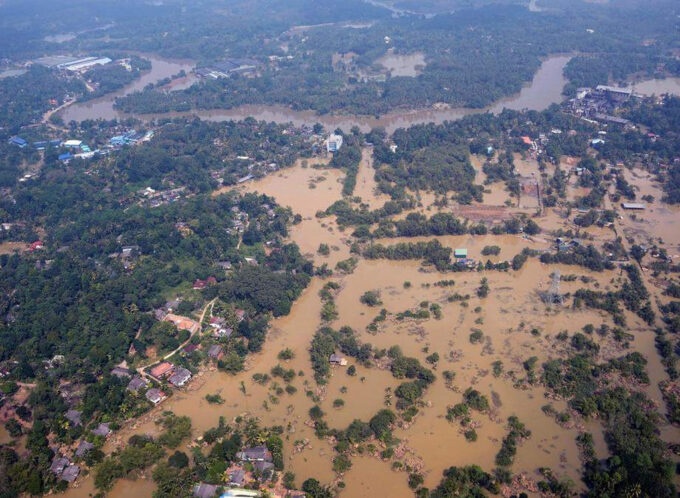
The International Monetary Fund (IMF) has approved an immediate disbursement of approximately USD 206 million under the Rapid Financing Instrument (RFI) to assist Sri Lanka in the wake of the catastrophic Cyclone Ditwah.
Speaking shortly after the Executive Board’s decision, IMF Senior Mission Chief for Sri Lanka, Evan Papageorgiou, emphasised that while the funds are provided without the typical conditionalities of an Extended Fund Facility (EFF), the government must maintain strict fiscal discipline.
Transparency and accountability in emergency spending
Papageorgiou stressed that emergency funds must be managed with high standards of transparency to ensure they reach the intended recovery efforts.
“All emergency spending should be executed in full compliance with the Public Financial Management Act and supported by enhanced monitoring and regular public reporting in line with transparency and accountability standards. The Central Bank of Sri Lanka should continue to refrain from monetary financing of the budget.”
He further noted that public investment management reforms will be vital to “prioritise reconstruction projects and ensure value for money.”
The nature of the RFI vs EFF
Unlike the ongoing Extended Fund Facility, the RFI is a one-time injection of liquidity designed for urgent needs.
“RFI is a single disbursement. So today’s board meeting is just for that. There are no other purchases or disbursements after this. As such, there is also no review of on-programme conditionality, unlike the EFF, which is an ongoing, long-standing engagement with the country.”
Catalytic effect and debt sustainability
The IMF believes this disbursement will act as a signal to other international donors to provide further support.
“This 206 million USD disbursement from the rapid financing instrument will not undermine Sri Lanka’s good progress toward its sustainability. It will increase Sri Lanka’s IMF credit commitment by a relatively small amount… I would instead point to the catalytic effect that this access can have because this ensures that the authorities’ response can be augmented, and there is quick access to additional financing, not only from the IMF but also from other development partners, as well as bilateral donors.”
Repayment terms and interest rates
Papageorgiou clarified that the RFI offers more favourable terms than borrowing from the primary market or issuing domestic bonds.
“The repayment of the RFI has a grace period of three and a quarter years, and it starts to get repaid up to five years after that… The basic rate of charge right now, for the week of December 15th to 21st, is 3.274%. Even with [potential] surcharges, the cost of borrowing from the RFI is lower than the country borrowing in the primary market.”
Economic outlook following the disaster
The IMF has adjusted its short-term projections for Sri Lanka, citing supply chain disruptions and infrastructure damage.
- Inflation is expected to rise in the short term due to food shortages.
- Current Account is likely to widen over the next 6–12 months due to increased imports for construction and food.
- A potential reduction in agricultural exports and tourism earnings is anticipated.
Next steps: Renegotiating the EFF
With the fifth review of the EFF delayed by the cyclone, an IMF team is slated to visit Sri Lanka early next year.
“A significant natural disaster and significant events such as Cyclone Ditwah and ensuing damages require a very careful understanding of all these effects on programme parameters, on economic policies, and how the reforms that have already been planned for the EFF… fit into the next phase of the programme”











Leave a comment