
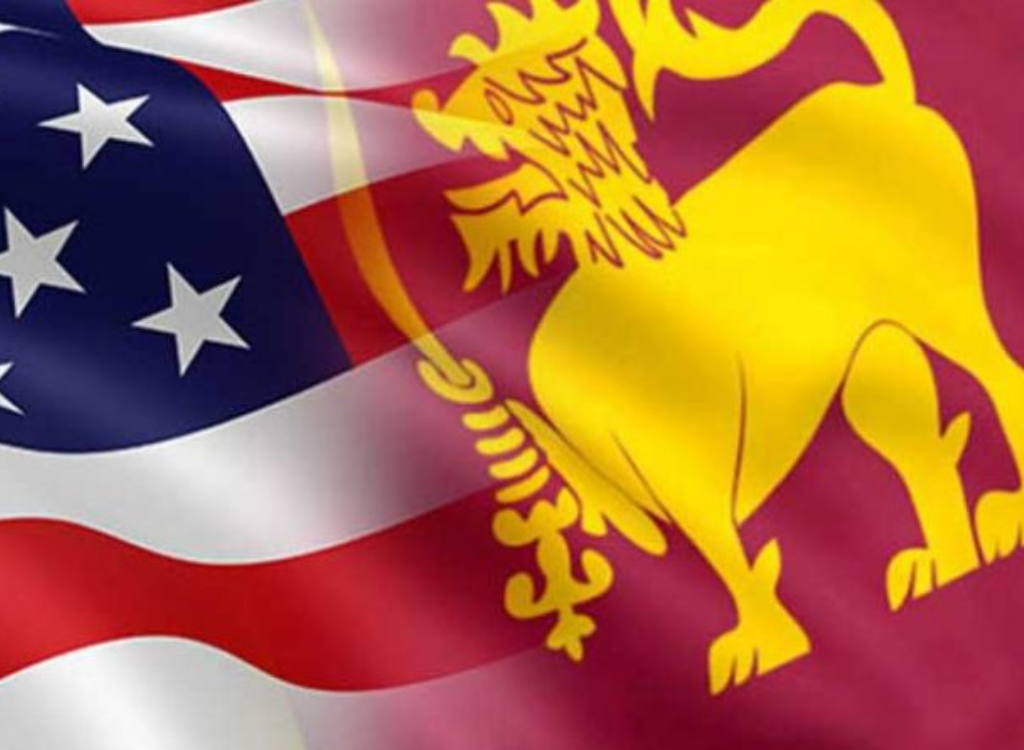
While Sri Lanka remains hopeful of concluding a proposed trade agreement with the United States before August, the Government has made it clear that it cannot extend zero-tariff access to US imports, unlike trade partners such as Vietnam and the Philippines.
Deputy Minister of Trade, Commerce, and Food Security R.M. Jayawardana told The Sunday Morning that negotiations with the US are ongoing, with the Government pushing for concessions to bolster Sri Lanka’s struggling export sector.
However, he stressed that Sri Lanka lacks the economic capacity to reciprocate with duty-free access for American goods.
“We are unable to offer zero-tariff access. Other countries may have the economic capability to do so, but we are unable to go for such discussions,” Jayawardana said, adding that final decisions now rest with the US delegation. “We expressed our needs and the relief we are seeking, which are presently being discussed. We are hoping to come to a mutual understanding on this.”
His remarks come in response to a growing debate over Sri Lanka’s approach to US trade negotiations.
In Parliament last week, New Democratic Front MP Ravi Karunanayake called for immediate zero-tariff access to US exports, arguing that the country’s trade imbalance with the US, with exports exceeding $3.1 billion and imports at just $300 million, leaves room for such a concession.
Despite this, Jayawardana’s position underscores the Government’s cautious approach to tariff reform amid fiscal constraints and ongoing commitments under the International Monetary Fund (IMF) programme.
At the Committee on Public Finance (COPF) on 7 March, Finance Ministry Deputy Secretary A.K. Seneviratne confirmed that the Government plans to phase out the Ports and Airports Development Levy (PAL) over five years and the CESS over three.
These para-tariffs have long been criticised for complicating trade, but their removal must be executed in a “budget-neutral” manner, per IMF requirements.
In its Letter of Intent to the IMF in December 2023, the Government pledged to avoid new tax policies or incentives that could erode state revenue.
Any future tax measures, including changes that could affect trade negotiations, would require IMF consultation.
“We are fully committed to trade liberalisation, which is critical for attracting investment and boosting productivity growth,” the Government said in its statement to the IMF, noting that any adjustments would be supported by technical assistance and measures to enhance local business competitiveness.










Leave a comment