
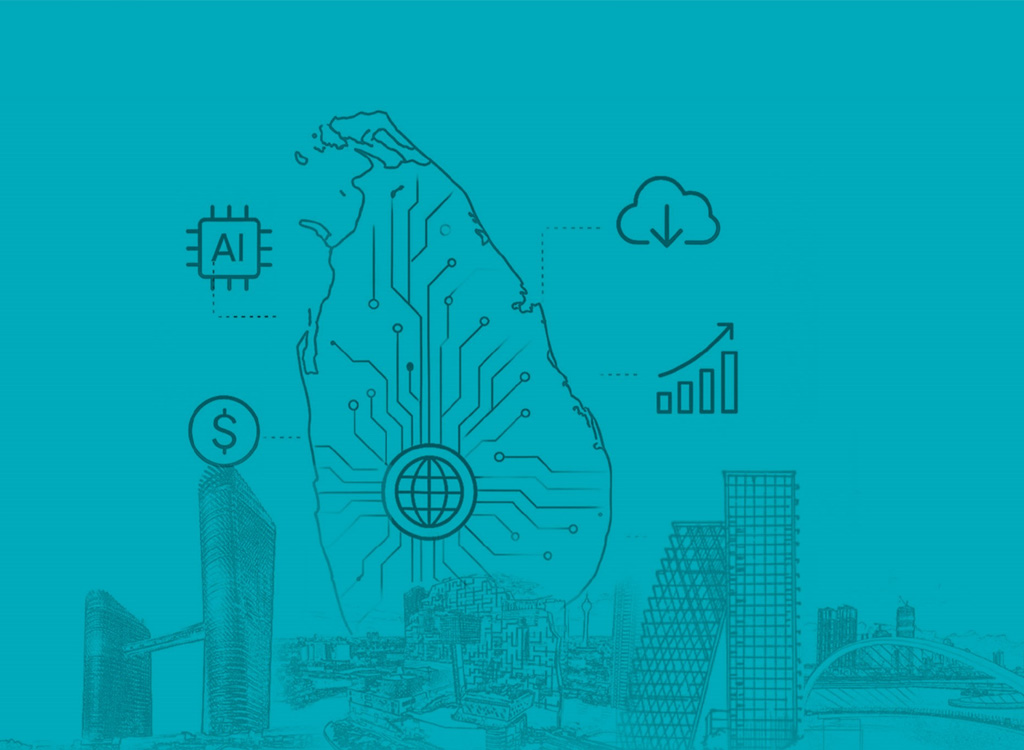
Sri Lanka must move beyond its current cyclical economic recovery and focus on creating a structurally driven growth model, notes the Institute for Policy Studies (IPS) in its annual flagship report, Sri Lanka: State of the Economy 2025.
The report highlights the urgent need to transition from short-term gains to long-term, productivity-based growth, underscoring the role of technology infusion and digitalisation as critical drivers of economic transformation.
While the economy has shown signs of improvement following the recent crisis, the IPS cautions that sustainable development will depend on Sri Lanka’s ability to integrate cost-effective digital solutions across key sectors.
However, significant challenges remain, including low national computer literacy, currently at 39%, and even lower in the estate sector at just 17.9%.
Despite these disparities, the report points to promising opportunities.
Digital innovation can enhance access to healthcare, education, and government services, especially in underserved communities.
Targeted investments in digital access for underprivileged schools, coupled with affordable services and improved digital literacy, could help reduce education inequality.
Nearly 42% of adults in the poorest 40% of the population are already using digital payments, a trend the IPS says can be leveraged to expand e-commerce and improve public service delivery, including transport systems.
The report also notes that digital extension services could transform the agriculture sector by empowering farmers with timely information and resources.
Furthermore, enhancing export competitiveness through product traceability could help Sri Lankan goods meet new international standards amid increasing global trade uncertainties.
As the country prepares to resume debt service obligations, the IPS stresses that embedding technology-driven solutions into policy and planning can help reduce trade costs and improve overall efficiency.
By adopting such an approach, the report concludes, Sri Lanka can craft a compelling narrative of resilient, post-crisis recovery, laying the foundation for inclusive and sustained economic growth.










Leave a comment