
By The Pulseline News Desk
Independent testing of all 19 coal consignments supplied by India-based Trident Chempar to Sri Lanka’s Lakvijaya Power Plant in Norochcolai has reportedly found that none met the required quality standard, with every shipment recording a gross calorific value (GCV) below the minimum reject level set under the procurement.
The findings, presented to Parliament’s Sectoral Oversight Committee (SOC) on Infrastructure and Strategic Development last week, have intensified questions over the quality of coal supplied to the country’s largest coal-fired power plant and the growing operational and environmental consequences.
The 2025-26 term tender awarded to Trident Chempar had specified a target GCV of 6,150 kilocalories per kilogram (kcal/kg), while 5,900 kcal/kg was established as the minimum acceptable level.
However, independent tests conducted by the Australian branch of Bureau Veritas, an accredited laboratory, found that all 19 consignments were below 5,900 kcal/kg.
All 19 consignments below rejection level
The tests were ordered after laboratory results submitted by Trident Chempar reportedly showed a mismatch with operational data recorded at the Lakvijaya coal power plant.
The SOC subsequently directed the Energy Ministry to conduct independent testing.
Samples retained by Lakvijaya Power Plant at the discharge port were sent to Bureau Veritas for testing, with the results now providing a shipment-by-shipment assessment of the coal quality.
The results were as follows:
Consignment 1: 5,426 kcal/kg
Consignment 2: 5,607 kcal/kg
Consignment 3: 4,901 kcal/kg
Consignment 4: 5,389 kcal/kg
Consignment 5: 5,503 kcal/kg
Consignment 6: 5,011 kcal/kg
Consignment 7: 4,762 kcal/kg
Consignment 8: 4,776 kcal/kg
Consignment 9: 4,924 kcal/kg
Consignment 10: 4,959 kcal/kg
Consignment 11: 4,831 kcal/kg
Consignment 12: 4,858 kcal/kg
Consignment 13: 4,959 kcal/kg
Consignment 14: 4,897 kcal/kg
Consignment 15: 5,822 kcal/kg
Consignment 16: 4,871 kcal/kg
Consignment 17: 5,789 kcal/kg
Consignment 18: 5,340 kcal/kg
Consignment 19: 4,943 kcal/kg
The seventh consignment recorded the lowest GCV at 4,762 kcal/kg, while even the highest result — 5,822 kcal/kg in the 15th consignment — remained below the 5,900 kcal/kg rejection threshold.
GCV measures the total heat released when a specified quantity of coal is completely burned and is a key indicator of the fuel’s energy content.
The independent results also appear to support earlier laboratory findings produced by Lakvijaya officials, which had reportedly been questioned because the testing institution was not considered accredited.
Growing mountain of ash
The quality issue has also raised concerns over the volume of ash generated at the power plant.
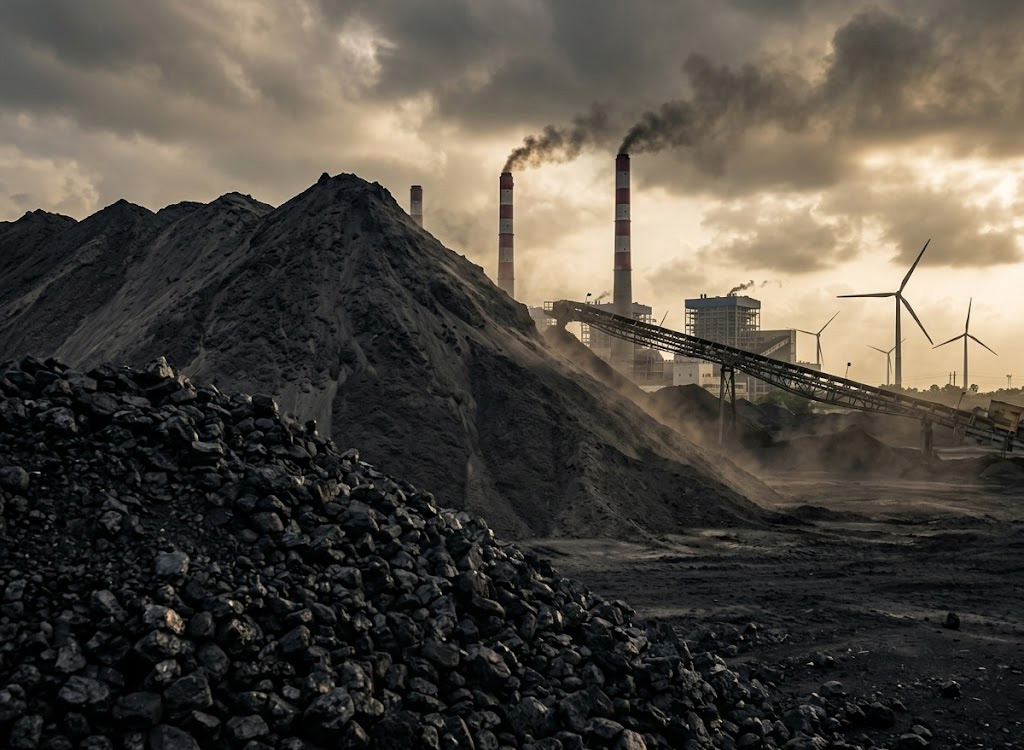
The burning of lower-quality coal has contributed to an increase in fly ash and bottom ash requiring handling, transportation, storage and disposal.
Energy sector analyst Vidhura Ralapanawe has reportedly said the ash pile at Lakvijaya has now reached around 12 to 13 metres in height, leaving it only about two metres below the top of the plant’s 15-metre wind barrier.
He said ash disposal at the site had been stopped in 2016 following pressure from communities and civil society groups over its environmental impact.
The plant had subsequently developed a mechanism to sell generated fly ash to cement manufacturers.
However, according to Ralapanawe, the lower-quality coal is now generating more ash than can be sold to third-party buyers, forcing the plant to resume dumping part of the excess.
He has estimated that the plant generates around 1,500 to 1,600 tonnes of ash a day, of which approximately 1,000 to 1,100 tonnes are sold to cement manufacturers. This leaves an estimated 400 to 500 tonnes requiring disposal each day.
Power plant reports higher ash costs
Energy Generation Lanka (EGL) (Pvt) Ltd, the successor company to the Ceylon Electricity Board, addressed the ash issue in a report submitted to the SOC.
While the company did not acknowledge additional dumping of ash, it reported an increase in the generation of both fly ash and bottom ash during the period under review.
EGL has said emissions from the plant had been monitored according to applicable environmental requirements and that measured emission parameters remained below the maximum permissible limits.
At the same time, the company has acknowledged that increased quantities of ash had raised the operational costs associated with its management and disposal.
According to EGL, Rs. 8.25 million was spent on disposing of additional ash.
However, the company has said the additional generation of fly ash had also resulted in increased revenue from sales, amounting to Rs. 90.39 million.
After deducting disposal costs, EGL had reported a net gain of Rs. 82.14 million from the additional ash generation.
The figures have nevertheless raised questions over whether the financial gains from selling additional ash adequately capture the longer-term environmental and operational costs associated with handling excess waste.
Delayed shipments and financial penalties
The quality concerns come against a wider backdrop of delays in Trident’s coal deliveries.
All 19 shipments reportedly arrived after their scheduled dates.
Lanka Coal Company (LCC) has recovered $36.496 million, together with penalties, but Trident has reportedly not responded to invoices relating to additional late fees.
The issue of delayed shipments has added another layer of concern as authorities prepare for the next coal procurement cycle.
New coal tender faces another delay
Meanwhile, Sri Lanka’s next term tender for the 2026-27 coal supply season has yet to be finalised, despite the award originally being expected around the middle or end of July.
The procurement covers approximately 2.28 million metric tonnes of coal, divided between two suppliers on a 70:30 basis.
Seven companies qualified for the tender:
Mohit Minerals Ltd
Taranjot Resources (Pvt) Ltd
Visa Resources (Pte) Ltd
Potencia LLC-FZ
Aditya Birla Global Trading (Singapore) Pte Ltd
A2A Trading FZE
GMR Metallurgical Resources AG of Switzerland
The appeals process concluded on August 3, and the decision is expected to be forwarded to Cabinet for approval.
Once Cabinet approval is granted, the successful bidders will have 14 days to submit their performance bonds.
The first shipment was initially scheduled to arrive on September 10 but has since been pushed to September 12.
Tight coal stocks raise pressure
The timing has become particularly sensitive because Lakvijaya’s existing coal stocks are expected to last only until around September 15 or 16, according to officials.
Authorities are also expecting a rejected shipment involving Taranjot to arrive in the meantime. If that shipment arrives before the first consignment under the new tender, officials estimate that the plant could have enough coal for another eight to nine days.
However, the narrow window leaves little room for further delays involving procurement, vessel positioning, the voyage or unloading.
The latest procurement also used a two-envelope procedure, which reportedly took longer than initially anticipated to evaluate.
With the first new shipment now expected only days before existing stocks run out, officials are facing another potentially tight transition.
The combination of substandard coal, delayed shipments, mounting ash, unresolved financial claims and a delayed new procurement has placed the country’s coal supply system under renewed scrutiny.
For a power system heavily dependent on Lakvijaya, the issue goes beyond procurement compliance. Ensuring that the plant receives coal of the contracted quality and that future tenders are completed on time will be critical not only for reliable electricity generation, but also for controlling the environmental and financial costs associated with the plant’s operations.













Leave a comment