
By The Pulseline News Desk
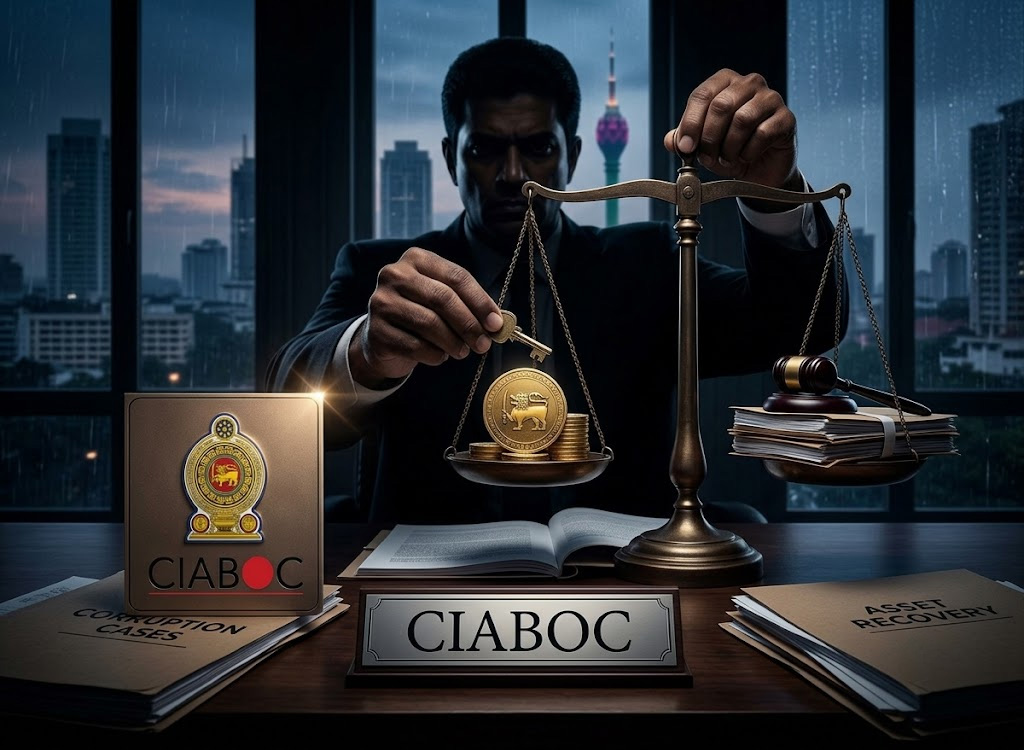
The government has proposed a series of amendments to the Anti-Corruption Act that would significantly expand the powers of the Commission to Investigate Allegations of Bribery or Corruption (CIABOC), including allowing its Director General to refrain from prosecuting an accomplice who provides a full and truthful disclosure about an alleged offence.
The proposed amendments to the Anti-Corruption Act, No. 9 of 2023 have been published pursuant to an order issued by President Anura Kumara Dissanayake, alongside changes concerning the legal effect of several provisions of the Act.
One of the more significant changes relates to individuals who are themselves implicated in bribery or corruption offences but subsequently assist investigators.
Under the proposed amendment, the CIABOC Director General would have the power not to charge or prosecute an accomplice accused of an offence if that person makes a full and true disclosure of all circumstances within their knowledge relating to the offence.
The provision effectively creates a form of cooperation mechanism within corruption investigations, potentially allowing investigators to obtain evidence against principal offenders from individuals who were themselves involved in an alleged offence.
Greater power to withdraw cases
The proposed amendments would also expand the Director General’s powers regarding prosecutions already initiated before Magistrates’ Courts.
Section 67 of the 2023 Act is to be amended to enable the Director General to withdraw charges filed in Magistrates’ Courts.
The move would give the anti-corruption commission greater flexibility in managing prosecutions, although the exercise of such powers would remain subject to the legal framework governing the Commission.
Recovery of corruption proceeds
Another key proposal focuses on the financial consequences of corruption.
The amendments seek to enable authorities to obtain the value of property acquired or converted as a result of corruption, strengthening provisions aimed at ensuring that individuals convicted of corruption cannot retain benefits obtained through unlawful conduct.
The proposed changes would also make any grant, appointment, benefit or advantage obtained as a result of corruption unlawful from the date of conviction.
This provision could have implications beyond the direct financial proceeds of corruption, potentially affecting positions, privileges or other advantages obtained through corrupt conduct.
The broader objective is to ensure that corruption does not merely result in criminal punishment but also leads to the removal or recovery of benefits obtained through the offence.
Wider staffing powers for CIABOC
The proposed legislation would also expand the pool of public officials who can be appointed to serve with the Commission.
Under the amendment, officers and servants of the provincial public service or the Police Force could be appointed to CIABOC, either temporarily or permanently.
The provision could allow the Commission to draw on a wider range of expertise and personnel when conducting increasingly complex corruption investigations.
A stronger enforcement framework
The proposed amendments come as the government seeks to strengthen the institutional framework for combating corruption following the introduction of the 2023 Anti-Corruption Act.
The proposed amendments to the existing law will introduce broader investigative and enforcement powers.
Of particular significance is the proposed cooperation mechanism for accomplices. If implemented, it could encourage individuals involved in corruption networks to come forward with information by offering the possibility of avoiding prosecution in return for complete and truthful disclosure.
However, the effectiveness of such a provision will ultimately depend on how the Director General exercises the discretion granted under the law and what safeguards are established to prevent selective or arbitrary application.
The proposed amendments therefore represent another important step in the government’s anti-corruption agenda, but their real impact will depend on how effectively the strengthened legal powers are translated into investigations, prosecutions and recovery of illicit assets.
With corruption remaining a major concern in Sri Lanka’s governance and economic recovery efforts, the amendments are likely to face close scrutiny as they move through the required legislative process.













Leave a comment