
By The Pulseline News Desk
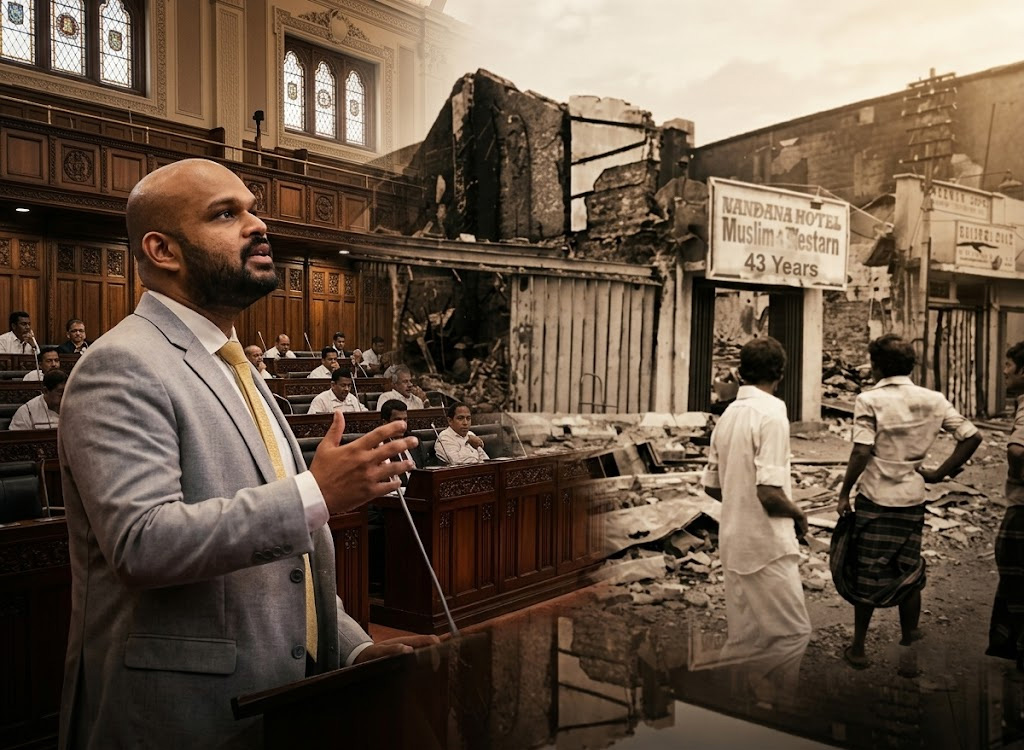
Tamil members of parliament (MPs) have marked the 43rd anniversary of Black July in Parliament, paying tribute to the victims of the anti-Tamil violence of July 1983 while renewing long-standing calls for truth, justice, and accountability.
The commemorations took place against the backdrop of one of the darkest chapters in Sri Lanka’s post-independence history, with Tamil parliamentarians reflecting on the enduring impact of the violence on the country’s Tamil community.
Batticaloa District MP Shanakiyan Rasamanickam said the passage of more than four decades had done little to address the wounds left by the events of July 1983.
In a message posted on X, Rasamanickam said 43 years had passed since the atrocities that “forever changed the lives of the Tamil people,” yet there had been “no justice and no accountability.”
He said the memories of those who lost their lives, the homes and businesses destroyed, and the trauma endured by survivors continued to weigh heavily on the Tamil community.
“The memories of those killed, the homes burned, and the scars left behind remain unhealed in the hearts of Tamils,” he said, underscoring that the demands for accountability remain as relevant today as they were decades ago.
A defining moment in Sri Lanka’s history
Black July refers to the anti-Tamil pogrom that erupted across Sri Lanka in July 1983 following the killing of 13 Sri Lankan soldiers by the Liberation Tigers of Tamil Eelam (LTTE) in Jaffna on July 23.
Beginning on July 24, widespread attacks targeting Tamil civilians spread across Colombo and other parts of the country. Mobs attacked Tamil homes, businesses, and places of worship, often using electoral registers to identify Tamil-owned properties. Many victims were killed, assaulted, or displaced as violence continued for several days.
While estimates vary, hundreds of Tamils were killed, with some reports placing the death toll at over 1,000. Thousands of homes and businesses were destroyed, and tens of thousands of Tamils were displaced, many seeking refuge in temporary camps before emigrating overseas.
The events of Black July are widely regarded as a turning point that accelerated Sri Lanka’s decades-long civil war, strengthening support for Tamil militant groups and deepening ethnic divisions that shaped the country’s political landscape for years to come.
Continuing calls for accountability
Successive governments have acknowledged the suffering caused by Black July, but victims’ groups and Tamil political representatives have consistently argued that meaningful accountability for the violence has remained elusive.
Human rights organisations have long documented allegations that state authorities failed to prevent the attacks and that investigations into those responsible were inadequate. Calls for independent investigations, reparations, and institutional reforms have continued both domestically and internationally.
For many Tamils, Black July remains not only a historical tragedy but also a symbol of unresolved grievances relating to justice, reconciliation, and equal citizenship.
Memory and reconciliation
Annual commemorations of Black July are held in Sri Lanka and across the Tamil diaspora to remember those who lost their lives and to reflect on the consequences of ethnic violence.
This year’s parliamentary remembrance once again highlighted the enduring significance of Black July in Sri Lanka’s national consciousness, with Tamil MPs stressing that genuine reconciliation requires confronting the past, acknowledging the suffering of victims, and ensuring accountability.
Forty-three years after the violence, the anniversary serves as a reminder of the lasting human cost of ethnic conflict and the continuing challenge of building trust between communities while addressing unresolved demands for justice.







Leave a comment