
By The Pulseline News Desk
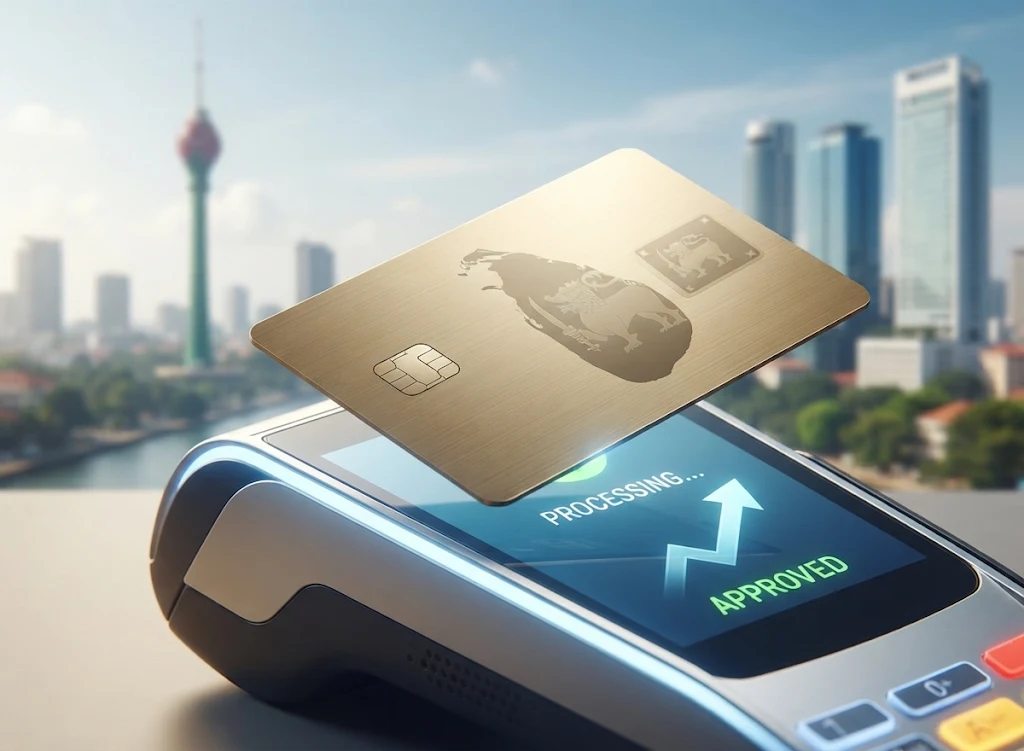
Sri Lanka’s active credit card base expanded by 1% in September, adding more than 22,000 cards during the month, as consumer credit continued to grow amid the country’s economic recovery.
The latest data released by the Central Bank of Sri Lanka (CBSL) showed that the number of active credit cards increased by 22,011 in September, bringing the total to 2,319,794 by the end of the month.
The increase takes the growth in active credit cards to 7.1% during the first nine months of 2026, representing an addition of 153,608 cards.
The expansion follows growth of 7.8%, or 157,730 cards, in 2025 and 4.8%, or 91,371 cards, in 2024.
The recovery in economic activity, improved consumer confidence and aggressive credit card promotions by banks amid declining interest rates have supported the expansion in credit card usage over the past two years.
However, the pace of expansion has come under pressure following the CBSL’s decision to reverse its accommodative monetary policy stance and raise its key policy interest rate by 100 basis points in May.
Although active credit cards increased by 25,720 in May, growth slowed in June following the monetary policy tightening.
Analysts have also pointed to changing household spending patterns, suggesting that tighter monetary conditions and fuel rationing introduced in March may have prompted consumers to exercise greater caution in their spending.
Credit card growth has nevertheless remained positive, reflecting the gradual recovery in economic conditions and the renewed willingness of consumers to access credit.
Some analysts have also attributed the expansion to the return of customers who had reduced or discontinued credit card usage during the economic crisis because of exceptionally high interest and penalty charges.
Sri Lanka’s credit card market experienced a contraction in 2023, when the number of active cards declined by 1.8%, or 39,991, following the country’s sovereign default in 2022 and the subsequent sharp increase in interest rates.
CBSL aggressively raised policy rates from April 2022 to contain soaring inflation, making borrowing significantly more expensive for households and businesses.
Monetary conditions subsequently eased as inflation declined, with CBSL reducing its key policy rates eight times from June 2023.
Inflation eventually moved into deflationary territory in September 2024 before returning to positive territory in August 2025.
However, renewed inflationary pressures following a sharp depreciation of the rupee and increases in fuel prices prompted CBSL to reverse course and tighten monetary policy in May 2026.
The latest credit card figures suggest that consumer credit demand has remained resilient despite the shift towards tighter monetary conditions, although the impact of higher borrowing costs and changing household spending patterns will remain important factors influencing growth in the coming months.











Leave a comment