
By The Pulseline News Desk
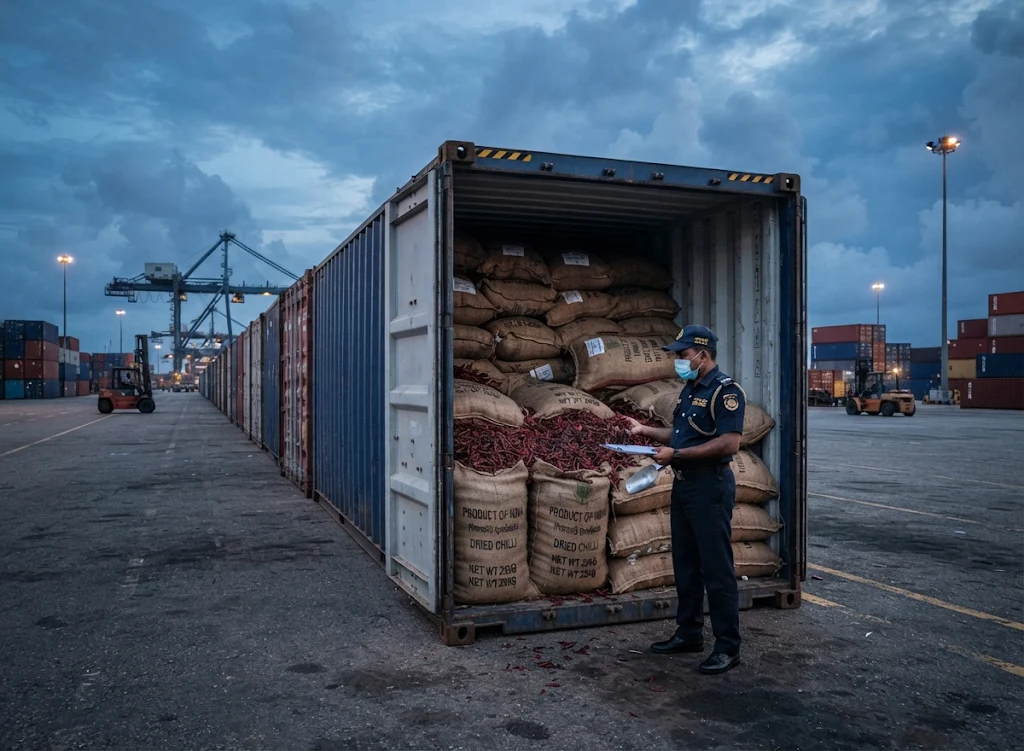
The wholesale price of dried chillies in Sri Lanka could exceed Rs. 2,500 per kilogram in the coming weeks, amid concerns over a potential market shortage caused by the continued detention of imported stocks at Sri Lanka Customs.
The Essential Food Importers’ Association has reportedly warned that nearly 120 containers carrying dried chillies remain held at Customs warehouses, raising concerns over supply disruptions and further price increases.
Association Secretary P. Subramaniam has told the media that importers had completed the necessary documentation, paid applicable Customs duties and other charges, and undergone the required inspection procedures. However, the consignments have not been released due to an issue relating to quality standards.
He has said the wholesale price of dried chillies, which previously stood at around Rs. 1,050 per kilogram, had already increased to approximately Rs. 2,000, with the possibility of exceeding Rs. 2,500 if the situation continued.
The shortage has also affected domestic chilli powder manufacturers, with several factories reportedly forced to suspend production due to a lack of raw materials, resulting in substantial financial losses.
However, Trade Minister Wasantha Samarasinghe has called on importers to ensure that all imported dried chillies meet the required quality standards, warning against attempts to exploit supply shortages for excessive profits.
The Minister has told the media that there was no restriction on importing dried chillies provided the consignments complied with the country’s quality requirements.
He has suggested that the problem could be linked to improper transportation practices, noting that chillies stored in freezers due to the El Niño phenomenon and other conditions may have been transported to Sri Lanka in ordinary containers.
Sri Lanka normally imports between 250 and 350 containers of dried chillies, the Minister has said, adding that a similar incident had not been reported previously.
He has identified concerns involving 14 containers imported in October and another 52 containers brought into the country in November.
Samarasinghe has urged importers to prioritise quality compliance and cautioned them against creating artificial shortages to secure higher profits at the expense of consumers.
With importers demanding the urgent release of detained stocks and the Government insisting on compliance with quality standards, the situation has raised concerns over the potential impact on consumer prices, domestic food processing industries and the availability of an essential cooking ingredient.
The immediate challenge for authorities is to resolve the Customs clearance issue without compromising food safety standards, while preventing further disruption to market supplies.












Leave a comment