
By The Pulseline News Desk
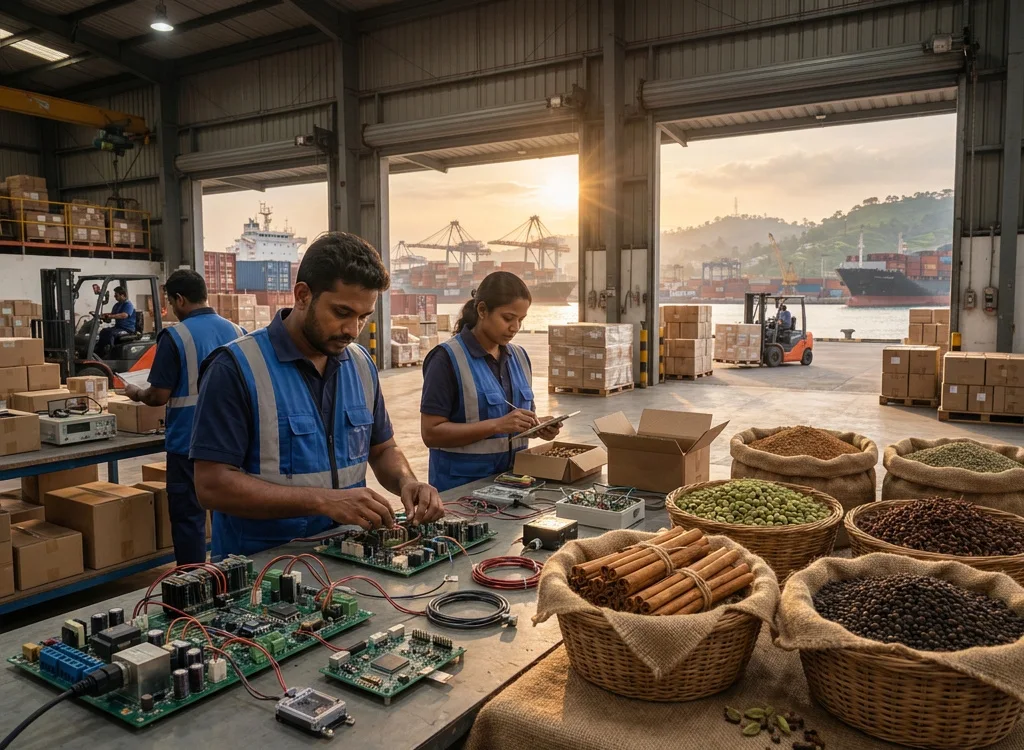
Rising export earnings from electrical and electronic components and spices have helped cushion Sri Lanka’s export performance this year, as its two traditional export pillars, apparel and tea, struggle with weaker international demand.
Official data has reportedly shown that export revenue from electrical and electronic components surged 59.6 percent to US$566.1 million during the first 10 months of 2026 compared to the corresponding period last year.
Spices and concentrates have also recorded strong growth, with export earnings increasing 35.4 percent during the same period, reflecting their growing contribution to the country’s export basket.
The gains from these two sectors have helped offset declining revenues from apparel and textiles and tea, which remain among Sri Lanka’s most important export earners.
Export revenue from apparel and textiles have fallen 5.5 percent to US$4.2 billion during the January-October period, while tea earnings have declined 6.8 percent.
Officials have attributed the weaker performance in both sectors partly to reduced international demand amid the ongoing crisis in the Middle East, which has affected buying patterns and export markets.
The pressure on these traditional export industries has also forced the Government to revise its annual export revenue expectations.
The Export Development Board (EDB) has lowered its 2026 export revenue target by 7.5 percent to US$18.5 billion from the original US$20 billion, citing sluggish overseas demand, particularly for tea and apparel.
The latest figures highlight the changing composition of Sri Lanka’s export sector, with electrical and electronic components and value-added agricultural products emerging as important sources of export growth.
However, the continued dependence on apparel and tea means that weakness in these established industries remains a significant challenge to achieving the country’s broader export ambitions.













Leave a comment