
By The Pulseline News Desk
Sri Lanka’s Government has defended its revised tourism revenue calculation methodology, rejecting opposition allegations that the authorities retrospectively changed the formula to present a more favourable picture of the country’s tourism earnings.
The issue came under scrutiny in Parliament on Monday (23), with Opposition MP Namal Rajapaksa questioning why the Sri Lanka Tourism Development Authority (SLTDA) introduced a new revenue calculation method in May 2026 and applied it retrospectively from January.
Rajapaksa raised concerns that the revision could have been intended to conceal declining foreign exchange earnings from tourism, particularly following the sharp drop in arrivals and revenue recorded in March and April. “Today there is a question in society whether you introduced this formula retrospectively to inflate and show a higher figure for declining tourism revenue,” he has told Parliament.
The SLTDA revised its methodology in May, incorporating country-specific tourist arrival figures, average lengths of stay and daily expenditure estimates to calculate tourism earnings. The revised methodology resulted in higher estimated revenue figures for the January-April period compared with the earlier calculations.
The timing of the revision attracted attention as Sri Lanka’s tourism industry faced external pressures following the outbreak of the latest Middle East conflict, including US and Israeli strikes on Iran from February 28, which disrupted international travel and affected tourism movements.
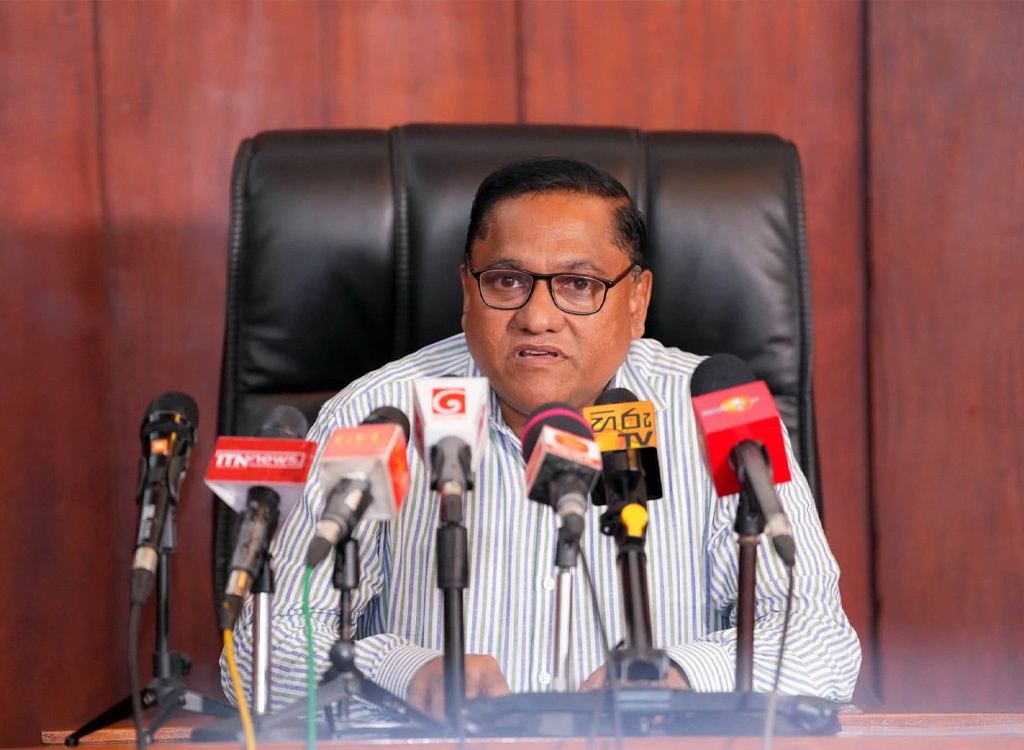
However, Tourism Minister Vijitha Herath has rejected claims that the Government had manipulated the figures, insisting that the revised methodology was based on an internationally recognised United Nations tourism framework.
He has explained that the new calculation used a different sample size and a revised approach to estimating tourist expenditure.
Under the revised methodology, estimated average daily spending per tourist was reduced from US$182 to US$143. “It is according to that calculation that a decrease in revenue is shown, not because of the arrival of so-called budget tourists,” Herath has said, rejecting suggestions that lower-spending visitors were responsible for the reported changes.
The Minister has also outlined Sri Lanka’s leading tourism source markets, identifying India as the country’s largest market, followed by the United Kingdom. Six European countries, including Germany, are among the top ten source markets.
Deputy Tourism Minister Ruwan Ranasinghe has pointed to international travel disruptions as another major challenge facing the industry.
He has said more than 3,000 flights had been cancelled due to conflicts in the Middle East and the Russia-Ukraine war, affecting international travel patterns and tourism-related activity.
Ranasinghe has also cited longer-term financial indicators to defend the industry’s performance, saying tourism earnings in rupee terms had increased from Rs.712 billion in 2018 to Rs.967 billion in 2025.
Collections from the Tourism Development Levy had also doubled from Rs.2 billion to Rs.4 billion over the same period, he has added.
The parliamentary exchange highlights the continuing debate over how Sri Lanka measures tourism’s contribution to foreign exchange earnings, particularly at a time when the country is seeking to strengthen its external reserves and reduce pressure on its balance of payments.
While the Government maintains that the revised methodology provides a more accurate assessment of tourism expenditure, the retrospective application of the new formula has raised questions about the comparability of historical revenue figures.
The challenge for the authorities will be to ensure that tourism statistics remain transparent, consistent and credible, particularly as the industry remains a critical source of foreign exchange and employment for the recovering economy.








Leave a comment