
By The Pulseline News Desk
The Human Rights Commission of Sri Lanka (HRCSL) has found that Sri Lanka Customs violated a writer’s constitutional rights by continuing to detain two Tamil-language books for more than six months, recommending their immediate release.
In its recommendation in Case No. HRC/KIL/031/26, the Commission concluded that the continued seizure of the books authored by B. Piratheepan violated his fundamental rights to freedom of expression, equality before the law and freedom from discrimination based on language, as well as his right to enjoy and promote his culture and use his language.
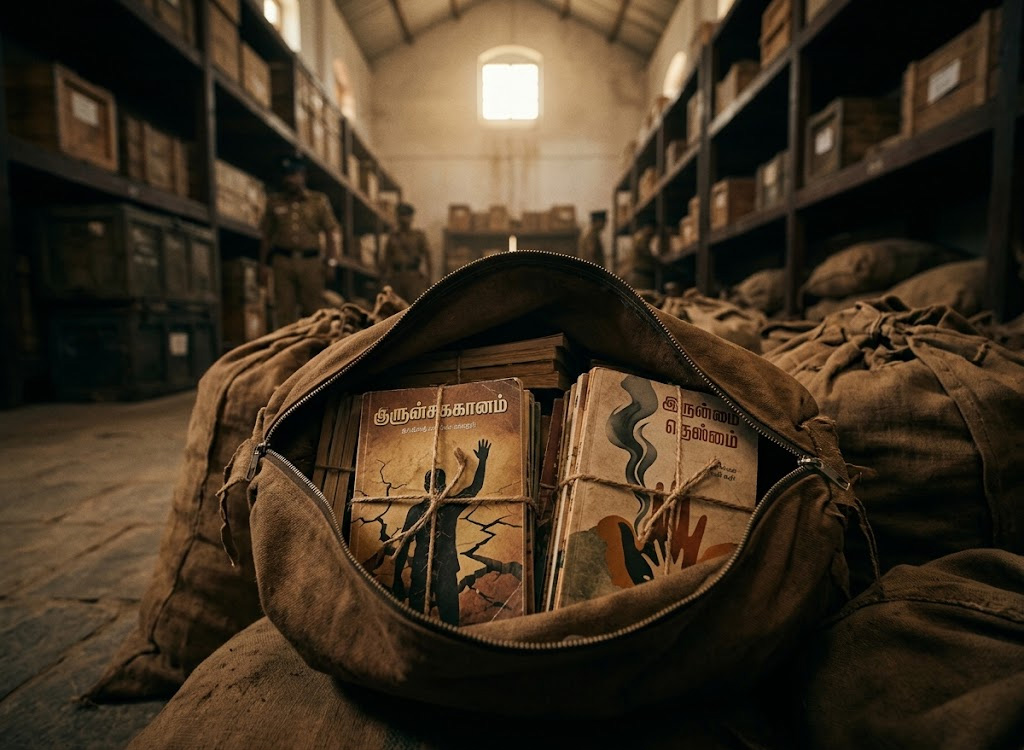
The four books, Ippothum Inge Irandu Thesangalthaan, Elluttal Nan Yuttam Ceykiren, Bayangaravaathi and Cyanide, were printed in Chennai, India, and imported into Sri Lanka.
Sri Lanka Customs seized the publications on 27 March 2026, informing the author that they would be released only after obtaining approval from the Ministry of Defence.
Following an opinion from the Arts Council of Sri Lanka and the State Literary Sub-Panel, two books, Bayangaravaathi and Cyanide, were released after experts determined that they were works of fiction.
However, 75 copies of Ippothum Inge Irandu Thesangalthaan and 147 copies of Elluttal Nan Yuttam Ceykiren remained in detention.
Customs failed to establish legal grounds
The HRCSL observed that none of the respondents involved in the inquiry wished to take direct responsibility for the continued detention of the two books, describing the handling of the matter as characterised by indecision and a lack of transparency.
Customs had purported to act under Section 135, read with Section 12 and Schedule B of the Customs Ordinance, which allows restrictions on publications containing material calculated to lead to acts punishable under Section 120 of the Penal Code.
However, relying on the Supreme Court judgment in Mohamed Razik Mohamed Ramzy v. Officer-in-Charge, Criminal Investigation Department & Others (SC (FR) No. 135/2020), the Commission emphasised that intent remains an essential element of Section 120.
The inclusion of the term “calculated” in Schedule B of the Customs Ordinance reinforces the requirement to establish intent, the Commission observed.
It concluded that both causation and intent must be established to justify legal consequences under Section 120 and that the Director General of Customs had failed to demonstrate that he had formed a reasonable opinion that these elements were present in the case.
Content deemed insufficient to justify seizure
The Commission acknowledged that passages in the two books, including allegations that the Sri Lankan military had attacked civilians and that the Janatha Vimukthi Peramuna had supported violence, could be considered shocking, offensive or disturbing by some readers.
However, it found no evidence that the passages were calculated to incite disaffection against the State, promote ill-will between communities or produce other harmful outcomes covered by Section 120 of the Penal Code.
The HRCSL noted that the passages contained allegations that some readers might reflect on and others might dismiss, but lacked the potency expected of material likely to incite disaffection or promote communal hostility.
It stressed that Section 120 concerns expressions that are directly inciteful and capable of influencing large sections of the population to engage in harmful conduct.
The continued detention of the books therefore amounted to prior censorship and was neither necessary nor proportionate to the legislative objectives of Section 120, the Commission concluded.
It also noted that the disputed content was claimed to be already in the public domain and had previously appeared in Tamil-language newspapers. The respondents had not demonstrated that the material had contributed to disaffection or promoted ill-will between communities.
Concerns over language discrimination
Separately, the HRCSL found that the sequence of events and the explanations provided during the inquiry indicated that the Tamil language of the publications had played a pivotal role in their seizure.
Several State institutions that handled the books had treated them with prejudice and suspicion that would not have been directed towards publications in another language, the Commission observed.
Given that the books had remained in detention for more than six months without a formal procedure, the HRCSL found a violation of Article 12(1) of the Constitution, which guarantees equality before the law and equal protection of the law.
It also determined that the continued seizure amounted to discrimination on the grounds of language, violating the author’s rights under Article 12(2).
The Commission further highlighted the constitutional protection afforded to the freedom to promote one’s own culture and use one’s own language under Article 14(1)(f).
It noted that Tamil-speaking people constitute a linguistic minority in Sri Lanka and recalled that the marginalisation of Tamil speakers throughout the country’s post-independence history had been one of the root causes of the ethnic conflict.
State officials should therefore be particularly sensitive to the implications of treating Tamil-language publications with prejudice, the HRCSL said.
The Commission emphasised that the freedom to promote one’s culture and use one’s language includes the autonomy of citizens to decide what cultural and literary material they wish to produce and consume. State interference should be permitted only in the limited circumstances provided for under Article 15 of the Constitution.
Immediate release recommended
Concluding its inquiry, the HRCSL found that the continued seizure of Ippothum Inge Irandu Thesangalthaan and Elluttal Nan Yuttam Ceykiren violated the author’s constitutional rights to freedom of expression, non-discrimination and the enjoyment and promotion of his culture and language.
The Commission accordingly recommended that the Director General of Sri Lanka Customs forthwith release all detained copies of the two books.
The recommendation was issued by the HRCSL.










Leave a comment