
By The Pulseline News Desk
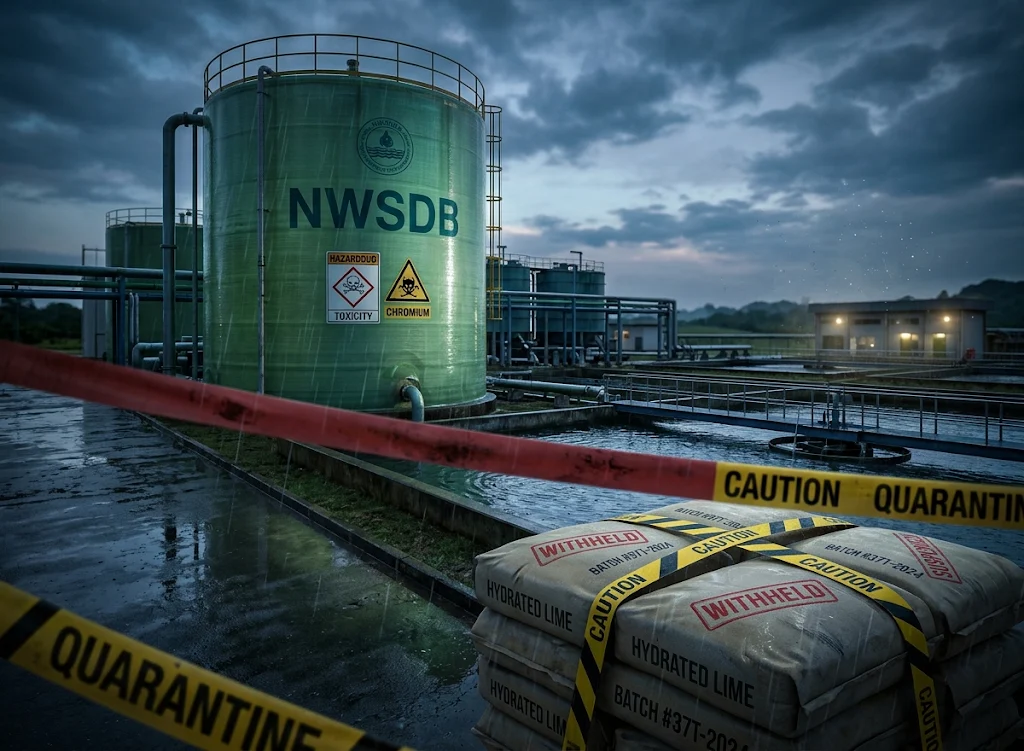
The National Water Supply and Drainage Board (NWSDB) has temporarily withheld the use of 37 tonnes of hydrated lime, a chemical used in drinking water treatment, after an internal laboratory test had detected chromium levels 58% above the recommended limit.
The consignment was reportedly tested by the NWSDB’s central laboratory, which had recorded a chromium concentration of 19 milligrams per kilogram (mg/kg), compared with the prescribed limit of 12 mg/kg.
According to reports, the chemical, also known as calcium hydroxide, is used in water treatment processes. However, the NWSDB has decided not to release the affected stock for use while further investigations are carried out.
NWSDB Chairman A.M.P.C.T. Bandara has been quoted in the media as saying that a committee comprising specialists from the Board and two university professors had been appointed to examine the matter and determine the appropriate course of action, including the possibility of making a claim against the supplier.
He has said a subsequent test conducted by the Sri Lanka Standards Institution laboratory had recorded a chromium concentration of 11 mg/kg, below the prescribed limit.
Despite the differing test results, the Board has withheld the relevant stock as a precautionary measure.
“At present, we are doing chemical treatment using another batch,” Bandara has said.
Meanwhile, retired NWSDB water treatment specialist Nihal Ratnayake has told the media that hydrated lime was generally applied at a rate of approximately five milligrams per litre of water.
He has observed that, given the relatively small quantities used in water treatment, the stock could potentially be used for a limited period if no alternative was available. However, he has cautioned against its continuous use.
Sri Lanka maintains drinking water quality standards based on Sri Lanka Standard SLS 614, which the Government says is aligned with World Health Organization recommendations and international best practices.
NWSDB operates a network of 36 laboratories responsible for testing water and wastewater quality.
The incident has highlighted the importance of stringent quality controls over chemicals used in public drinking water supplies, particularly where laboratory findings raise questions about compliance with prescribed standards.
The committee’s findings are expected to guide the Board’s decision on the future use or disposal of the affected consignment and any action against the supplier.












Leave a comment