
By The Pulseline News Desk
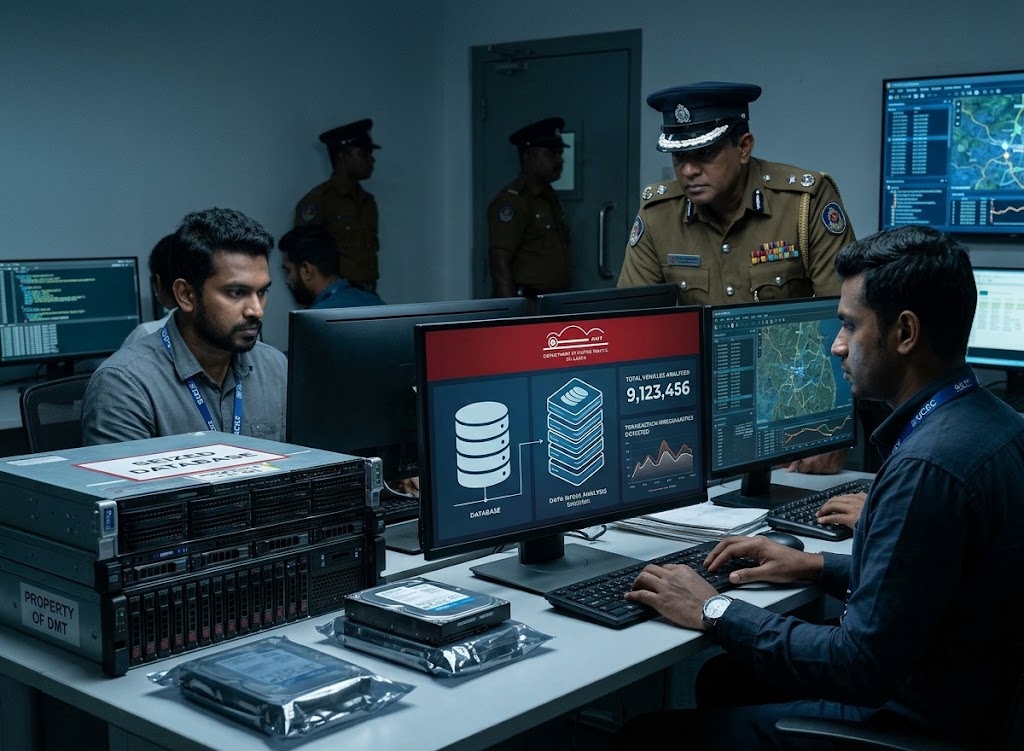
Police have commenced a detailed analysis of a digital data system seized from the Department of Motor Traffic’s (DMT) head office in Narahenpita, as investigations into suspected irregularities involving the department’s records continue.
The analysis is being conducted under the direction of the Walana Central Anti-Corruption Unit, with a team of data analysts examining the seized system at a secure location, police have said.
The database, maintained by the DMT since 1995, contains records relating to approximately nine million vehicles registered in Sri Lanka. Its seizure is expected to provide investigators with access to a substantial body of historical vehicle registration information.
The system was taken into police custody last Friday following an order issued by the Panadura Magistrate’s Court.
The operation was carried out with the assistance of technical specialists and institutions with expertise in digital forensics and information technology, reflecting the technical complexity of examining a database of this scale.
Officials from the Sri Lanka Computer Emergency Readiness Team (SLCERT), professors from the University of Colombo School of Computing (UCSC), scientists from Sri Lanka Telecom (SLT), and officers of the Walana Central Anti-Corruption Unit participated in the operation.
The involvement of these specialists is intended to facilitate the technical examination of the seized system, while ensuring that the analysis is conducted at a secure location.
The database, which spans more than three decades of vehicle registration records, could provide investigators with an extensive historical information base for examining transactions and identifying potential irregularities.
However, police have not yet disclosed the specific findings of the ongoing analysis or indicated how long the examination is expected to take.
The investigation also highlights the growing role of digital forensic expertise in examining suspected corruption and administrative irregularities within government institutions, particularly where large volumes of historical electronic records are involved.
Further developments are expected as investigators continue examining the seized data system.












Leave a comment