
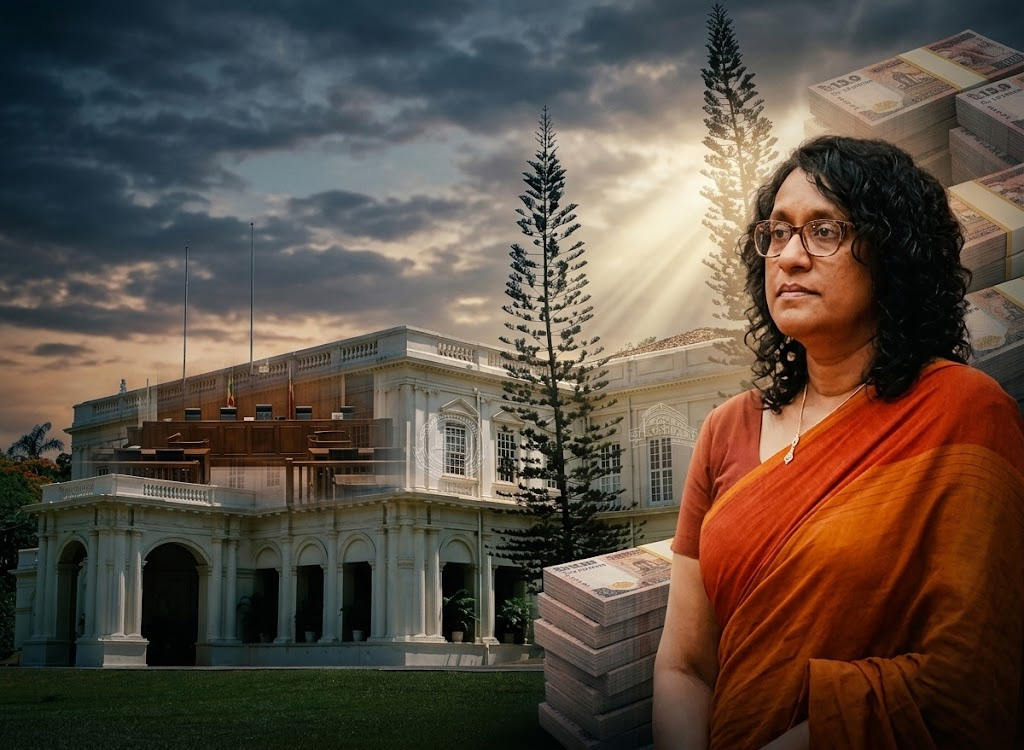
Some properties converted into courthouses, others earmarked for “economically viable” use as government moves to offload the upkeep of Sri Lanka’s presidential real estate
By The Pulseline News Desk
Some of Sri Lanka’s Presidential palaces have already been converted into courthouses, while others will be repurposed for economically viable use, Prime Minister Harini Amarasuriya told Parliament on Wednesday (22), as she disclosed the mounting cost of maintaining properties that have largely sat unused since the presidency’s public standing was upended in 2022.
Responding to a question from opposition member of parliament (MP) Chaminda Wijesiri, the Prime Minister said Rs. 13.9 million had been spent maintaining eight Presidential palaces during 2025 and the first six months of 2026.
“The Government has to spend funds to maintain Presidential palaces until they are put to economically viable use,” Amarasuriya told the House.
Properties built for prestige
The disclosure puts a number on a question that has lingered in Sri Lankan politics for years: what to do with a network of presidential residences and retreats scattered around the country, many of them built or expanded during periods when the executive presidency projected a very different image of itself.
Sri Lanka’s presidential estate includes some of the country’s most historically loaded properties. The President’s House in Colombo traces its lineage back to the residence of British colonial governors, repurposed after independence and later thrust into the national spotlight in mid-2022, when it was overrun by protesters during the mass uprising that eventually forced a sitting president to flee the country. Temple Trees, on Galle Road, has functioned as an official residence for both presidents and prime ministers and carries its own colonial-era history. In Kandy, the President’s Pavilion — originally built for British governors near the Temple of the Tooth — is now used only occasionally, mainly around the Esala Perahera.
Other properties have drawn sharper criticism. A so-called “presidential palace” built in Jaffna in 2012, on land seized from local Tamil residents, became a symbol of the excesses of the war and post-war years. Constructed at a cost running into billions of rupees, it was never used as an actual residence and has since been floated for alternative uses, including a proposed lease to a private university.
From residences to courtrooms
Against that backdrop, the government’s move to convert some palaces into courthouses reflects a broader push to find practical use for buildings that otherwise generate cost without return. Sri Lanka’s court system has long grappled with case backlogs and space constraints, making repurposed state properties an appealing, low-cost option compared to new construction.
The Prime Minister’s remarks suggest the remaining palaces not suited to judicial use will instead be steered toward commercial or other economically productive purposes, though she did not detail which properties fall into that category or what form that use might take.
A recurring cost, a recurring question
The Rs. 13.9 million maintenance bill for the roughly 18-month period is unlikely to settle the debate. Presidential palaces have periodically resurfaced in Parliament as symbols of a bloated and, in some cases, historically fraught state apparatus — properties that continue to cost the public money regardless of whether any president actually uses them.
With the government now on record committing to repurpose the remaining palaces, MPs are likely to keep pressing for specifics: which properties, on what timeline, and at what projected return, if any, once they move off the state’s maintenance books.






Leave a comment