
By The Pulseline News Desk
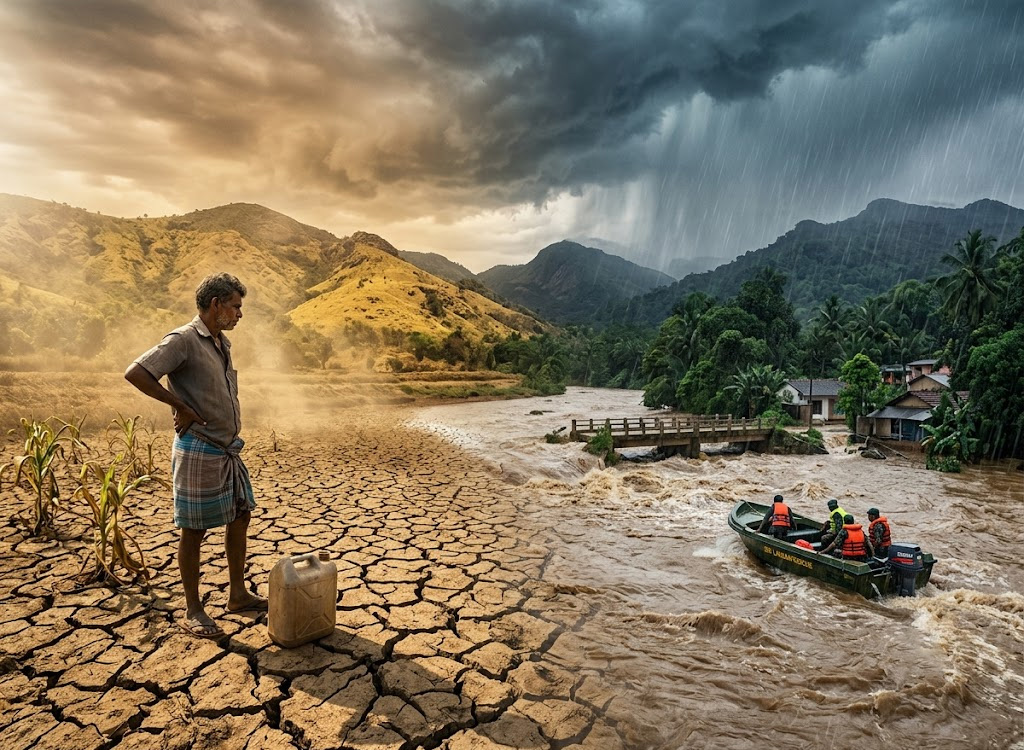
Sri Lanka’s weather in the second half of 2026 is shaping up to be a story of extremes — parched fields giving way, within months, to swollen rivers. That is the picture painted by Minister of Environment Dr Dammika Patabendi and the Department of Meteorology, who used a public briefing to sound an unusually urgent alarm about the El Niño phenomenon now taking hold across the island.
A faster, fiercer onset than expected
Patabendi told reporters that the El Niño condition has developed more severely than earlier forecasts suggested, and that it could reach its peak stage well ahead of schedule — potentially as early as November. That timeline compresses the window the country has to prepare, and it explains the sense of urgency behind this week’s briefing, which was called specifically to raise public awareness of what lies ahead.
According to the Minister, the coming months will unfold in two distinct phases. July, August, and September are expected to bring severe dry weather to much of the country, followed by a sharp reversal: heavy rainfall from October through December. It is precisely this swing — from drought conditions to potential flooding within the same year — that officials are most anxious to prepare the public for.
A global phenomenon, a local emergency
Patabendi was careful to frame El Niño as a worldwide climatic event rather than a problem unique to Sri Lanka, but he made clear that state institutions are not waiting for the situation to worsen before acting. Government agencies, he said, are already implementing measures to confront the impact.
Still, the Minister’s message to the public was direct: cooperation will be essential. He appealed to citizens to conserve both water and electricity in the months ahead, warning that a severe drought remains a real possibility. Beyond the immediate strain on resources, Patabendi cautioned that the ripple effects of El Niño could extend into livelihoods and public health — raising the risk of job losses, broader economic setbacks, and health complications tied to the extreme conditions.
Meteorologists: Conditions intensifying toward “very strong”
The scientific picture presented by Director General of the Department of Meteorology Ajith Wijemanna reinforced the Minister’s concerns. Wijemanna said the El Niño event, which had until recently remained weak on a global scale, has now progressed to a moderate stage and continues to intensify — with the potential to become very strong.
Typically, he noted, an El Niño episode runs its course over 10 to 12 months, and this one is expected to bring the same dual character officials described: stretches of drought interspersed with, or followed by, intense rainfall.
The regional breakdown matters. Wijemanna said rainfall is expected to increase in the Western, Sabaragamuwa, Kandy, Nuwara Eliya, Galle, and Matara districts, while other parts of the country face a different threat entirely — drier conditions and rising temperatures. That divergence means the national response cannot be one-size-fits-all; water-stressed districts and flood-prone ones will need very different forms of preparation, often at the same time.
What comes next
The Meteorology Department’s near-term outlook offers a rough timeline for households and businesses to plan around: some rainfall is expected to return by late September, with heavier rains arriving from October onward. Officials have flagged the final months of the year as a period of particular concern, cautioning that flood conditions could develop as the rains intensify.
For now, the government’s message is one of vigilance rather than panic — but the underlying warning is unmistakable. With El Niño potentially peaking earlier than anticipated, the runway for households, farmers, and local authorities to prepare for both drought and flood risk is shorter than originally thought. Officials are urging Sri Lankans to treat the coming months as a period demanding real conservation and readiness, not just routine seasonal caution.










Leave a comment