
By The Pulseline News Desk
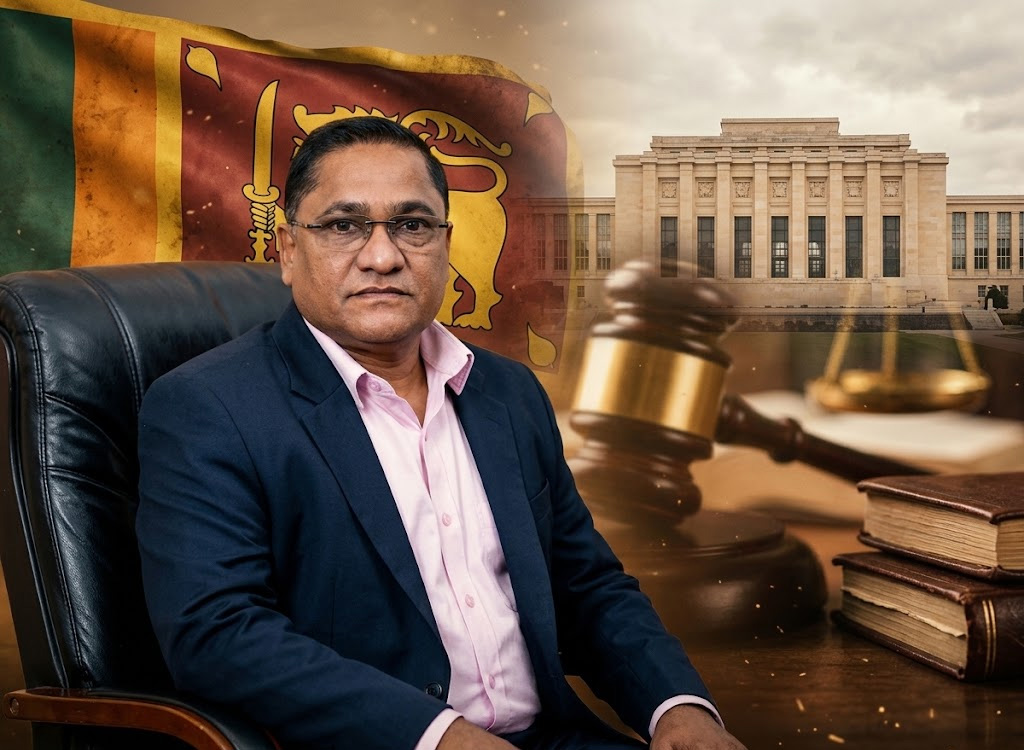
Sri Lanka is preparing for another closely watched session of the United Nations Human Rights Council (UNHRC) in Geneva, with Foreign Minister Vijitha Herath leading a delegation expected to defend the Government’s progress on reconciliation, accountability and human rights.
Herath will attend next month’s UNHRC sessions with a technical team from Colombo and officials from Sri Lanka’s Permanent Mission to the UN in Geneva. The delegation is expected to brief the international community on steps taken in response to previous UN resolutions and the Government’s position on outstanding human rights concerns.
The visit comes as the Office of the UN High Commissioner for Human Rights (OHCHR) prepares to present a written update on Sri Lanka.
The Government has already responded to an advanced copy of the written update shared by the OHCHR several weeks ago, according to diplomatic sources.
The upcoming review is particularly significant because it will take place under UNHRC Resolution 60/1, which provides for continued monitoring of developments relating to reconciliation, accountability and human rights in Sri Lanka.
The OHCHR update is also expected to cover the continuing evidence-gathering and case-building work of the OHCHR Sri Lanka Accountability Project, based in Geneva.
The accountability mechanism has remained one of the most contentious aspects of the UN’s engagement with Sri Lanka. Successive Sri Lankan governments have expressed reservations over external mechanisms that could lead to investigations or prosecutions, while the UN and rights groups have continued to press for credible accountability for alleged violations.
Sri Lanka’s human rights issue has been before the UNHRC for more than a decade, particularly following the end of the civil war in 2009.
Over the years, the Council has adopted several resolutions calling for progress on reconciliation, accountability, transitional justice and institutional reform. The Government has at different times supported, rejected or sought to modify elements of these initiatives.
The present administration has attempted to position itself differently, stressing domestic mechanisms, institutional reform and reconciliation while maintaining that Sri Lanka should determine its own accountability processes.
The Geneva session will therefore provide an important opportunity for the Government to demonstrate whether its commitments are translating into measurable progress.
For Colombo, the challenge will be to convince the international community that reforms and reconciliation efforts are producing tangible results while resisting measures it considers intrusive or inconsistent with national sovereignty.
For the UN and rights groups, the focus is likely to remain on whether Sri Lanka is making sufficient progress on accountability, addressing unresolved cases and creating credible mechanisms to deal with the legacy of the conflict.
The forthcoming session could consequently become another test of the Government’s ability to balance domestic political expectations with international scrutiny.
With the OHCHR continuing to monitor developments and preserve information relating to alleged past violations, Sri Lanka’s engagement with Geneva is unlikely to be limited to the issues raised at next month’s session. The country’s response to reconciliation, accountability and human rights will remain an important part of its international diplomatic agenda.








Leave a comment