
By Vox Civis
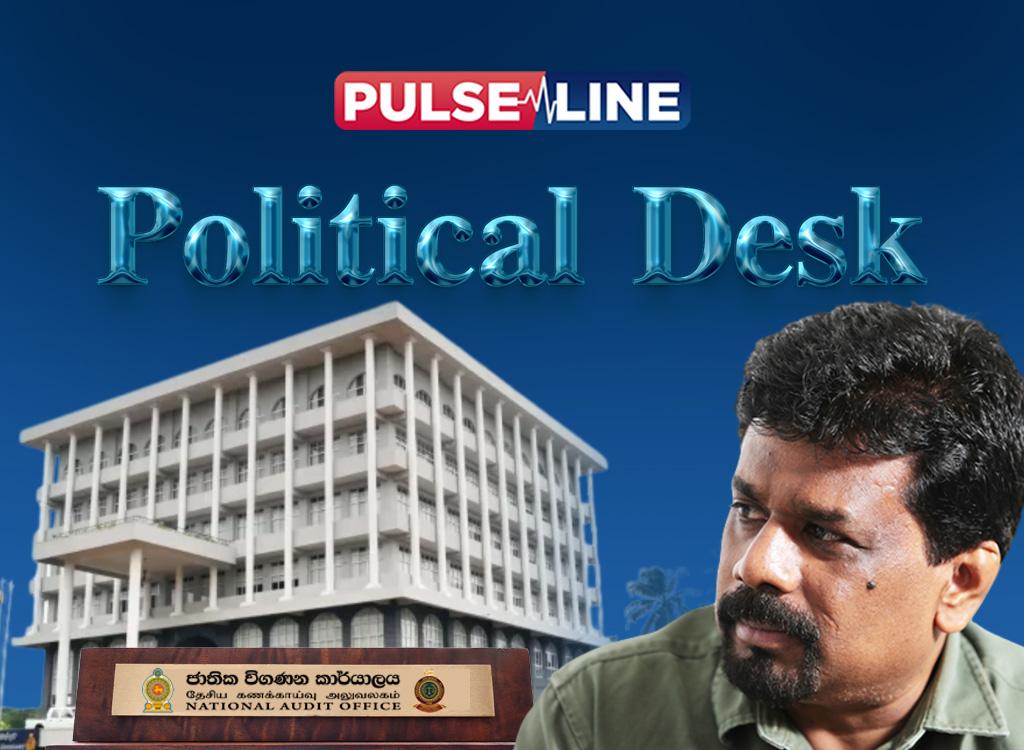
In the months leading up to last year’s election, one slogan towered above the rest, repeated with the force of a moral decree: “Accountability – first, second, and third.” It was the current President’s rallying cry, the ethical anchor upon which he promised to rebuild a battered nation. He invoked the Auditor General with almost reverential insistence, positioning financial oversight as the indispensable foundation of clean governance.
At the time, this resonated deeply with a public exhausted by alleged theft, opacity and political impunity. But in the hard light of governing, slogans have a short half-life. And today, as Sri Lanka confronts a cascading political and economic crisis triggered by an unprecedented natural disaster, the gap between promise and performance has widened into something profoundly serious.
What has taken shape over the past year is not just administrative delay or political miscalculation. It is a pattern – a series of troubling choices and silences – that together call into question whether the administration truly intends to institutionalise accountability, transparency and rule-based governance, or whether the campaign rhetoric was merely a tactical narrative deployed to capture public sentiment in a moment of national vulnerability.
Vacancies, delays and excuses
Few examples illustrate this better than the inexplicable failure to appoint a permanent Auditor General despite the position lying vacant since April 2025. This, being the very office that the President repeatedly described as the “heartbeat of accountability.”
This state of affairs has formed the backdrop to all kinds of allegations pertaining to corrupt activities in the post disaster milieu with aid – both in cash and kind – flowing in from all directions but with little accountability as to how they are being utilized or distributed. This is in addition to the massive aid package unveiled by the government for those affected by the disaster with allegations of political favouritism in the granting of this assistance, growing louder by the day.
To highlight the point, the Sri Lanka Grama Niladhari Association alleges that political pressure from local politicians and grassroots activists of the National People’s Power (NPP) has created a situation where disaster-compensation payments cannot be carried out properly or fairly. Sumith Kodikara, the convenor of the Association, told media that Grama Niladharis across the country are facing intense pressure to take steps to issue disaster loans to individuals aligned with the ruling party, even when some of those individuals have not been affected by the disaster.
Speaking to the media in Kandy regarding political pressure directed at Grama Niladharis involved in disaster-response activities, Kodikara added that unless such political interference is stopped without delay, officials will be pressured into giving compensation exclusively to ruling party supporters.
Violation of the law
He alleged that NPP local activists have even created specific formats to list individuals who have not fallen victim to the disaster but are listed to be granted compensation. This, he pointed out, is a serious violation of the law. Unfortunately, the state entity that should ideally be keeping an eye on the current goings on – the Auditor General’s Department – has been rendered redundant for no other reason than the apathy of the current political leadership in dithering over the appointment of a head since April.
For seven months, acting Auditor General G.H.D. Dharmapala has been performing the full responsibilities of the office. More importantly, key parliamentary oversight mechanisms like the Speaker, COPE and COPA, have all attested to his competence. Last week the National Audit Office Trade Union Collective is reported to have formally written to the President urging his appointment, underscoring his capability and the urgency of ending the vacuum, at least in light of the present circumstances. And yet, nothing.
Many suspect that the delay in the appointment to this key state entity which no less than the current President described as the ‘heart of government’ is due to the inability to find a candidate pliable to the administration. It will be noted that key positions in the state apparatus, such as the Secretary to the Treasury, Secretary of Public Security, Head of the Bribery Commission, Head of the CID have all been handed out to those connected with the ruling party at some point in time.
In a government that promised accountability as its central organising principle, the continued failure to appoint an Auditor General can no longer be treated as a technical lapse but rather a political signal. Besides, a nation emerging from bankruptcy cannot afford an oversight void at the apex of its audit machinery. But that is precisely what it has been made to endure.
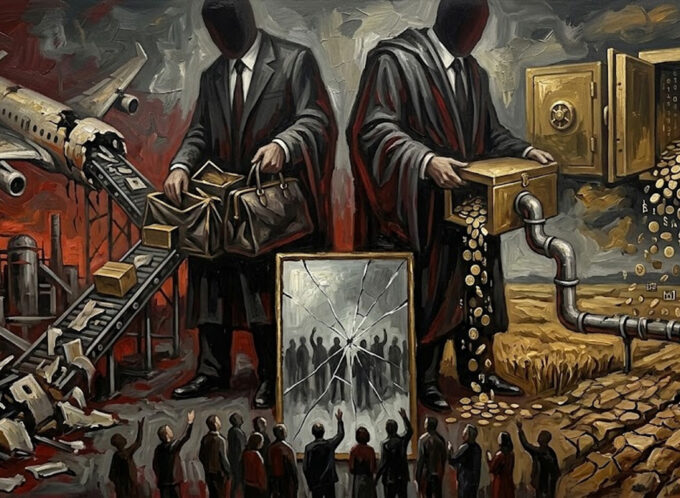
The situation is no better in other key state institutions. SriLankan Airlines, a perennial fiscal black hole draining the Treasury of billions annually, has been operating without a CEO for eight months. The absence of leadership in an entity so critical to national finances suggests indifference, inability to act decisively or vested interests at play – none of which matches the reformist image the administration attempts to project.
A telling parliamentary recordThese contradictions do not seem isolated. They trace back to a revealing moment in June 2023, when the previous Ranil Wickremesinghe led administration introduced the Asset Declaration Act – a key administrative reform recommended by the IMF to strengthen transparency and curb corruption. At the time, all three JVP MPs, including the current President and current Prime Minister, voted against it.
Their opposition was justified using ideological arguments about selective application and the need for deeper systemic transformation. Yet the underlying message was unmistakable; that even when presented with an internationally recognised instrument to strengthen integrity in public office, these MPs chose obstruction over reform.
Today that vote looks even more consequential. It reveals that the party now in charge of the state has long been skeptical of institutionalised accountability frameworks, unless they can be controlled on their own terms.
The accountability paradox
To demand accountability from others while resisting or delaying the mechanisms that enable accountability is a contradiction no amount of moral rhetoric can disguise. This contradiction has grown to become the defining political pressure point of the administration.
Instead of strengthening institutions, the government appears increasingly inclined to centralise authority, frame dissent as hostility and cast its political rivals as enemies of the state. Such behaviour may consolidate control in the short term, but it corrodes trust – slowly, deeply, and often irreversibly. Critics point to several decisions and trends that reinforce the perception of selective accountability. They include:
• Weaponising narratives for political gain – Campaign messaging portrayed the party as the singular moral alternative to a corrupt political class. But in power, the same administration appears less interested in applying the standards they preached about.
• Shielding political allies – Cases involving those perceived as close to the ruling circle appear to move slowly or not at all, while cases involving critics, journalists and opposition figures seem to attract disproportionate attention. The motor accident involving the disgraced former speaker where the police came in for harsh ridicule for the manner in which they acted to protect the politician and not the victims, is a case in point. Despite the victims and dozens of eye witnesses claiming the MP to be drunk, the police had failed to run a breathalyzer test even by afternoon the next day.
• Undermining legal processes – From public commentary on ongoing cases to inconsistent enforcement of legal directives, the government appears at times to be operating outside the spirit, if not the letter, of the law. Ministers to whom court orders have been issued – there are at least three – are yet to be served these orders. Yet these same individuals boldly conduct press conferences almost on a daily basis.
• Suppressing dissent – Trade unions, activists, student groups and professionals have increasingly found themselves labelled as obstacles or saboteurs for raising concerns. The culture of democratic contestation has been put under pressure.
• Decisions that unsettle the governance structure – Whether intentional or poorly communicated, several policy directions have raised alarm among constitutional scholars, and ethnic and religious communities concerned about centralised power being chipped away without consultation.
These concerns have not come from fringe actors alone. They have been voiced by civil society organisations, professional groups, academics, former public officials and a growing segment of the public who voted for change and not for a new form of centralised politicisation.
Moral authority issue
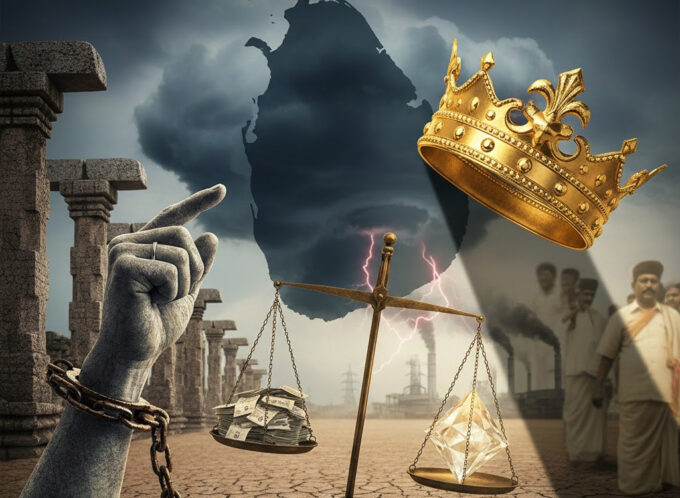
A government can survive unpopularity and even navigate an economic crisis if it displays honesty and consistency. What it cannot survive is the erosion of moral authority; the perception that it no longer practices what it preaches. The administration that demanded a higher moral standard from others is now facing that exact standard itself. And, it is not measuring up.
The still-vacant Auditor General’s post, the paralysis at SriLankan Airlines, the history of voting against the very asset declaration reforms being demanded of others, and the broader pattern of centralised power and selective transparency are not mere bureaucratic irregularities, but political indicators. They tell a story of a government that came to power using the language of accountability but now struggling to embody its substance.
Across the country, there is a palpable sense of growing frustration not just among opposition supporters, but among the very middle-class professionals, youth groups and diaspora networks that championed change. Their disappointment is particularly instructive because it stems not from ideological disagreement but from expectations betrayed.
Nation losing patience
These constituencies expected rule-based governance, not rule by political convenience; they expected independent institutions, not politically re-engineered ones; respect for legal processes, not rhetorical justification for bypassing them; economic clarity, not ad-hoc policy shifts; and transparent appointments, not unexplained vacancies; finally universal accountability and not selective targeting. Instead, many are beginning to see a drift toward opacity, an allergy to criticism, and a growing gap between word and deed.
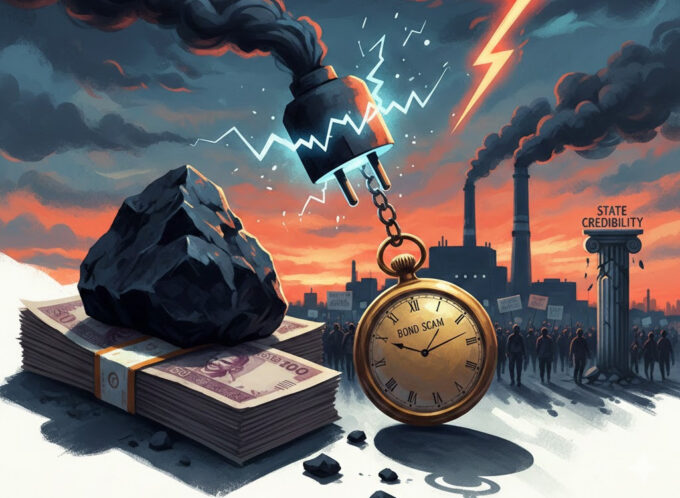
The current regime must understand that political legitimacy is not an infinite resource. It must be replenished through conduct, not words. In a fragile economy still surviving under IMF-mandated discipline, trust is not optional but is a currency more valuable than foreign reserves.
Besides, it seems that the government’s credibility problem is already seeping into the broader governance framework. Public servants seem confused because without clear guidance or stable leadership, decision-making is near impossible. It is a well-known fact that vacancies at the top of critical institutions exacerbate paralysis down the chain. Some of the immediate outcomes include:
• Wary investors – When regulatory decision-making appears politicised or erratic, capital has a tendency to retreat to safer havens.
• Professionals and youth feel disillusioned – Many who advocated for this administration now question whether their hopes were misplaced.
• Cautious international partners – Diplomatic and financial institutions assess governments not by their rhetoric but by demonstrated institutional coherence. The current regime has little to show on that score.
At a moment when Sri Lanka needs stability, discipline and clarity, the impression being created is one of improvisation, defensiveness and institutional weakening.
The bigger danger
Sri Lanka has been here before where governments swept into power on the wave of public frustration, end up becoming what they consistently condemned in the past. But the danger today is more acute not only because of the fragile state of the economy, but rather that the government frames itself as morally superior, ideologically pure and historically vindicated.
It is often observed that when moral certainty fuses with political authority, governance risks transforming into orthodoxy – impervious to advice, unresponsive to dissent, and unwilling to confront its own failures. If the administration continues along this path, the outcome is predictable: narrowing democratic space, deepening social polarisation and eroding institutional autonomy. Some of these symptoms are already visible.
Sri Lankans across all walks of life are not asking for miracles. They are simply asking for:
• A functioning Auditor General’s Office with a permanent, qualified head.
• Transparent appointments for all key state institutions including SriLankan Airlines.
• A consistent, rules-based approach to economic policy.
• An end to selective accountability and politically driven legal action.
• Respect for democratic norms, freedoms and dissent.
• A commitment to the unitary structure that maintains national cohesion.
• A government that communicates truthfully and does not shift narratives for convenience.
These are not ideological demands; they are fundamental prerequisites for rebuilding a nation that has been repeatedly bruised by governance failures.
Opportunity and obligation
The President still has political capital, but it is shrinking. The nation still listens to him, but with growing skepticism. His strongest asset remains his ability to inspire hope. But hope is a fragile emotion that thrives on evidence, not on slogans.
Appointing a permanent Auditor General, especially one endorsed by parliamentary oversight committees and the National Audit Office, would be a first step toward restoring lost credibility. Filling critical leadership positions without delay would signal seriousness while allowing legal processes to function independently would rebuild trust. And most importantly, demonstrating that accountability applies not only to adversaries but equally to allies would re-establish moral authority.
Sri Lanka cannot afford another cycle of disillusionment. Its economy is too fragile, its social fabric too frayed, its youth too disenchanted, and its global credibility too recently rebuilt to risk further erosion. If the government wishes to retain relevance, it must confront the widening gap between narrative and reality. It must recognise the gravity of public sentiment. It must pivot; decisively, transparently and courageously, toward genuine reform rather than defensive rhetoric.
Because ultimately, no government can sustain itself on slogans: not in this economy nor in this political climate, and certainly not after the lofty promises it made. What the country demands today is not another speech about accountability, but accountability itself – demonstrated, institutionalised and applied without fear or favour.
Until that happens, the legitimacy of this administration will remain in question and Sri Lanka’s path to recovery will continue to be obstructed not just by its past, but increasingly by its present









Leave a comment