
By The Pulseline News Desk
The decision whether to grant bail or remand a suspect in custody remains one of the most sensitive and demanding responsibilities entrusted to Sri Lanka’s trial judges, particularly magistrates, according to senior Supreme Court Justice Yasantha Kodagoda.
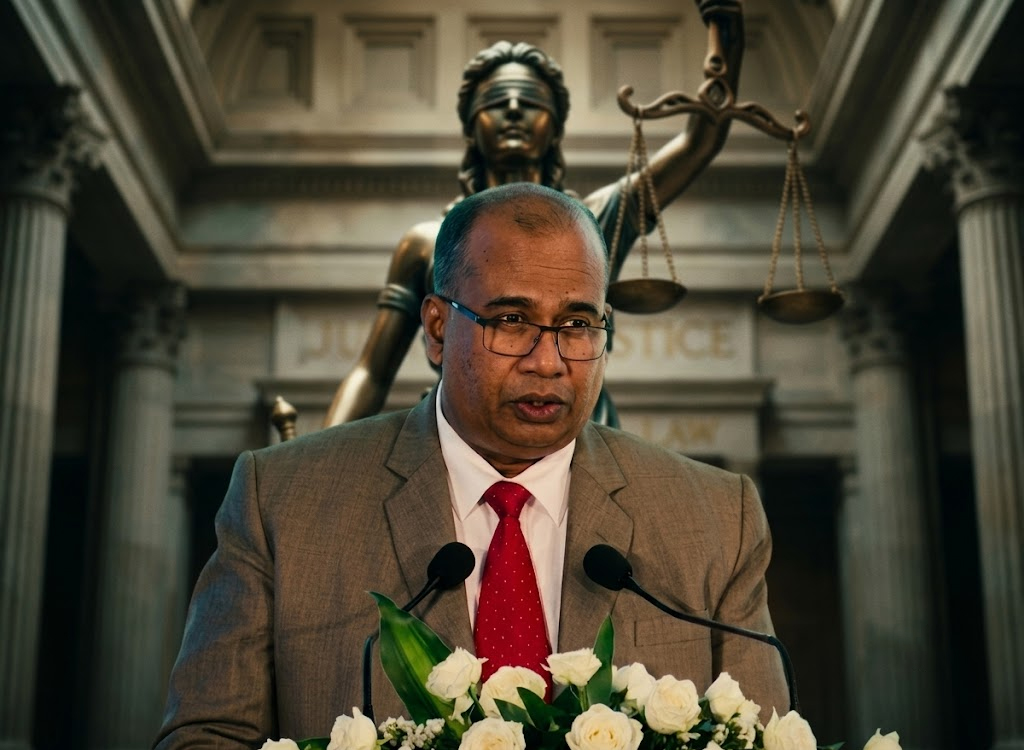
Speaking at a special lecture attended by members of the judiciary and legal scholars, Justice Kodagoda said judges are often required to make decisions with far-reaching consequences within a very limited period, balancing the constitutional rights of suspects with the interests of victims, the expectations of society and the requirements of the law.
His observations come at a time when court decisions in high-profile criminal and politically sensitive cases are increasingly subjected to intense public scrutiny and commentary, particularly through traditional and social media platforms.
Balancing liberty and justice
Justice Kodagoda noted that the arrest and remanding of a suspect directly affect an individual’s fundamental rights, making bail determinations among the most consequential decisions made by judges in courts of first instance.
Unlike appellate courts, which generally have the benefit of detailed legal arguments and extensive records, magistrates often have to assess the material before them within a short timeframe while applying complex legal principles to determine whether a suspect should be released or remain in custody pending investigations or trial.
The decision, he said, is not merely procedural but one that requires judges to carefully balance competing legal and public interests.
Victims’ expectations and presumption of innocence
Justice Kodagoda observed that although criminal proceedings formally involve the prosecution — including the police — and the defence, judges must remain conscious of the expectations of victims throughout the judicial process.
He noted that many victims and members of the public are unfamiliar with the legal doctrine of the presumption of innocence, one of the fundamental principles underpinning criminal justice systems.
As a result, he said, victims often expect that a suspect will be immediately remanded in custody, whereas judges are legally required to determine bail strictly in accordance with the applicable law rather than public expectations.
His remarks highlighted the tension that frequently exists between public perceptions of justice and the legal safeguards designed to protect the rights of accused persons until their guilt is established by a court of law.
Public perception shaped by politics
Justice Kodagoda also reflected on the growing public reaction to judicial decisions in politically sensitive cases.
He said court rulings in such matters are often viewed not through an objective or impartial lens but through the public’s own political affiliations and social attitudes.
Describing this phenomenon metaphorically, he said many people interpret judicial decisions through “tinted glass,” with preconceived political beliefs influencing how they assess court outcomes regardless of the legal reasoning behind them.
Such perceptions, he suggested, present an additional challenge for judges seeking to maintain public confidence while remaining faithful to the law.
Judges bound by law, not public opinion
Emphasising the legal framework governing judicial decision-making, Justice Kodagoda said judges are obliged to apply not only the written provisions of the law but also the intention of Parliament when legislation was enacted.
They are equally bound by legal principles developed through decisions of the superior courts, which provide authoritative guidance on interpreting statutes and constitutional provisions.
These obligations, he noted, require judges to base their decisions exclusively on legal principles and the evidence before them rather than public sentiment or political considerations.
Growing influence of media
Justice Kodagoda identified the modern media environment as one of the most significant challenges confronting the judiciary.
He observed that judicial proceedings and judges’ remarks are frequently reported selectively or taken out of context, particularly on social media platforms where partial or inaccurate accounts can spread rapidly.
According to him, media reports sometimes interpret court proceedings in ways that fit predetermined narratives rather than accurately reflecting what transpired in court.
During the lecture, he recalled one of his own experiences to illustrate how judicial observations could be misrepresented after proceedings.
The rapid growth of digital platforms, he suggested, has amplified pressures on judges who are expected to maintain impartiality while operating in an environment where individual court decisions can attract immediate public commentary and criticism.
Safeguarding judicial independence
Justice Kodagoda concluded that judges today perform their duties in an increasingly complex environment marked by heightened public expectations, political polarisation and intense media scrutiny.
Despite those challenges, he stressed that the judiciary must continue to uphold judicial independence and the rule of law by deciding cases solely on the basis of the Constitution, legislation and established legal principles.
His remarks underscored the broader reality facing courts in modern democracies: while judges cannot avoid public scrutiny, their legitimacy ultimately depends on their ability to remain independent of political influence, media pressure and shifting public opinion while faithfully administering justice.













Leave a comment