
By The Pulseline News Desk
A committee appointed to review how presidential pardons and general amnesties are granted to convicted prisoners has proposed a series of reforms aimed at making the process more transparent, consistent and accountable.
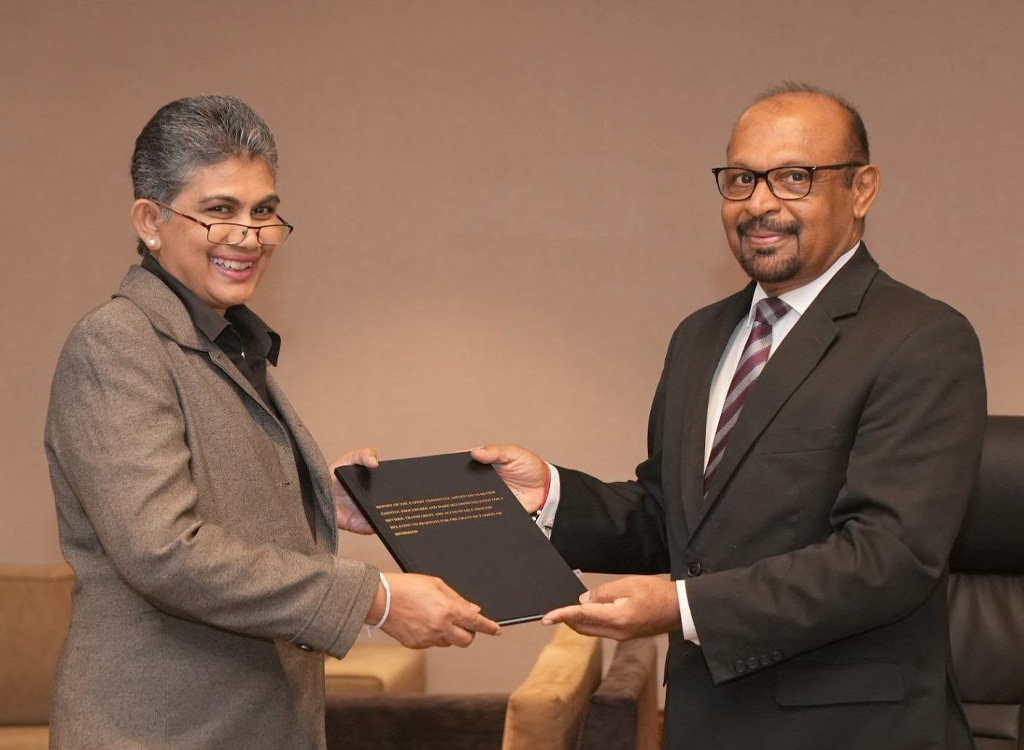
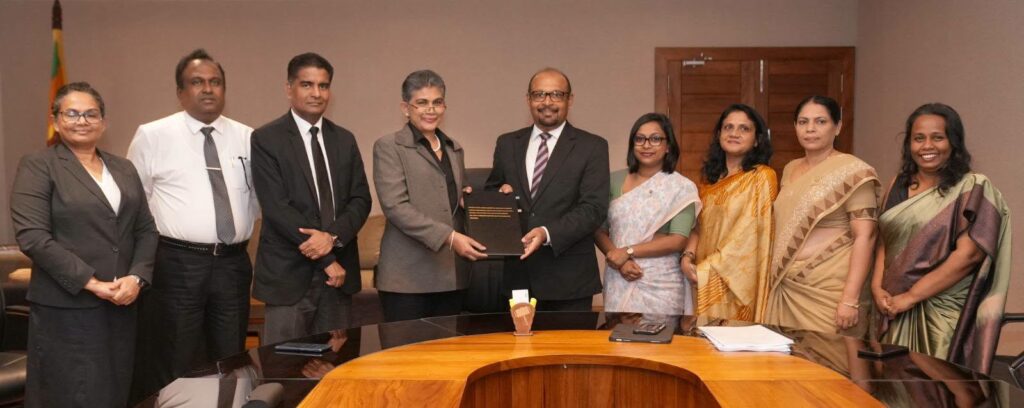
The 13-member committee, chaired by retired Supreme Court Justice S. Thurairaja, has submitted a 105-page report to Justice Ministry Secretary Ayesha Jinasena outlining recommendations for a new framework governing the exercise of one of the President’s most significant constitutional powers.
The committee was tasked with examining the existing mechanism for granting presidential pardons and recommending reforms that would establish a systematic, fair and transparent process for considering applications from convicted inmates.
Its report is expected to form the basis for drafting new instructions and guidelines governing the implementation of presidential pardons and general amnesties.
Strengthening oversight
Among the key recommendations is the establishment of advisory committees to oversee the implementation of presidential pardons and amnesties.
According to informed sources, these bodies would monitor whether decisions are carried out in accordance with established procedures and ensure that the pardon process is not vulnerable to abuse or undue influence.
The proposed oversight mechanism is intended to introduce greater institutional safeguards while preserving the President’s constitutional authority to grant clemency.
Although the committee’s full recommendations have not yet been made public, the emphasis on structured decision-making and monitoring reflects concerns that the existing process requires clearer rules and stronger accountability.
A constitutional power under scrutiny
Under Sri Lanka’s Constitution, the President has the power to grant pardons, reprieves and remissions of punishment to persons convicted of criminal offences.
The exercise of that authority has traditionally been regarded as an important constitutional safeguard, allowing clemency to be extended in exceptional circumstances such as humanitarian grounds, rehabilitation, miscarriage of justice or broader considerations of public interest.
General amnesties have also been granted periodically, particularly on national occasions such as Independence Day and Vesak, enabling groups of eligible prisoners to secure early release subject to prescribed conditions.
However, while the constitutional power itself is well established, the procedures leading to the exercise of that power have often attracted criticism for lacking transparency.
Calls for reform
Successive governments have faced questions over the criteria used to determine which prisoners receive presidential pardons, particularly in high-profile cases involving politically connected individuals or inmates convicted of serious offences.
Civil society organisations, legal practitioners and governance advocates have repeatedly called for greater transparency in the process, arguing that the absence of publicly available guidelines has created room for inconsistency and public suspicion.
Several controversial presidential pardons granted over the past decade generated legal and political debate, with critics questioning whether established procedures had been properly followed and whether adequate consultation had taken place before clemency was granted.
Those controversies have fuelled calls for a structured framework that balances executive discretion with procedural safeguards and public accountability.
Towards a rules-based process
The Thurairaja Committee’s recommendations appear to be directed at addressing many of those longstanding concerns.
By proposing formal guidelines and independent oversight mechanisms, the committee has sought to ensure that decisions on presidential pardons are based on consistent criteria rather than ad hoc considerations.
The proposed advisory committees would also create an additional layer of institutional scrutiny, helping authorities monitor implementation and detect any departures from approved procedures.
Legal observers note that while the President’s constitutional power to grant pardons cannot be removed through administrative guidelines, a clearly defined process can strengthen public confidence by ensuring that recommendations are evaluated fairly and transparently.
Next steps
The report has now been submitted to the Justice Ministry, which is expected to examine its recommendations before preparing the necessary instructions and procedural guidelines.
If implemented, the reforms would represent the most significant review of Sri Lanka’s presidential pardon mechanism in recent years, introducing a more structured framework for a constitutional power that has long been exercised with limited public visibility.
Whether the proposed changes ultimately lead to legislative reforms or administrative directives remains to be seen, but the committee’s recommendations are expected to contribute to broader efforts to improve transparency, accountability and public trust in the administration of criminal justice.











Leave a comment