
By The Pulseline News Desk
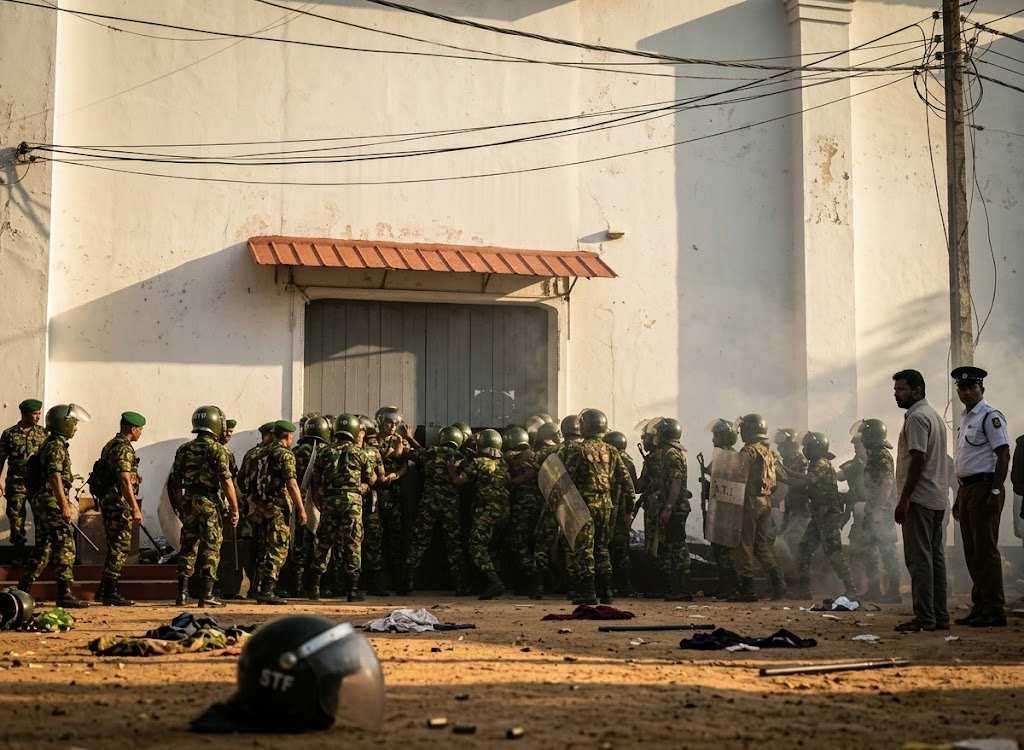
The People’s Joint Opposition (PJO) has called for a transparent, independent and comprehensive investigation into the deadly unrest at Negombo Prison, describing the violence of 5 and 6 July as one of the gravest prison tragedies in Sri Lanka’s history and warning that unanswered questions surrounding the incident have shaken public confidence in the country’s prison administration.
In a strongly worded statement, the PJO said the deaths of 33 people, including 23 inmates and 10 prison officials, represent a national tragedy that demands complete accountability from the State.
While welcoming the appointment of a committee of inquiry headed by a recently retired Supreme Court judge, the opposition alliance stressed that the investigation must be impartial and address what it described as a series of serious operational failures, administrative lapses and possible violations of both domestic and international law.
Questions over prison management
According to the PJO, one of the most troubling aspects of the incident was the failure to prevent violence from escalating after the initial clashes on 5 July.
The statement noted that although two deaths had occurred on the first day, the situation had reportedly been brought under reasonable control by the evening. Despite this, prison authorities allegedly failed to separate inmates from prison officers or take precautionary measures to prevent renewed violence overnight.
The following morning, prison officials were reportedly sent into areas where inmates were having breakfast. The opposition described the move as an inexplicable decision that heightened tensions and directly preceded the deadliest phase of the violence.
The PJO questioned who authorised the deployment and why officers were exposed to what it called an obvious and foreseeable risk.
Use of firearms under scrutiny
The opposition also called for a detailed examination of the use of lethal force during the riot, particularly reports that a prison security officer fired an automatic weapon through an opening in a prison door, resulting in multiple deaths and injuries among inmates.
It said investigators must determine whether the use of firearms was justified or whether the situation could have been managed through less extreme measures.
Delayed police intervention
Another major concern raised in the statement relates to the role of the police.
The PJO referred to a public statement by a Deputy Inspector-General of Police indicating that police and Special Task Force personnel had remained on standby from the evening of 5 July but were never instructed by prison authorities to intervene.
The opposition questioned why specialist police units were not deployed despite the escalating violence and asked whether failures in coordination between prison authorities, the police and the Ministry of Defence contributed to the loss of life.
Allegations of abuse during prison transfers
The statement also highlighted allegations that inmates transferred from Negombo Prison after the riot were subjected to severe assaults while being transported to Welikada, Angunakolapelessa and Boossa prisons.
According to the PJO, reports from prisoner rights advocates allege that transferred inmates suffered broken limbs, extensive injuries and, in some cases, died while in State custody.
The opposition called for a thorough investigation into who was responsible for organising and supervising the transfers and whether excessive force or unlawful violence was used against prisoners after the riot had ended.
State responsibility and human rights
The PJO argued that deaths occurring while individuals are in State custody engage Sri Lanka’s constitutional obligations as well as its responsibilities under international human rights treaties.
The statement cited Article 11 of the Constitution, provisions of the International Covenant on Civil and Political Rights, the Convention against Torture, the Universal Declaration of Human Rights and the United Nations Standard Minimum Rules for the Treatment of Prisoners, commonly known as the Nelson Mandela Rules.
It maintained that these legal obligations require authorities to exercise the highest level of care in protecting prisoners’ lives and dignity.
Criticism of government response
The opposition criticised what it described as the delayed response by the Ministry of Justice.
It claimed the Minister of Justice was unavailable during the height of the crisis and did not visit Negombo Prison until the afternoon of 6 July. The statement also questioned the Minister’s absence from an emergency meeting convened on 8 July following requests by prisoner rights groups.
The PJO further criticised prison authorities for allegedly denying officers from the Human Rights Commission of Sri Lanka (HRCSL) access to Welikada Prison on 7 July, describing the incident as a serious breach of the Human Rights Commission Act and warning that such actions could create suspicion of attempts to conceal evidence of abuse.
Administrative failures
The statement also linked the tragedy to what it described as prolonged instability within the prison administration.
According to the PJO, Negombo Prison had operated without stable leadership following the interdiction of Commissioner-General of Prisons Tushara Upuldeniya in June 2025. The opposition alleged that despite a HRCSL directive calling for his reinstatement, the order had not been implemented, contributing to weaknesses in prison management.
Broader challenges
While sharply criticising the authorities’ handling of the incident, the PJO also acknowledged the severe structural challenges facing Sri Lanka’s prison system.
The statement noted that prisons are operating at approximately four times their intended capacity, with nearly three-quarters of inmates being held on remand without conviction. It said overcrowding, staff shortages and inadequate resources place prison officers under enormous pressure while undermining the rights and safety of detainees.
The opposition argued that addressing these systemic issues is essential to preventing future tragedies.
Call for transparency
Concluding its statement, the PJO called for complete transparency in the investigation, insisting that every aspect of the Negombo Prison violence, from the initial outbreak of unrest and security response to the deaths during inmate transfers and alleged administrative failures, must be fully examined.
It said those found responsible, whether through negligence, misconduct or criminal wrongdoing, should be held accountable, while warning that any attempt to obscure the facts would further erode public trust in the justice system.










Leave a comment