
By Methmalie Dissanayake
Nearly two months after Cyclone Ditwah tore through parts of Sri Lanka, official narratives increasingly speak of recovery. Roads have been cleared, emergency shelters dismantled, and administrative briefings suggest that the worst is over. In much of the country, daily life is inching back towards a fragile normalcy.
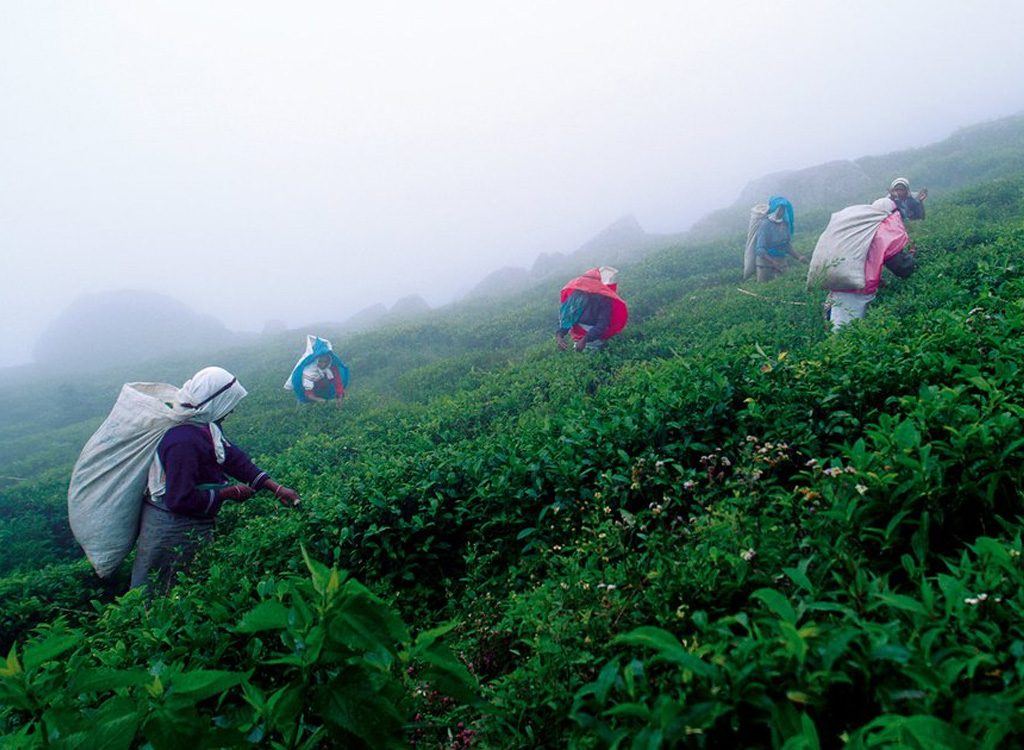
For the Malaiyaha Tamil plantation community, however, the disaster has not ended. In many ways, Cyclone Ditwah was not a rupture but a continuation – a stark manifestation of a crisis that has endured for more than 200 years.
What the cyclone revealed was not merely the failure of disaster management mechanisms, but the cumulative cost of structural neglect faced by a community that has long contributed to Sri Lanka’s economy while remaining among its most vulnerable citizens.
In plantation areas such as Gammaduwa, the cyclone did not create new vulnerabilities. It exposed and intensified existing ones – insecure land tenure, poor access to healthcare and education, fragile livelihoods, and a governance system that remains distant and largely indifferent to ground realities.
Gammaduwa, located about 20 km inland from Matale, stands as one of the clearest examples of the plight of plantation communities in the aftermath of Cyclone Ditwah. Long before the rains arrived, residents here were already grappling with precarious living conditions. Employment opportunities in estates were dwindling, public services were limited, and social safety nets were weak.
On 26 and 27 November 2025, Gammaduwa recorded the highest rainfall in the country – 545 millimetres within two days. Landslides followed swiftly, cutting off access routes and isolating entire settlements. Even now, travel beyond the Gammaduwa Tamil Maha Vidyalaya remains impossible. Four small villages remain completely cut off, surrounded by unstable terrain and landslide debris.
Residents say that while the Government continues to announce relief packages and compensation schemes, very little assistance has reached places like Gammaduwa. For many, trust in official promises has eroded.
“There is no work, no school, no security,” one resident said. “They tell us recovery is happening, but we don’t see it.”
Estate employment has collapsed, leaving families without income. Children’s education has been severely disrupted. Health conditions have deteriorated, with limited access to clinics and medicines. Social stress has increased, manifesting in rising domestic violence and mental health concerns. Yet residents say the official response remains procedural rather than responsive.
Unanswered questions
Several Government measures, residents argue, are ill-suited to plantation realities. Land scarcity remains acute, compounded by estate companies refusing permission for relocation or reconstruction. Families categorised as ‘medium risk’ under National Building Research Organisation (NBRO) assessments have been instructed to return to their homes, while rental assistance is restricted to those labelled ‘high risk.’
Compounding the problem is language. NBRO assessment reports are issued only in Sinhala, a language many residents cannot read. As a result, families are expected to comply with technical instructions they do not fully understand.
Authorities have advised residents to evacuate if rainfall exceeds 55 millimetres. But residents ask practical questions: how are they expected to measure rainfall? Where should they go if heavy rain begins at night? Who is responsible if something goes wrong? These questions remain unanswered.
The marginalised among the marginalized
These realities formed the backdrop of a recent roundtable discussion on Thursday (22), convened by the Centre for Policy Alternatives (CPA), bringing together lawyers, researchers, activists, and political representatives with long-standing engagement in plantation sector issues.
Opening the discussion, CPA Researcher and Attorney-at-Law Bhavani Fonseka said the organisation initially examined Cyclone Ditwah through a broad human rights lens but soon realised the need for a sharper focus on the Malaiyaha Tamil community.
“In December, soon after the cyclone, we began discussing recovery and human rights in general,” Fonseka said. “But as more information emerged, it became clear that the plantation community was experiencing the impact very differently.”
Fonseka argued that the cyclone stripped away any remaining pretence of equality between policy discussions in Colombo and lived realities in plantation areas. The CPA’s long-standing focus on land rights, language rights, and access to services, she noted, all converged sharply in the aftermath of Ditwah.
“We also saw people denied access to information in Tamil, with official documents continuing to be issued only in Sinhala. That is a fundamental rights issue.”
She also highlighted labour-related concerns, noting that many workers were expected to resume work in hazardous conditions or risk losing daily wages. “Even with a Commissioner General of Essential Services, there are serious failures in addressing both survival needs and long-term security,” she said.
‘We are treated as expendable’
Uva Shakthi Foundation Executive Director Nadesan Suresh said Cyclone Ditwah reinforced the plantation community’s long-standing experience of being treated as a population apart. “Our identity as Malaiyaha Tamils matters,” he said. “But within the State, we are still viewed as a separate ‘plantation community,’ not as citizens with equal rights.”
Suresh described widespread infrastructure neglect across the Badulla District, where 11 Regional Plantation Companies (RPCs) oversee 247 divisions. He said basic disaster preparedness measures, including early warning systems, were absent.
In Nawalawatta, home to around 300 families, access roads had deteriorated to the point that rescue teams could not reach residents. In Madulsima, where six members of a single family died during the cyclone, neighbours attempted rescues using crowbars and mammoties. “The plantation company did not even provide a backhoe,” Suresh charged.
Months later, uncertainty continues. “People don’t know if they will receive the Rs. 25,000 compensation promised. They don’t know what will happen to their children’s schooling,” he said.
He rejected claims of land scarcity, arguing that generations of families had lived in line rooms without dignity. Proposals for vertical housing or ‘upside-down’ line rooms, he said, had been consistently rejected. “People want permanent housing with land of at least 10 perches, not stacked temporary shelters.”
Activist Ganeshalingam Ganesh, speaking from Maskeliya, emphasised that land demands must prioritise safety. He recalled landslides in 1972, 1982, 2014, and the Meeriyabedda tragedy, where entire line-room settlements were buried.
“People are constantly shifted between camps, schools, and shelters,” he said. “The disaster is being used to push people around, not to resolve the problem.”
Ganesh described how families without formal addresses were excluded from welfare schemes and basic services. He also raised concerns about the use of Police to pressure families attempting to settle in safer areas. “We need permanent solutions, not tents,” he said.
Many bottlenecks, one core issue
Lawyer, activist, and Civil Collective for Malaiyaha Reconstruction (CCMR) Convener Gauthaman Balachandran identified five major obstacles to recovery.
The first, he said, was communication. “People do not know what assistance they are entitled to or what the process is.”
Second was the State’s long-standing practice of subcontracting responsibility to plantation companies, eroding its own capacity to serve citizens directly. Third, eligibility criteria remain rigid, excluding informal workers and those without formal documentation. Fourth, plantation companies have failed to reinvest profits into infrastructure.
“The foundational problem, however, is land,” Balachandran said. “Both the Government and companies avoid the question of ownership.”
Anthony Jesudasan of the CCMR highlighted how land insecurity directly excluded families from compensation schemes. He said Plantation Minister Samantha Viddyarathna had acknowledged difficulties in granting Rs. 5 million in housing compensation due to the absence of land deeds.
Yet many families, Jesudasan noted, had built homes using Employees’ Provident Fund savings or overseas income.
CPA Researcher and CCMR Co-Convener Selvarajar Rajasegar also drew attention to long-standing unresolved cases, noting that some families affected by landslides more than 20 years ago were yet to receive assistance to rebuild permanent homes. In estates such as Hulandawa, he said, residents possessed only informal documents bearing stamps but no official signatures, leaving them in a perpetual state of legal uncertainty.
Because housing remains located on land owned by plantation companies, Rajasegar said residents were often required to seek permission even for basic services such as electricity and water connections. “This lack of land security translates directly into vulnerability,” he said.
Living under ‘two masters’
One of the most striking observations to emerge from the discussion was the description of plantation communities as living under ‘two masters’ – the State and estate management.
Activist Vijayagowri Palaniyappan explained that while ownership and production systems in plantations had changed over time, living conditions remained firmly under the control of estate management. Housing, access roads, sanitation, and even permission to install electricity or water connections often require approval from plantation companies.
“This is why people continue to be treated like captive labour,” she said. “They are citizens in theory, but in practice, their lives are governed by private management.”
This dual authority has direct implications during disasters. While the Government issues directives on evacuation, compensation, and reconstruction, implementation is frequently stalled by estate companies refusing access to land or disputing jurisdiction.
Separating housing and settlements from estate control, she argued, was essential to any meaningful reform. Recognising plantation settlements as villages under Local Government administration would allow residents to access public services directly, without mediation by estate management.
Until then, she warned, plantation residents would continue to exist in a grey zone – subject to State authority when it came to labour and law enforcement, but excluded from State protection when it came to rights and welfare.
Women bearing the invisible burden
The gendered impact of Cyclone Ditwah received particular attention, with speakers highlighting how institutional neglect disproportionately affects women in plantation areas.
Activist V. Weerasingham drew attention to the near-total absence of State mechanisms focused on women’s welfare in estates. “In which estate is there a Women’s Development Officer?” he asked, noting that while women’s societies and development committees were routinely established in other sectors, plantation areas remained excluded.
This absence, he said, had direct consequences. Without institutional points of access, estate women have little recourse when facing domestic violence, livelihood loss, or health crises. “Women are expected to endure silently,” he said.
Weerasingham was particularly critical of the lack of sanitation facilities in both line rooms and shelters, describing it as a violation of basic dignity. He said political rhetoric often focused on development targets while ignoring the fact that many women in estates still lacked access to toilets, forcing them to navigate unsafe and undignified conditions daily.
Housing conditions further compound these risks. Many line rooms, he said, were structurally unsound, with cracked walls, broken doors, and unsafe layouts. Women, children, and the elderly live under constant threat, particularly during heavy rains. “This is not housing,” Weerasingham said. “This is survival under hazardous conditions.”
Beyond infrastructure, he stressed the need for representation. He argued that the realities faced by estate women could not be fully understood or addressed without their direct involvement in decision-making processes. Calling for women’s representation in presidential task forces and policy bodies, he warned that without such inclusion, policies would continue to overlook the specific needs of women and children.
Rajasegar also raised concerns about the upcoming GCE Ordinary Level Examination: “There are people still in shelters. They have nowhere to go. There is no attention to this matter. They are asked to relocate, but where are the buses, where is the transport? Children are told to attend other schools, but how can families afford three-wheelers when there are no buses?”
Political perspectives
Member of Parliament (MP) Mano Ganesan pointed out that although the President had announced immediate relief payments of Rs. 25,000 and housing compensation of up to Rs. 5 million for families who lost their homes, implementation at divisional and estate level remained inconsistent.
Ganesan questioned why districts such as Anuradhapura had been able to provide land and full housing compensation, while similar assistance remained unavailable in plantation-heavy districts like Nuwara Eliya, Badulla, and Matale. “This disparity is not accidental,” he said, describing it as a form of structural discrimination embedded within administrative decision-making.
He also highlighted how relief frameworks failed to account for informal livelihoods common in plantation regions. Vegetable traders, street hawkers, and small-scale vendors who lost their income following the cyclone have largely been excluded from compensation schemes, despite repeated appeals to include them. “The instructions may be given at the top,” Ganesan said. “But they do not reach the divisional secretariats.”
The Malaiyaha community, he noted, had consistently rejected flat-based housing models, arguing that individual homes with land connectivity were essential for dignity, safety, and social stability. Several previous housing initiatives had stalled midway, leaving hundreds of incomplete houses scattered across plantation regions.
While acknowledging India’s continued support for plantation housing, Ganesan stressed that the primary responsibility rested with the Sri Lankan State. “We are Sri Lankan citizens,” he said. “This cannot be treated as an external or charitable obligation.”
MP Jeevan Thondaman placed land rights at the centre of the crisis while cautioning against what he termed “political simplification” of the problem. He estimated that providing 10 perches of land to approximately 150,000 plantation families would require around 3,900 hectares.
Although Rs. 5 billion has been allocated for surveying and issuing land deeds, with an estimated cost of Rs. 25,000–28,000 per deed, Thondaman said progress had stalled. He also claimed that a proposed Japan International Cooperation Agency (JICA) study on plantation land rights had been discontinued, further delaying evidence-based reform.
On housing costs, Thondaman warned against unrealistic expectations. At an estimated Rs. 2.8 million per unit, providing houses to 150,000 families would require around Rs. 420 billion, far beyond the State’s fiscal capacity, particularly with debt repayments resuming in 2028. With the Estate Infrastructure Ministry receiving only Rs. 3–4 billion annually, he said large-scale housing delivery could not be achieved through short-term political promises.
Ensuring meaningful action
Meanwhile, speaking at the discussion by the CPA, People’s Action for Free and Fair Elections (PAFFREL) Executive Director Rohana Hettiarachchi, who is also a member of the Government-appointed Rebuilding Sri Lanka Task Force formed after Cyclone Ditwah to assist affected communities, said he agreed with the concerns raised.
“However, I must clarify that I am not a political representative. I was appointed to the task force to represent civil society. These concerns are valid. We have already spoken about them and plan to visit the affected areas in the coming days to gain a clearer picture of ground realities.”
Both the National People’s Power (NPP) Government and the main Opposition Samagi Jana Balawegaya (SJB) have articulated policy commitments towards the Malaiyaha community. The NPP has its Hatton Declaration, while the SJB has addressed the well-being of the Malaiyaha community in its election manifesto. In addition, in the run-up to the 2024 Presidential Election, the then Government issued a gazette notification in September 2024 introducing the Upcountry Charter, aimed at facilitating the full integration of the community into Sri Lanka’s socio-economic fabric.
However, the aftermath of Cyclone Ditwah has made it clear that, regardless of the number of manifestos and State policy documents in circulation, very little has translated into meaningful change on the ground for the well-being of the Malaiyaha people. The moment calls for more than policy declarations. It is time to return to implementation, honour electoral commitments, and turn long-promised words into reality.
Source: The Sunday Morning








Leave a comment