
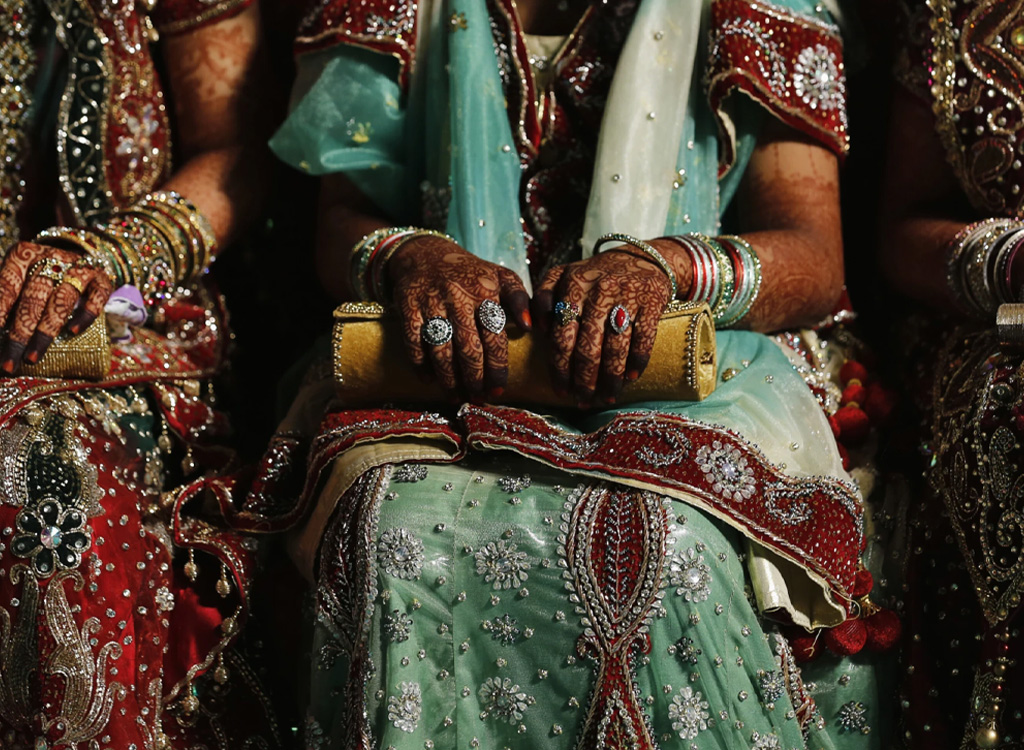
By Skandha Gunasekara
Sri Lanka’s long-stalled effort to reform the Muslim Marriage and Divorce Act (MMDA) has entered a new phase of public and stakeholder consultation, with the Ministry of Justice (MOJ) seeking written proposals on contentious questions.
The MOJ has clarity on questions ranging from child marriage and the bride’s signature to female quazis, court structures, the wali (guardian), and polygamy, while a private member’s bill by MP Faiszer Musthapha has intensified debate inside and outside Parliament.
Attorney-at-Law Shabry Haleemdeen, who heads the ministry-appointed Advisory Committee on Muslim Law Reforms, told The Sunday Morning the process currently had no fixed timeline and remained “open for public consultation” through individual feedback and stakeholder submissions, with stakeholders asked to send recommendations by the end of the month following repeated extensions.
“The ongoing discussions are basically about five things — the age of marriage, female quazis, whether the role of the wali is compulsory or optional, the best mechanism to hear these matters, and polygamy,” Haleemdeen said, adding that no final decisions had been taken and that the ministry would decide how to proceed only after the consultation concludes.
Ministry letter sets out 5 focus areas
A January ministry communication to stakeholders frames the consultation around proposals already discussed by the committee, including mandatory registration of marriages, the bride’s consent and signature, recognition of prenuptial agreements, reforms on dowry recovery and marital property distribution, and improved rules on divorce, children’s interests, mata’a (alimony/compensation), and maintenance.
It also identifies five headline issues for immediate feedback: (1) the legal minimum age of marriage under the MMDA; (2) placing the bride’s signature on marriage registration forms and whether the wali’s signature should appear only if the bride opts for it; (3) whether conditions should restrict polygamy and which institution should monitor them; (4) the most appropriate forum for MMDA disputes – quazi courts, district courts, a family court system, or a hybrid model; and (5) stakeholders’ position on appointing women as quazis.
The letter indicates that written recommendations were to be forwarded by 31 January 2026, with a requested maximum length of 1,500 words. However, Haleemdeen revealed the deadline for submissions had been extended upon request.
“Originally, it was only about three weeks that was given; at the end of the first week of January, they called for submissions to be made by 31 January. Then different organisations wrote and they wanted extensions. So originally it was extended up to the 14th of this month and then now it has been once again, on request, extended to the end of the month.”
Haleemdeen said the committee – first constituted previously and then re-appointed by the current Government with additional ministry officials – had been extending deadlines after multiple groups had requested more time.
“Once this Government came into power, it re-appointed almost the same committee as the one in 2021, in addition to a few ministry officials from the Justice Ministry and the Women and Child Affairs Ministry, along with the Ministry of Buddhasasana, Religious and Cultural Affairs as well. Likewise, some State officials have now been included in the committee, other than the previous set of individuals.”
Justice Minister Harshana Nanayakkara told The Sunday Morning that the committee was still in the consultation process and that he was unable to commit to a deadline for the Cabinet until the committee finalised its own schedule.
“I will present it to the Cabinet, but I can’t give a timeline because the committee has to give me the timeline,” he said, noting that the ministry may allow extra time for consultations after at least one council had requested an extension during the Ramadan period.
Nanayakkara also addressed MP Musthapha’s private member’s bill, saying the ministry was already considering two amendments that may overlap with it, but that he had not yet reviewed the text and therefore could not say whether Parliament and the ministry were “working on the same things”.
“As for MP Musthapha’s private member’s bill, there are two amendments that we were considering, which I believe are along the same lines as his bill. However, I have not seen it yet. When I do, I will see whether we are working on the same things or whether he has more to add. If so, we can consider taking that on as well,” the Minister said.
Bill signals support, but reforms piecemeal: MPLRAG
Muslim Personal Law Reform Action Group (MPLRAG) Co-Founder and activist Hyshyama Hamin said MP Musthapha’s bill – handed to Parliament on 5 January – reflected growing support for MMDA reform, but fell short of the deeper changes sought by rights advocates.
While welcoming leadership on some issues, Hamin said the bill was “piecemeal” and included “unusual conditions,” such as requiring the “consent” of minors. She also criticised provisions that would require the bride to sign either the wali’s declaration or a separate declaration.
“The bill includes some unusual conditions, such as requiring the ‘consent’ of minors – something that conflicts with the principle that marital contracts apply to adults only. Based on anecdotal cases and research, many child marriages take place between the ages of 16 and 18. Therefore, allowing exceptions will do little to address child marriage in Muslim communities.
“The bill also requires the bride to sign either the declaration made by the wali or a separate declaration. This still does not provide Muslim brides with autonomy to enter into marriage on an equal footing with Muslim grooms, because her signature is not placed on the same document.”
MPLRAG’s own January submission to the ministry urges reform across the same pressure points now under consultation.
It calls for raising the minimum age of marriage to 18 with no exceptions, framing the issue as a child rights concern and emphasising the education and life impacts of marriages between 16 and 18, including O/Level and A/Level schooling disruption and heightened health risks from early pregnancy.
On consent, MPLRAG argues that marriages should be valid only when both bride and groom sign in the presence of the registrar, with the wali’s signature optional at the bride’s discretion.
On polygamy, the group urges an outright prohibition, but proposes strict conditions if abolition is politically blocked – such as consent of all parties, proof of financial capacity, and safeguards against harm to existing wives and children.
It also pushes for a family court system as the long-term solution, proposing an interim hybrid model to improve access and accountability while reforms are implemented. And it insists that gender barriers be removed not only for quazis but across MMDA administrative roles, including marriage registrars and the Board of Quazis.
Meanwhile, the All Ceylon Jamiyyathul Ulama (ACJU) confirmed it had been invited to submit proposals but said it was not yet ready to disclose their contents.
“The ministry is carrying out a round of consultation and we have been invited [to] submit our proposals. I cannot say what we are submitting at the moment. We have requested for more time to make our submissions,” said ACJU President Mufti M.I.M. Rizwe.
Haleemdeen similarly indicated that not all formal submissions had arrived because “everybody was asking for extensions,” and that the consultation window had been repeatedly expanded.
The shadow of 2021
The current committee’s work sits in the shadow of prior reform efforts, especially the 2021 advisory committee report chaired by Haleemdeen. That report has been widely cited as recommending substantial changes including raising the minimum age of marriage to 18, addressing deficiencies in the quazi system, and tightening or abolishing polygamy – issues that remain central to today’s consultations.
In a 2025 statement, the Human Rights Commission of Sri Lanka (HRCSL) said it was aware of detailed reports produced in 2018 and 2021, and that it had been “informed” that in 2021 the Cabinet had decided to abolish the quazi system, ban polygamy, and legislate an age of marriage, while delays had fuelled frustration and ongoing harm to those affected by discriminatory provisions.
“The commission is privy to the detailed reports that have been produced in 2018 by the committee chaired by retired Justice of the Supreme Court Saleem Marsoof and in 2021 by the committee chaired by senior Attorney-at-Law Shabry Haleemdeen. The commission is also informed that, in 2021, the Cabinet of Ministers decided to abolish the quazi system, ban polygamy, and to legislate an age of marriage,” the statement reads.
HRCSL also reiterated that the MMDA lacked a minimum age of marriage and highlighted how the existing framework allowed marriages of girls below 12 with quazi authorisation — and even potentially without it under certain interpretations — raising urgent child rights concerns.
Earlier, MPLRAG publicly welcomed what it described as progressive Cabinet decisions on “key substantive issues,” including 18 as the minimum marriage age without exception, requiring the bride’s consent and signature, allowing women quazis, and abolishing polygamy – a package that overlaps with what advocates now urge the Government to enact.
Both Haleemdeen and Minister Nanayakkara indicated that the next decisive step would be a post-consultation synthesis by the committee and the ministry, followed by a Cabinet submission – however without a definitive timeline.
Meanwhile, MP Musthapha has defended his move to table the bill, positioning criticism as part of an iterative reform process. “If people criticise it, I welcome their criticism. The more criticism the more progressive we can become,” he said.
Continued victimization
For women’s rights activists, the contest now is whether the State will adopt sweeping reforms long discussed – minimum age 18 without exceptions, equal consent standards, women in decision-making roles, and major court restructuring – or whether political compromise will yield narrower amendments.
As HRCSL has cautioned, the longer the delay, the more “continued victimisation” the current law enables, and the more reform debates risk being reset by shifting governments and competing legislative initiatives.
“The delays in bringing about the necessary legislation has led to a back and forth on such decisions leading to frustration among those working on the issue and the continued victimisation of those subjected to the problematic provisions of the MMDA,” the HRCSL statement notes.
Source: The Sunday Morning











Leave a comment