
By The Pulseline News Desk
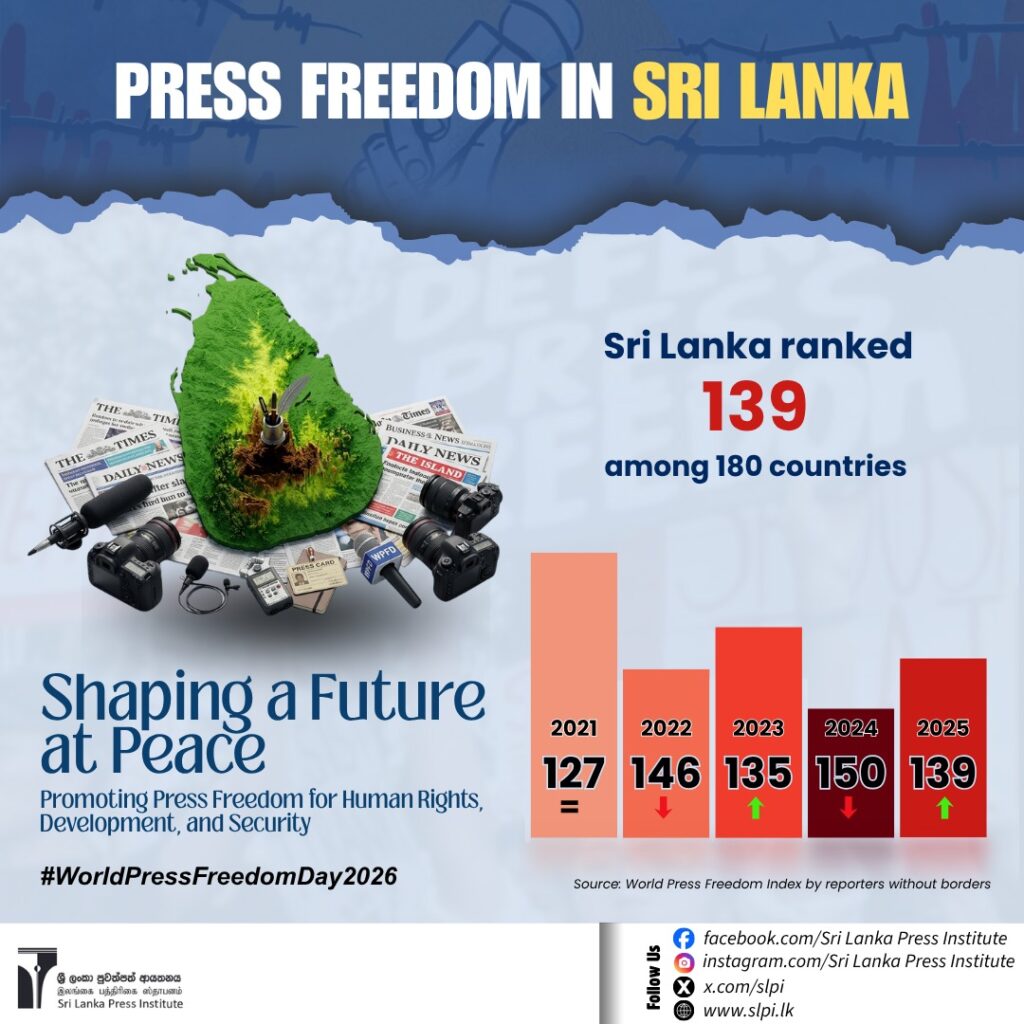
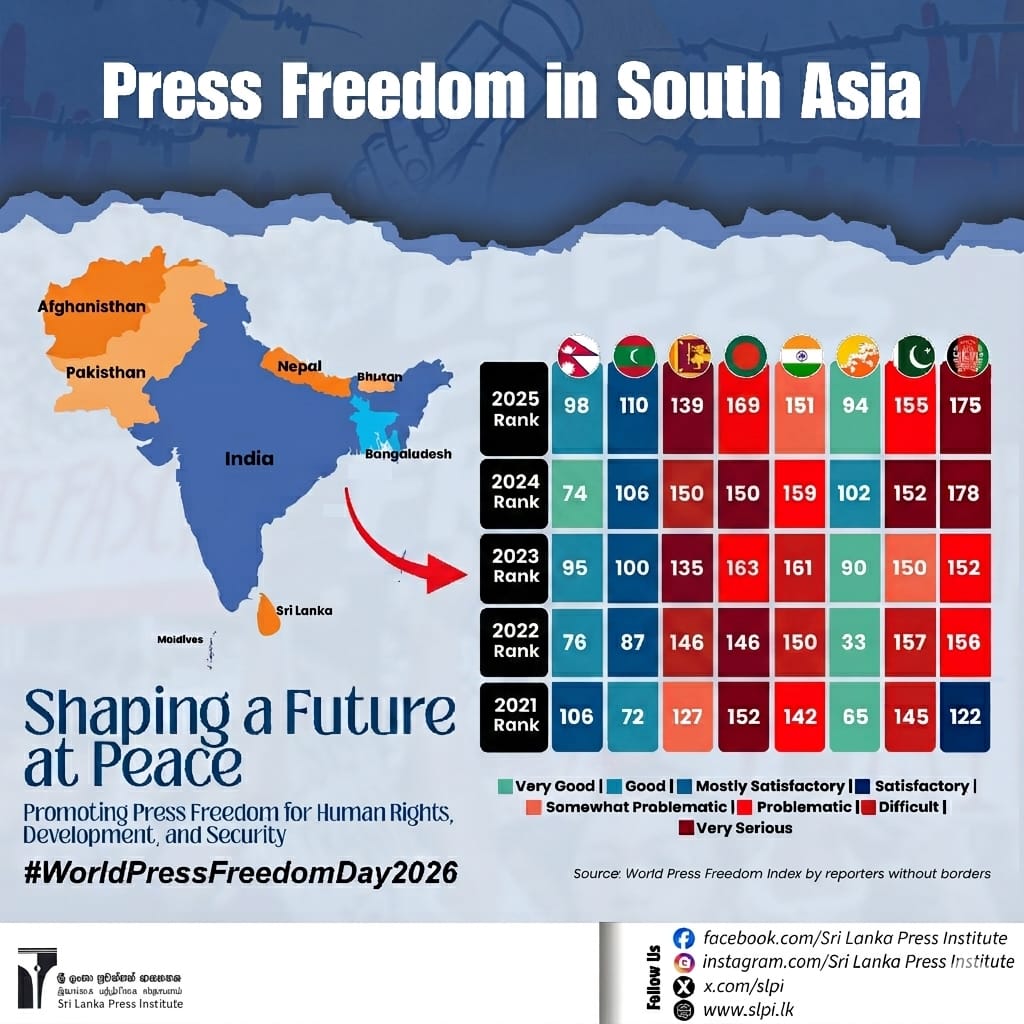
Sri Lanka has recorded a modest improvement in global press freedom rankings, climbing five places to 134th out of 180 countries in the 2026 World Press Freedom Index released by Reporters Without Borders (RSF). The country’s score rose to 40.77, up from its 139th position in 2025, reflecting incremental progress in a media environment long shaped by conflict, political influence, and legal pressures.
While the upward movement offers a measure of optimism, the latest report underscores that journalism in Sri Lanka remains under strain. RSF links many of the country’s enduring press freedom challenges to the legacy of the Sri Lankan Civil War, during which numerous journalists were subjected to violence, intimidation, and in some cases, enforced disappearances — many of which remain unresolved.
Fragile gains in a complex landscape
According to RSF, Sri Lanka’s media ecosystem continues to grapple with deep-rooted structural issues. Ownership remains highly concentrated, with significant influence wielded by major political families and affiliated business interests. This concentration, combined with limited diversity in viewpoints, constrains independent journalism and weakens public trust.
The report also highlights that despite the end of the civil war in 2009, journalists still face risks, including legal harassment and surveillance. The persistence of such challenges has kept the country within the “difficult” category for press freedom.
A global decline
Sri Lanka’s slight improvement comes against a backdrop of worsening global conditions for journalism. For the first time since the index was launched, more than half of the countries assessed fall into the “difficult” or “very serious” categories. Over the past 25 years, the global average score has reached its lowest point.
RSF attributes this decline largely to the expansion of restrictive legal frameworks, often justified under national security grounds. These laws have increasingly been used to limit reporting, restrict access to information, and criminalise journalistic work – even in countries considered democratic.
The legal indicator within the index saw the steepest drop in 2026, deteriorating in over 60% of countries surveyed. Nations such as India (157th), Egypt (169th), Israel (116th), and Georgia (135th) were specifically cited as examples where legal pressures on media have intensified.
Asia-Pacific under pressure
The Asia-Pacific region, which includes Sri Lanka, continues to be one of the most challenging environments for press freedom. RSF reports that 21 out of 32 countries in the region fall into the lowest categories, with conditions deteriorating due to increasing legal attacks, including the use of sweeping laws and punitive charges against journalists.
The report also warns of the growing influence of authoritarian media control models beyond national borders, particularly those associated with China. These models often combine censorship, surveillance, and state-driven narratives, and are being replicated in varying degrees across the region.
Leaders and laggards
At the top of the 2026 index, Norway retained its position as the world’s most press-free country for the tenth consecutive year, reflecting strong legal protections and a robust culture of independent journalism. At the other end of the spectrum, Eritrea ranked last for the third year in a row, continuing to be one of the most restrictive environments for media globally.
Sri Lanka’s climb in the rankings suggests incremental progress, but analysts caution that sustained improvement will depend on deeper reforms. Addressing impunity for past crimes against journalists, ensuring legal protections for media workers, and diversifying ownership structures are seen as critical steps toward strengthening press freedom.
The road ahead
As global trends point toward increasing restrictions on journalism, Sri Lanka’s experience reflects a broader struggle – balancing security, governance, and the fundamental right to information in an increasingly complex media landscape.






Leave a comment