
By The Pulseline News Desk
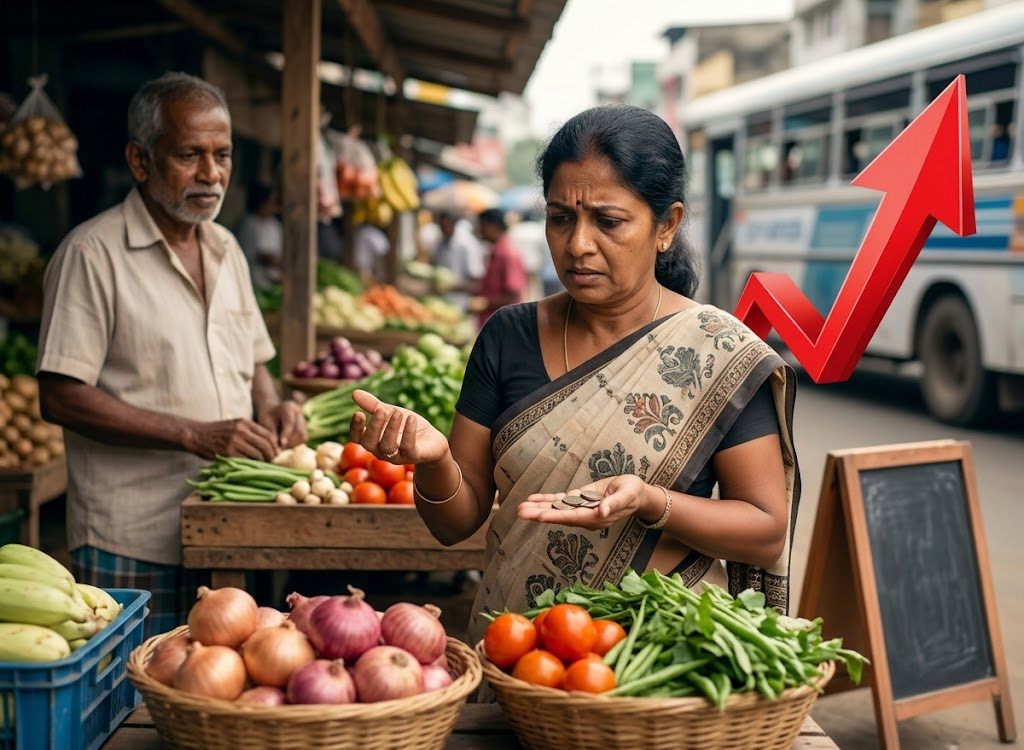
Sri Lanka’s inflation rate saw a notable uptick in April 2026, with the headline figure rising to 5.4% year-on-year, according to the Department of Census and Statistics (DCS). The increase marks a sharp jump from the 2.2% recorded in March, pointing to a resurgence of price pressures after a period of relative stability.
The rise was driven by both food and non-food categories, suggesting a broad-based increase in the cost of living. Food inflation climbed to 2.8% in April from 0.7% the previous month, while non-food inflation surged more steeply to 6.8%, up from 2.9% in March.
Broad-based price increases
Economists note that the sharper rise in non-food inflation indicates that costs beyond essential goods, such as transport, utilities, and services, are exerting greater pressure on households. This trend can often signal deeper, more persistent inflationary forces within the economy.
Food inflation, while rising more moderately, remains a critical concern for lower-income households, for whom daily consumption expenses account for a larger share of income. Even small increases in food prices can significantly affect purchasing power.
Measured by CCPI
The inflation figures are based on the Colombo Consumer Price Index (CCPI), which tracks changes in the price of a basket of goods and services in the Colombo district. While geographically limited, the CCPI is widely used as a key indicator of national inflation trends.
From crisis to stabilisation
The latest increase comes as Sri Lanka continues its fragile recovery from the economic crisis that peaked in 2022, when inflation soared to historic highs amid currency depreciation, supply shortages, and fiscal imbalances. Since then, tight monetary policy and stabilisation measures have helped bring inflation down significantly through 2024 and early 2025.
However, analysts warn that the April spike could reflect a combination of seasonal factors, adjustments in administered prices, and possible demand-side pressures as the economy gradually recovers.
Policy implications
The renewed rise in inflation presents a challenge for policymakers, particularly the Central Bank of Sri Lanka, which has been navigating a delicate balance between supporting economic growth and maintaining price stability.
If inflationary pressures persist in the coming months, the central bank may face constraints in easing monetary policy further, potentially affecting borrowing costs and investment activity.
Outlook
While a single month’s increase does not necessarily indicate a sustained trend, the breadth of the April rise, across both food and non-food sectors, will likely be closely monitored by authorities and market participants alike.
For households, the data signals a renewed squeeze in living costs, even as the broader economy shows signs of gradual recovery.












Leave a comment