
By Ambika Satkunanathan
The Chairperson of the National Women’s Commission (NWC) resigned less than four months after being appointed. Reports claim her resignation was due to ‘a lack of communication from the Presidential Secretariat, resources, and institutional support from the Government.’
In the consequent uproar, civil society held the Government responsible for failing to provide the needed resources to the NWC, whereas those defending the Government pointed to the protracted process of setting up any State institution to justify the delays and challenges.
There are multiple structural and systemic factors that will impede the effective functioning of independent commissions, such as the Human Rights Commission of Sri Lanka (HRCSL) and the NWC.
Appointees to these institutions who have been working on human rights issues and governance reforms should not be surprised by the lack of Government responsiveness, bureaucratic lethargy, or even the active undermining of independent oversight mechanisms themselves, as they are embedded in institutional psyches and culture.
The National People’s Power (NPP) Government that came to power on a platform of ‘system change’ must be proactive in identifying these structural and systemic problems and provide solutions and support to independent commissions. It cannot merely point to them as justifications for inaction.
The first step: Roll up your sleeves
The general assumption is that when members are appointed to a newly established institution, the bureaucracy, upon the instructions of the government of the day, will undertake the basic administrative tasks such as locating office space, hiring staff, and purchasing furniture and equipment prior to the members being appointed and assuming office.
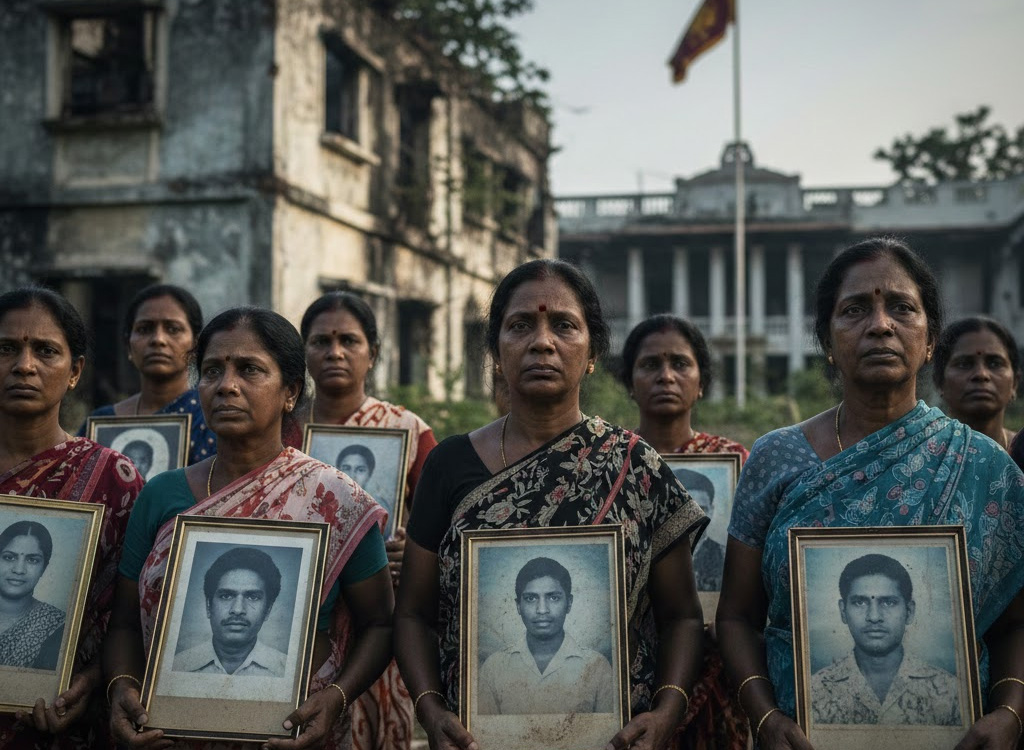
The reality is different. In the case of the Office on Missing Persons (OMP), it was the members themselves who had to perform these logistical and administrative tasks to initiate the functioning of the institution.
Exacerbated by cumbersome administrative procedures and an uncooperative bureaucracy, operationalising a newly-formed State institution is extremely challenging.
The OMP’s experience demonstrates how to address these and find creative solutions.
The office of the OMP was located at the Ministry of National Integration for around six months as it did not have office space. The commissioners and staff had to share desks. Since being located ‘inside’ the ministry building could lead to the ministry assuming the OMP was within its purview, the OMP was mindful of the need to maintain strict boundaries to ensure the ministry did not encroach upon its independence. Which it zealously did.
The OMP had one staff member when it began to function. Hiring of staff for State institutions can be done only based on a Scheme of Recruitment (SoR), a document which sets out how many staff you can have and their Terms of Reference (ToR). An SoR is formulated by the Department of Management Services (DMS), in consultation with the relevant entity.
This is not an easy task as the DMS may not understand the specific requirements for the ToR for an electric monorail operator, a genetics engineer, or, as in the case of the OMP, investigators or researchers.
Second, stemming from the first, is that the process is long-drawn and time consuming. While waiting for the SoR, the OMP advertised for short-term staff and requested the United Nations (UN) to provide UN Volunteers to support individual staff positions. This is a common practice used by ministries and independent commissions.
The first statement of the OMP, which acknowledged the task ahead and the pain and suffering the families of the disappeared had endured in their search, was issued within a month of their assuming office.
The statement went under a newly created letterhead. Because the OMP did not have an address as they did not know where they were going to set up the office, neither did the letterhead. The delay in beginning the substantive work of the OMP was largely due to the challenges encountered in physically setting up the office and drafting foundational elements such as internal rules, policies, and procedures.
The past is the present: The HRCSL
The OMP’s experience is not unique. The HRCSL was established in 1996, but was able to begin functioning only in 1997 largely due to challenges setting up the institution. Even by 2000, the commission’s office was situated in a small house and had only basic furniture and a few computers.
The annual State of Human Rights Report 2000 published by the Law and Society Trust (LST), for which I wrote the chapter on the HRCSL, identified shortage of staff and lack of funds, which prevented the HRCSL from fulfilling key parts of its mandate, such as monitoring detention centres, amongst the numerous challenges it faced. When I was appointed as a Commissioner to the HRCSL 15 years later, in 2015, most of my findings from 2000 – 15 years prior – had persisted.
In 2015, staffing shortages, lack of subject expertise, and lack of official language proficiency meant the commissioners had to undertake tasks such as analysis of draft laws or drafting statements and letters with very little staff support.
Much like for the OMP, the process to hire staff was tedious. Finalising the SoR took more than four years. The DMS lacked the versatility to adapt for specialised requirements of the independent commissions, and was itself constrained by administrative and financial regulations. External assistance in the form of UN Volunteers had to be obtained to undertake large-scale projects, such as the national study of prisons.
General administrative rules continued to constrain the independence and functionality of the commission. For instance, a cross-Government circular issued by the Ministry of Finance required Cabinet approval for any State entity, including independent commissions, to receive funds from foreign donors. This included the UN agencies if they did not already have a Standard Basic Assistance Agreement with the Government.
A regional officer had to use their own motorcycle to travel the length of the Eastern Province – Sri Lanka’s ‘longest’ province – because approval for repairing the official vehicle was delayed. Faxes containing sensitive information had to be sent from communication centres.
Even simple recurring payments such as the commission’s annual domain registration had to be done through personal credit cards of commissioners as reimbursable costs.
Safeguarding independence: The fundamental challenge
Government interference was reportedly cited by the Chairperson of the NWC as one of the reasons for her resignation.
The predisposition of any government, including supposedly ‘progressive’ ones such as 2015’s ‘Yahapalana’ or the current NPP, is to control, or, at the very least, exert some influence over institutions that are supposed to be ‘independent’ from the Government and exercise oversight functions.
In November 2016, the HRCSL, for the very first time since its establishment, submitted a report to the review of Sri Lanka’s implementation of a UN convention: the Convention Against Torture.
In January 2017, after the completion of the review of Sri Lanka in Geneva, the commissioners were invited to a meeting with then President Maithripala Sirisena. The purpose of the meeting was not mentioned and it was assumed it was a routine meeting to update him on the work of the commission and the challenges it faced.
Upon our arrival we saw Senior Deputy Inspector General of Police Ajith Rohana and Sri Lanka Freedom Party Parliamentarian and Minister of Provincial Councils and Local Government Faiszer Musthapha also in the waiting area and thought nothing of it. When we entered the room for the meeting, they did too, which we found surprising.
The President, who then proceeded to chastise the commission for submitting a report to the review of Sri Lanka by the Committee Against Torture (CAT), said that the HRCSL should have obtained approval prior to making the submission and that such an act brought disrepute to Sri Lanka. This was followed by Sinhala media reports of the President criticising the commission.
The commission informed the President that it had functioned as an independent commission according to the powers vested by law, that its report was based on evidence, and that it would continue to fulfil its legal obligations.
In 2019, the President criticised the HRCSL in Parliament for inquiring into the deployment of the Special Task Force (STF) to the Angunakolapelessa Prison. He also accused the commission of causing the deaths of Sri Lankan peacekeepers by delaying the human rights vetting of military personnel for UN Peacekeeping missions.
In response, the commission wrote to the President countering his charges and made the letter public.
After Gotabaya Rajapaksa was elected President in November 2019, the future of the OMP was in question as the Government was unable to decide if it wanted to disband the office, limit its powers, or allow it to continue. It made explicit its desire to ‘encourage’ the OMP to ‘close files’ and reduce the official number of disappeared cases.
These examples demonstrate that no Sri Lankan government has wholly understood or been comfortable with being held accountable by an oversight mechanism, be it the Human Rights Commission, or in this case the National Women’s Commission.
What next?
Funds are the National Women’s Commission’s immediate need, which the Government must provide without delay. Abiding by its promise of ‘system change’ requires the Government to enable strong, independent oversight institutions.
It is therefore imperative that it ensures its actions and/or inactions do not directly, indirectly, or inadvertently harm the daily functioning and independence of oversight bodies such as the NWC.
However, it’s not only the Government that must be proactive. Those appointed to oversight bodies should expect to encounter varied challenges and be willing to overcome them. They must use creative strategies to fulfil the legal mandate of the commission while zealously protecting its independence. This is essential to make the institution operational, functional, and effective.
(The writer is a lawyer and a former Commissioner of the Human Rights Commission of Sri Lanka)
Disclaimer: The views and opinions expressed in this article are those of the writer and do not necessarily reflect the official position of this publication.










Leave a comment