
By Centre for Policy Alternatives
Recent media reports indicate the revival of the proposed Kivul Oya Project under the Mahaweli L Scheme, which has implications for land ownership and use for present residents, as well as environmental and other impacts. Furthermore, concerns have been raised that the proposed project will lead to new settlements of Sinhalese communities, which may adversely affect the land and livelihoods of Tamil farmers who have lived in the area for several decades. These concerns were first discussed by the Centre for Policy Alternatives (CPA) in its 2011 report, titled “Land Issues in the Northern Province: Post-War Politics, Policy and Practices,” which reported on plans to alienate lands to the majority community in the guise of development projects with the potential to alter demographics. While the project stalled in the immediate post war period, documents and interviews indicate that the project is being revived under the present government. As noted in the 2011 report, the Mahaweli L Scheme is perceived by local communities as a tool used in the guise of development to alienate lands to the majority community and introduce new settlements, with it creating fear and apprehension among the minority communities. CPA notes that the 2011 initiative was introduced during the tenure of then President Mahinda Rajapaksa, with new documentation pointing to the project being revived in 2019 and continuing during the presidency of Gotabaya Rajapakse. CPA and others have noted several initiatives introduced during the post war years of 2009-2015 and 2019-2022 that attempted to alienate and acquire land in the North and East of the country that were informed by ethno-nationalism, militarisation and development projects and creating fears among minorities of losing their land and livelihood. With the revival of the Kivul Oya project, questions must be asked whether the present government is persisting with projects commenced under the Rajapakse government that aim to create new settlements in the guise of development with wide implications for land and livelihoods of minority communities, change ethnic demographics and threaten coexistence.
As context, the cabinet approved restarting the Kivul Oya Development project in January 2026, which was originally approved in 2011 with the objectives of providing irrigation facilities to Vavuniya and Mullaitivu Districts. CPA has previously noted that the Mahaweli L system has a history of demographic change. However, the availability of land that is suitable for wetland rice during the major rainy season and upland crops during the minor rainy season makes it an area with potential for agricultural development. As construction was temporarily halted in 2023 due to the economic crisis, a new timeline has been reportedly set from 2026 to 2031. The estimated cost of the project has been revised to Rs. 23,456 million from an original estimation of Rs. 4,170 million in 2011.
The Environmental Impact Assessment Report for the proposed Kivul Oya project outlines a detailed cost-benefit analysis of the proposed project in terms of its environmental, economic, social and cultural impacts. The loss of natural habitats, an exacerbation of human-elephant conflict, relocation of people, disturbance to archaeologically important sites, reduction in flow of water downstream of the dam site, increased potential for development of salinisation and pollution due to overuse of agrochemicals are some of the negative impacts analysed in the report. The direct benefits are reported to be the income obtained from agriculture, while the indirect benefits are received through the establishment of projects related to fishing and livestock. However, as discussed below, there are significant gaps in terms of how the social implications have been assessed.
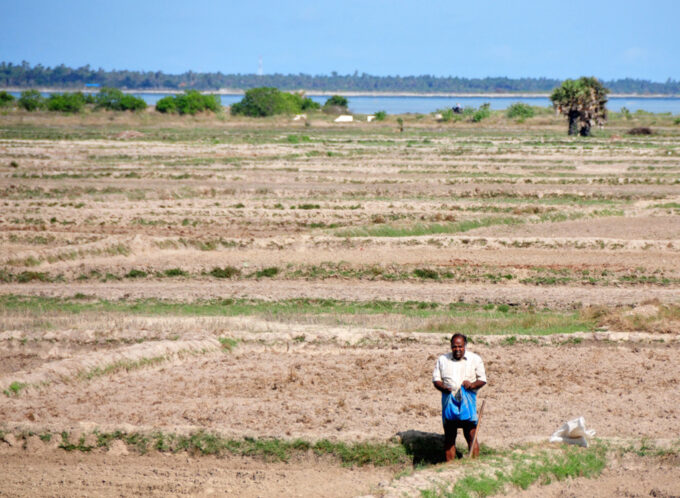
CPA reiterates its concerns raised in 2011 in terms of alienating lands and creating new settlements for the majority community in the guise of development. This is against the backdrop of land being a root cause of the conflict, with the Kivul Oya project reinforcing fears of land being used to further ethnonationalism and trigger new conflict. Such fears have been voiced by local communities in the area. According to a letter submitted by the Tamil community of the area to the District Secretary of Mullaitivu District, 1615 acres of their paddy land areas were confiscated for the development of the Kivul Oya Project. According to documents, the confiscated lands are located in Uththarayankulam (Nelunkulam), AmayanKulam (Kiribanweva),Kulavadukkulam, Adayakaruththaankulam, Nayadichchamurippu, Sivanthamurippukulam, Thattamlai, Kunjukkulam (Tikiriweva), Sagalaatruveli of the Kokkuthoduvai, Kokkilai and Karunatkerni areas of the Maritimepattu (Karaithuraipatru) division. Reportedly, more than 7000 people are to be settled in the Mahaweli “L” zone area, comprising only Sinhalese who are to be given land under the project, with seemingly no lands allocated to minority communities.
Further, a significant environmental impact of the Kivul Oya project is the loss of approximately 2500 ha of forestland inhabited by wildlife at present. It has been discovered that, as a result, the Human Elephant conflict that exists in certain parts of the area will be exacerbated. The total cost of the reforestation programme proposed as a compensation measure for the estimated loss of forestland is Rs. 720 million. In addition, Rs. 100 million will be allocated for electric fences.
In addition, several historical and archaeological sites may also be impacted by the proposed project. CPA was informed that small irrigation tanks such as Ramankulam, Kottodaikulam, Oyamadukkulam, Vellankulam, Periyagattukul am, Panikkal Madukkulam, Sannamuttara Madukkulam, Kammanjikulam, Kurinjakkulam, Pulikkuttikulam, and Thirivaichchakulam, as well as parts of the paddy lands falling under Vedivaiththakallu Kulam, Navalar Farm, Kallatrukul am, Eechankulam, and Koolankulam, and the areas including the ancient Tamil villages north of Vavuniya—namely Kattupūvarasankulam village, Kanchuramottai village, and part of Maruthodai village—face the risk of becoming water-retention areas of the proposed irrigation dam.
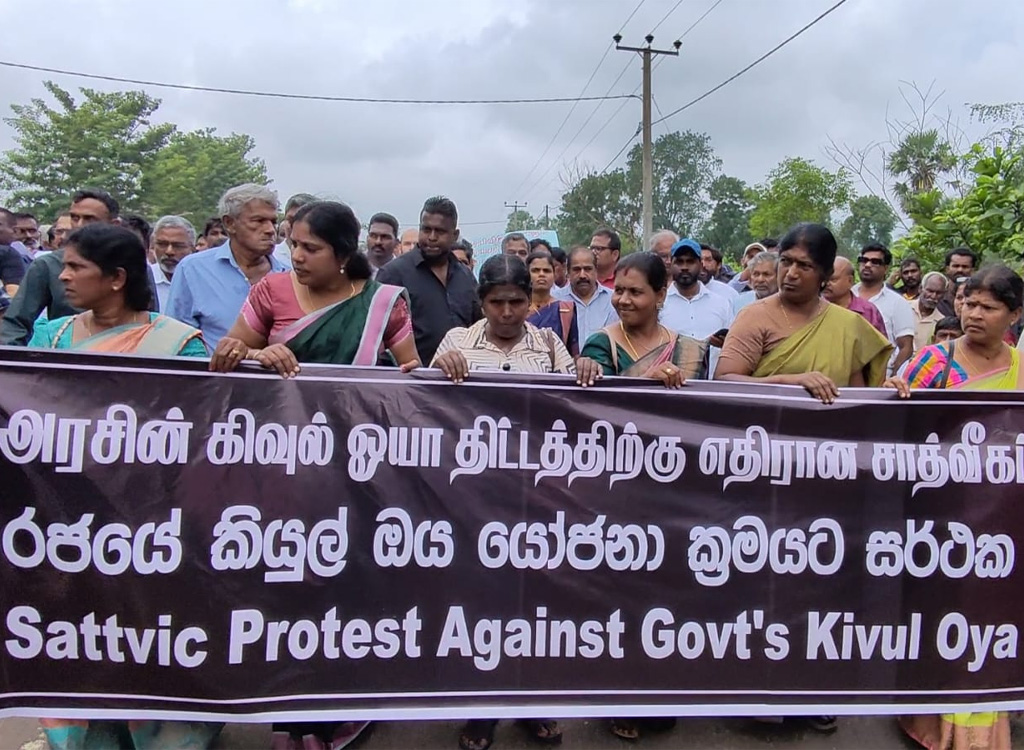
The above concerns raise questions as to why the government is persisting with a project commenced by the Rajapaksa government, with no genuine effort made to engage with affected communities and address their grievances. The revival of the project has seen protests from residents and Tamil political parties, raising concerns of the wide implications for lands, livelihoods, reconciliation and identity politics. Further, it is important to note that the present initiative is the latest move by the present government that has wide implications for land ownership and minority rights. In March 2025, a gazette was issued that impacted land ownership in the Northern Province and was withdrawn by the government amidst protests and a legal challenge in the Supreme Court. The present move raises similar concerns that land rights will be impacted in the guise of development, reigniting fear that a root cause of conflict is not only sustained by this government but that these new initiatives have the potential to trigger new conflict.









Leave a comment