
By Dr. Nadee Dissanayake
Nonviolence rarely makes the policy headlines, but it quietly drives whether reforms succeed, institutions endure, and societies bounce back.
In Sri Lanka in 2026, nonviolence is more than a moral principle; it is a practical engine of economic stability, political trust, and social resilience, powering recovery where conventional tools fall short.
Nonviolence and the economy: Stability as an invisible asset
Economic recovery depends on confidence, and confidence depends on predictability. Investors, entrepreneurs, tourists, and even households do not respond only to interest rates or tax incentives. They respond to signals of stability: how disputes are managed, how protests unfold, how institutions react under pressure.
Nonviolent civic engagement lowers what economists rarely name but deeply fear: social risk. When conflict is governed through restraint rather than confrontation, markets perceive continuity rather than disruption. Supply chains remain intact. Policy reforms are debated rather than derailed. Administrative systems function without paralysis.
Sri Lanka’s recent recovery illustrates this clearly. Periods of calm dialogue allowed difficult reforms – fiscal consolidation, subsidy rationalisation, and revenue mobilisation – to proceed. Moments of escalation, by contrast, immediately triggered hesitation: postponed investment decisions, cautious lending, and nervous international commentary.
Nonviolence does not guarantee growth, but it reduces volatility, and in fragile recoveries, volatility is often the decisive factor.
In this sense, nonviolence functions like economic infrastructure. It does not generate revenue directly, but without it, revenue generation becomes harder, costlier, and politically unsustainable.
Reform without breaking
Political systems under stress often confuse force with authority. When legitimacy weakens, coercion appears tempting. But coercion accelerates decline by widening the gap between state and citizen. Nonviolence offers a different pathway: reform through participation rather than domination.
In a nonviolent political culture, disagreement is not treated as disloyalty. Protest is recognised as feedback, not sabotage. Institutions adapt instead of entrenching. This does not mean governments concede to every demand; it means they engage without humiliation or fear.
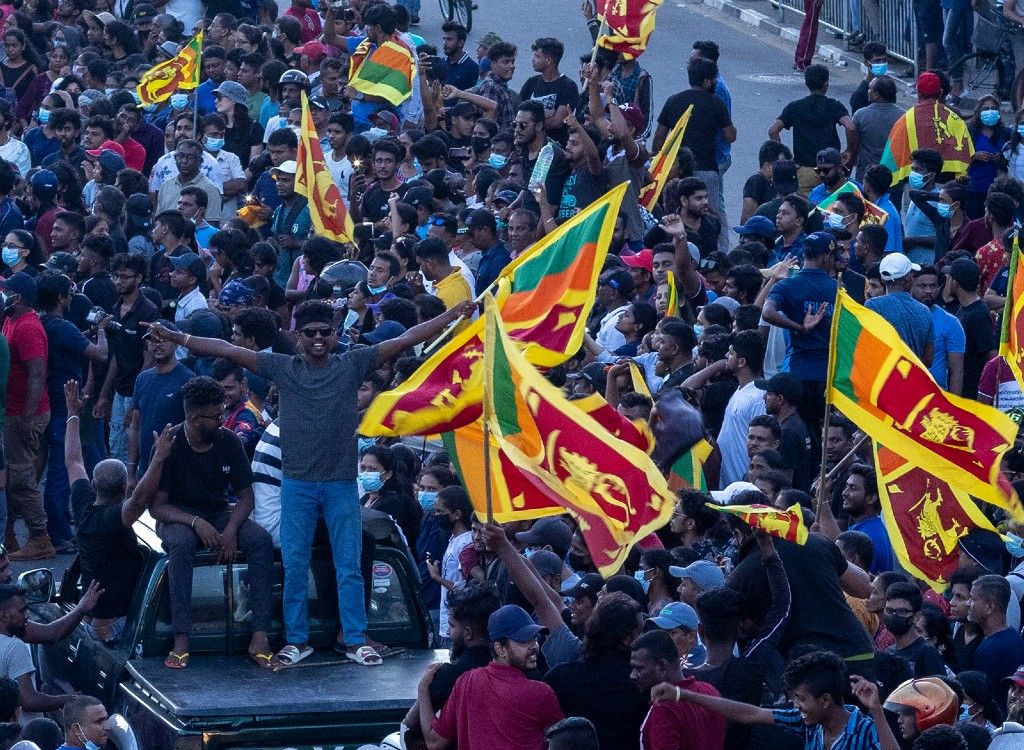
Sri Lanka’s democratic energy remains strong. Citizens have shown willingness to mobilise, question, and demand accountability. The long-term outcome of this energy depends on method. Nonviolent engagement preserves legitimacy on both sides: citizens retain moral authority and institutions retain the space to govern.
Where politics remains nonviolent, reforms gain time. Time allows sequencing, communication, and adjustment. In post-crisis contexts, time is often the most valuable political resource.
Social trust as a development multiplier
Economic models often treat trust as a soft variable. In reality, it is a multiplier. High-trust societies implement policies faster, collect revenue more efficiently, and absorb shocks with less conflict. Low-trust societies spend enormous energy policing compliance, managing resistance, and repairing damage.
Nonviolence strengthens trust not by eliminating conflict but by changing how conflict is handled. It replaces fear with predictability, anger with process, and suspicion with engagement. Over time, this reshapes social expectations: citizens believe institutions will listen; institutions believe citizens will cooperate.
For Sri Lanka, rebuilding trust is particularly urgent. Years of crisis eroded confidence not only in economic management, but in fairness, consistency, and respect. Nonviolent public life restores dignity to disagreement. It allows citizens to oppose policies without rejecting the state itself. This distinction is critical. States collapse not when citizens protest, but when citizens disengage.
Youth, digital space and the future of civic discipline
Sri Lanka’s young people will decide if nonviolence stays alive or becomes just an idea. Social media gives them a strong voice, but also exposes them to misinformation, online fights, and attention-seeking anger.
Practising nonviolence today means learning new skills: thinking before speaking, sharing responsibly, and staying calm under pressure. These are skills that can be taught through education, good examples from leaders, and supportive institutions.
When young people see disagreements handled with respect and fairness, they learn that participating in society matters. But when loud arguments get attention, they learn the opposite. The impact of these lessons affects the country’s future economy and politics.
In short, teaching nonviolence is an investment in better citizenship for tomorrow.
Why this moment matters
Sri Lanka stands at a narrow but promising window. Recovery has begun, but memories of crises remain fresh. This is precisely when societies choose whether to institutionalise restraint or drift back towards confrontation.
If nonviolence is treated as merely symbolic, it will fade. If it is recognised as functional, supporting growth, reform, and resilience, it can become embedded in governance, public administration, and civic life.
The lesson is simple but demanding: methods shape outcomes. Reform achieved through humiliation breeds resistance. Stability maintained through fear breeds fragility. Progress built through nonviolence builds endurance.
Vision for the future
Nonviolence does not eliminate hardship. It does not remove political disagreement or economic pain. What it does is prevent hardship from turning into fracture and disagreement from turning into destruction.
For Sri Lanka, the question is no longer whether nonviolence is desirable. It is whether recovery can survive without it. Evidence suggests it cannot. As the country moves deeper into reform and renewal, the quiet power of nonviolence may prove to be one of its most valuable, and most underappreciated, national assets.
(The writer is an independent researcher)
Disclaimer: The views and opinions expressed in this article are those of the writer and do not necessarily reflect the official position of this publication.











Leave a comment