
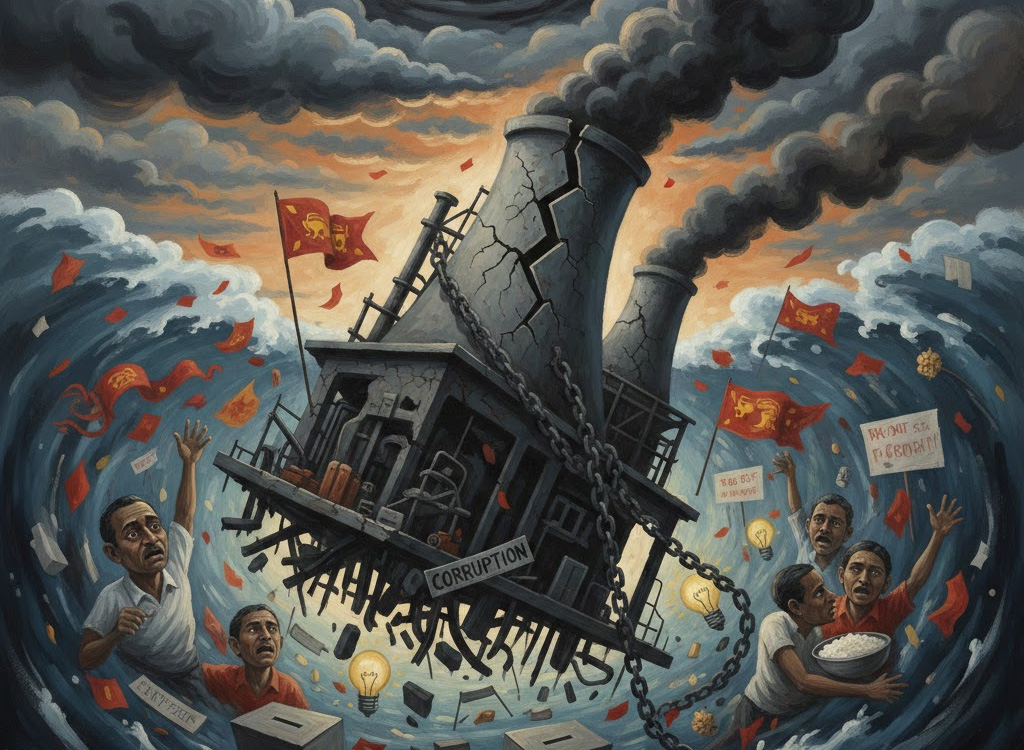
In January 2015, when the so-called ‘Yahapalana’ administration finally dislodged the long-entrenched Rajapaksa-led political machine, the country was promised a new political culture. Yet before the new administration could even settle into office, the bond controversy at the Central Bank of Sri Lanka exploded into public consciousness. It was a cruel twist of fate. A Government elected on an anti-corruption mandate found itself immediately on the defensive over allegations of financial impropriety.
From that moment onwards, the die was cast. The Opposition, led principally by the newly-formed and Rajapaksa-led Sri Lanka Podujana Peramuna (SLPP) and vigorously supported by the Janatha Vimukthi Peramuna (JVP), seized the issue with ruthless clarity. Morning, noon, and night, in Parliament, on television talk shows, at village meetings, and roadside rallies, the bond issue was hammered into the national psyche. It did not matter that prosecutions were slow, that commissions were appointed, that legal complexities abounded. The narrative was simple and devastating: those who promised good governance had betrayed that promise at the very outset.
Politics is often less about the final verdict of a court of law and more about the verdict in the court of public opinion. By the time the elections of 2019 and 2020 arrived, the term ‘bond scam’ had fused with the identity of the outgoing administration. The SLPP’s landslide victory was not merely a triumph of organisation, but the culmination of five years of relentless narrative-building. The unmistakable lesson was that in Sri Lankan politics, there is no such thing as ‘too early’ in a campaign. A government can be defined, often permanently, by its first major misstep.
And, in hindsight, despite the fact that both the SLPP and JVP kept hammering on the alleged bond scam while in Opposition, neither the SLPP that took over government in 2019 nor the JVP/National People’s Power (NPP) that took office in 2024 have actually done anything to prosecute the alleged culprits – all of whom yet roam free.
Today, a similar, if not more profound, opportunity has presented itself to the current Opposition. The alleged coal procurement irregularities surrounding the Ceylon Electricity Board (CEB) have erupted relatively early in the tenure of the present administration. Unlike the bond controversy, which revolved around financial markets and Treasury instruments largely abstract to the average citizen, this issue cuts to the heart of daily life. Electricity is not an arcane financial instrument, it is the lifeblood of homes, hospitals, factories, and farms.
The numbers alone are sobering. Internal CEB documentation reportedly estimates generation losses from inferior coal at Rs. 2.7 billion. Anticipated repair and maintenance costs at the Norochcholai coal power plant are estimated at around Rs. 300 million. The maximum compensation recoverable from the supplier is said to be only Rs. 1 billion, leaving a direct loss of approximately Rs. 2 billion for just the first few shipments. A further 20 shipments are reportedly pending. If even a fraction of these figures holds true, the cumulative losses could multiply several times over. But the true cost may not be captured in ledger entries. The prospect of shutting down the Norochcholai plant for weeks to conduct repairs evokes painful memories. Any threat to generation capacity in the present context risks reopening wounds that are still raw.
What makes the situation politically combustible is that the current ruling alliance rose to power on a platform that was unequivocal in its denunciation of corruption. The JVP-led NPP presented itself as a moral corrective to decades of alleged misgovernance. Its propaganda machinery is perhaps the most disciplined and media savvy in recent history. It understood, better than any other movement, how to align public sentiment with political messaging. That very strength has now become a vulnerability because for a movement that perfected the art of exposing others, being placed under the same spotlight is a dangerous reversal.
It is in this context that the Opposition appears to have finally realised that it is now or never and was seen making waves in Parliament last Friday (20). Speaking in Parliament, members of the Samagi Jana Balawegaya (SJB) threatened mass protests if electricity tariffs were increased further, particularly in light of the CEB’s request to the Public Utilities Commission of Sri Lanka for approval to raise prices by 13.6% in the upcoming quarter.
They openly challenged the suitability of incumbent Energy Minister Kumara Jayakody, pointing to past controversies and ongoing investigations at the Commission to Investigate Allegations of Bribery or Corruption (CIABOC). Additionally, former Minister Patali Champika Ranawaka had reportedly lodged a formal complaint on Tuesday (17), adding to the pressure. Yet parliamentary speeches, however fiery, rarely penetrate beyond the already converted.
If the Opposition truly seeks to replicate the success of the SLPP and JVP between 2015 and 2020 with the bond scam, it must internalise the lesson of that period. The bond controversy was not kept alive solely within the chamber of Parliament. It was taken to temple courtyards, market squares, and village junctions. It was translated into everyday language. It was framed not as a technical dispute, but as a betrayal of trust.
The coal controversy, if the allegations are substantiated, is even more visceral. Inferior coal does not merely represent a balance sheet anomaly; it damages critical generation infrastructure, reduces efficiency, and compels higher tariffs. When consumers are told that prices must rise by double digits at a time when global oil and gas prices are relatively subdued, they will inevitably ask why. If the answer, or even the perception, is that procurement was mishandled or manipulated, the political consequences could be severe.
The gravity of the issue is compounded by allegations that technical warnings were disregarded. Reports suggest that senior CEB officials cautioned against the use of substandard coal months ago. If those warnings were indeed sidelined in favour of assurances from suppliers, the implications are even more disturbing. Governance is ultimately about judgement – about whose advice is heeded and whose is ignored. It is for this reason that it is said that when political authority appears to override technical expertise, the results are often costly.
There is also the question of institutional response. Multiple complaints have reportedly been lodged with CIABOC and with the Police. The pace of investigation, however, appears to many observers to be lethargic. Similarly, the role of the Auditor General, too, is under scrutiny. In a climate where public trust in institutions has been battered by successive crises, perceived inaction can be as damaging as proven wrongdoing. Citizens who are repeatedly told to bear austerity measures will reasonably expect swiftness and transparency when allegations of fraud arise.
It is here that the Opposition’s dilemma becomes decisive. On the one hand, it can continue to wage a largely parliamentary battle, issuing statements and filing motions. On the other, it can undertake the more arduous task of sustained public mobilisation. The former is comfortable and controlled. The latter is unpredictable but potent. The SLPP and JVP chose the latter path during the ‘Yahapalana’ years, and it yielded dividends.
There is a broader democratic principle at stake. Opposition is not merely about waiting for the next election; it is about shaping the national conversation between elections. If indeed the coal procurement affair represents a modern form of plunder, as some critics allege, then confining the debate to committee rooms would even amount to dereliction of duty.
Conversely, if the Government believes it has been unfairly maligned, it too has a responsibility to lay out the facts comprehensively and transparently before the court of the people. Ultimately, the electorate is not naïve. Sri Lankans have endured currency collapses, fuel queues, blackouts, and tax hikes. They have seen governments of every hue promise reform and deliver disappointment. What they are increasingly attuned to is hypocrisy. A Government that rose on the shoulders of anti-corruption rhetoric cannot afford even the perception of duplicity.
Equally, an Opposition that aspires to power cannot afford timidity when presented with a defining issue. The next election may still be years away, but as history has shown, the groundwork for victory or defeat is often laid in the first year of a government’s tenure. In 2015, a single controversy shaped five years of politics. Today, the coal saga threatens to play a similar role. Whether it becomes a footnote or a turning point will depend not only on the findings of investigators, but on the resolve of political actors to confront the moment.
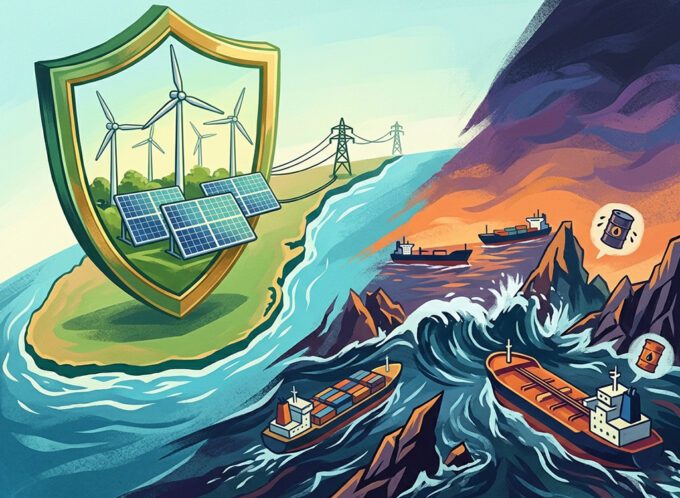
In the end, energy security is too vital to be reduced to partisan theatre. It is the foundation upon which economic recovery rests. If missteps have occurred, accountability must be swift. If accusations are exaggerated, clarity must be provided. The stakes are higher than any single minister or party.
Source: The Sunday Morning
Disclaimer: The views and opinions expressed in this article are those of the writer and do not necessarily reflect the official position of this publication.











Leave a comment