
By Dinouk Colombage
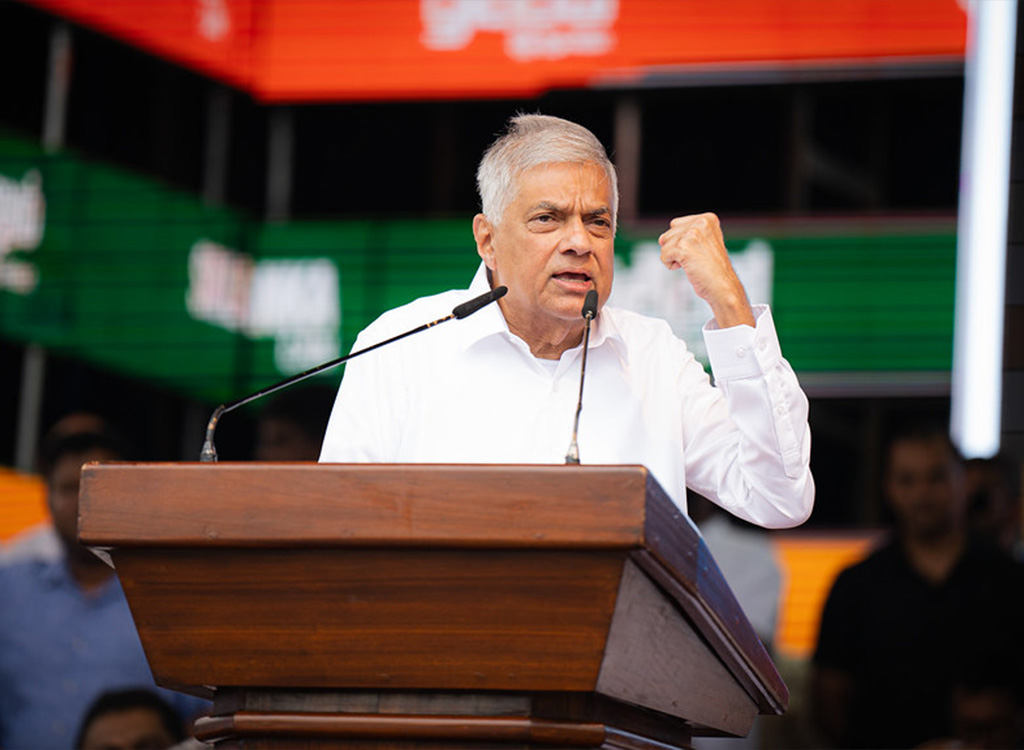
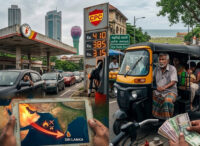
When former President Ranil Wickremesinghe assumed the office of the executive presidency in 2022, it was on the back of Sri Lanka’s greatest economic crisis post-independence. The country was languishing in bankruptcy, with families unable to secure three meals a day. Queues for essentials such as fuel, gas, and medicine were all common sights around the country.
It is of little surprise, therefore, that Wickremesinghe was elected as the eighth Executive President, following the abrupt departure of his predecessor Gotabaya Rajapaksa amidst popular protest and growing unrest and violence in the country.
This was not a task many were willing to take on. In fact, ahead of the parliamentary vote to elect the next president following Rajapaksa’s resignation, Opposition Leader Sajith Premadasa withdrew his name from consideration.
For the Leader of the United National Party (UNP), who was also the sole Member of Parliament (MP) from his party, taking up the task of rebuilding a broken economy was certainly not one which would win him favours. Fast forward 24 months, the country had successfully navigated itself out of bankruptcy and into a period of six consecutive quarters of economic growth.
However, for the erstwhile President, the political system had been ruptured beyond repair with the public demanding a system change, a complete rejection of the existing political establishment in the country. Despite his success at the helm, a politician who had faithfully served the nation for over 47 years was viewed as being too deeply entrenched in a system that the voters demanded be replaced.
A champion of the youth
Having started his career as a member of the UNP in the early 1970s, Wickremesinghe was part of the resurrection of the Grand Old Party which saw it emerge from having only 17 seats in Parliament to securing a five-sixth majority.
While the former President’s political acumen was noticed early on in his career, it was his ability to recognise the need of a situation and take steps to guide the ship through stormy waters, and achieve results, that served him well throughout his career.
It was in his political infancy that the former President first found himself having to address growing unrest and disillusionment amongst the youth of the country. As the embers of the first Janatha Vimukthi Peramuna (JVP) insurrection were still smouldering under the surface, the newly appointed Minister of Youth Affairs and Employment attempted to address the economic hardship faced by the younger generation.
Recognising that public sector jobs, financed by an economy weary from years of being closed off to the rest of the world, would not be a feasible option, priority was given to revitalising the National Youth Services Council (NYSC).
Despite the economy being opened up, a shortage of labour in the newly introduced industries was a concern. Under the NYSC, a slew of training centres was made available to the youth in the hope that they would be attracted to the new opportunities that were arising.
Wickremesinghe’s commitment towards creating a stable future for the youth of the country was quickly recognised and utilised as he was appointed Minister of Education in 1980. Tasked with ensuring that education was able to keep pace with the rest of the world, he quickly moved to expand free education to Year 13.
Taking up causes on the global stage
Wickremesinghe’s dedication to evolving education in the country has been a cornerstone of his career. Even as President, alongside having to rebuild a bankrupt nation, he continued to drive development in the field of education.
In fact, it was during his tenure as President that Wickremesinghe introduced the concept of the world’s first climate change university, an education institution which was to be dedicated to expanding the global fight against climate change.
While early on in his career the former President was focussed on developing a workforce that would enable Sri Lanka to capture manufacturing potential, late in his career he demonstrated an ability to pivot and ensure the country was abreast of global trends. From manufacturing, the former President attempted to position the country as an education hub for the region.
Climate change and the environment are not topics many leaders of the Global South have attempted to champion, choosing vote-winning initiatives instead. However, recognising the indisputable impact it had on Sri Lanka, Wickremesinghe took up the cause.
It was in 2022 that the former President, who was forced to seek assistance for the insolvent country from all quarters, decided that Sri Lanka must secure international support for regional sustainable initiatives in climate change that would ultimately benefit the country.
In a short space of time, the country and its President became one of the leading voices for climate change on the global stage. Championing initiatives such as the Climate Justice Forum, International Climate Change University, and Tropical Belt Initiative, Sri Lanka was making it clear that bankruptcy did not translate into subservience in the face of divisive topics.
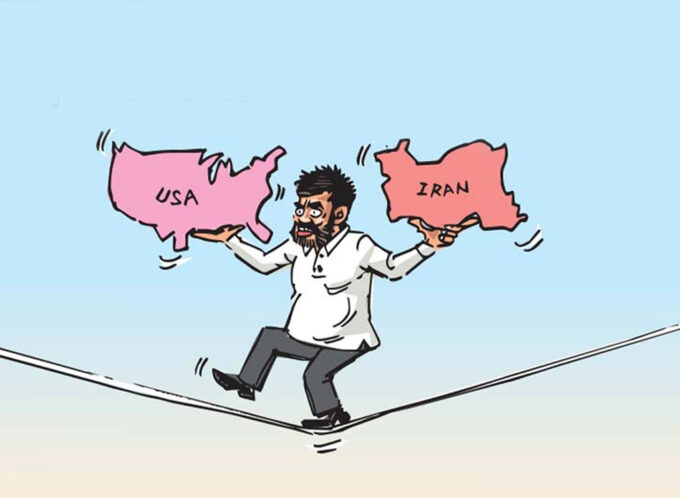
Extending beyond climate change, former President Wickremesinghe took the opportunity brought by Sri Lanka occupying the Chair of the Indian Ocean Rim Association to advocate for the re-establishment of the Indian Ocean as a Zone of Peace (IOZOP).
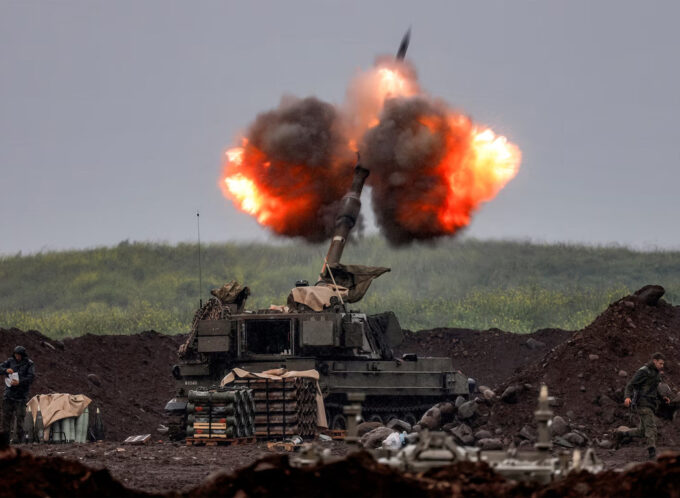
From the halls of the United Nations to the corridors of power in China, the former President did not shy away from standing firm on the principles of the IOZOP, calling for the halt of big-power rivalry in the region – a threat that is becoming more apparent as conflicts spread around the world.
Statesmanship ahead of its time
From early on in his career, Wickremesinghe has demonstrated that foresight accompanies his policies. However, it was when he ascended to the presidency in 2022 that he was allowed to not only shine in a personal capacity but also elevate the country’s international standing.
Bruised and battered, a bankrupt Sri Lanka was reliant on the goodwill and support of the international community. Yet this did not mean that when global issues threatened the rules-based order, of which Sri Lanka is a part, the President stayed silent.
When afforded space on the international stage, Wickremesinghe continued to espouse ideals and beliefs which at times ran contradictory to the larger powers. It was during these years that his statesmanship was truly on display for all to see, where, despite at times having spoken up against those who were allied with Sri Lanka, he maintained their support for the country during its period of turbulence.
From being the youngest Minister to reaching the heights of becoming the eighth Executive President of Sri Lanka, Wickremesinghe has not only witnessed the evolving political landscape in Sri Lanka’s post-independence period, but has also shaped much of it.
Ultimately, his time at the top was short-lived. A country that has been tormented and dragged down to pauperism was desperate for a radical change. Anger had blinded the citizenry to the leadership that they had finally been provided with after decades of mismanagement and corruption.
Whether Sri Lanka will regain a statesman of the calibre and ability of Ranil Wickremesinghe remains to be seen. Certainly, in the years to come, his leadership will be looked back upon with an underlying question of ‘what if’.
(The writer previously served as the Director of International Affairs to former President Ranil Wickremesinghe and is a current member of the United National Party Working Committee)
Disclaimer: The views and opinions expressed in this article are those of the writer and do not necessarily reflect the official position of this publication.




Leave a comment