
By Dr. Nadee Dissanayake
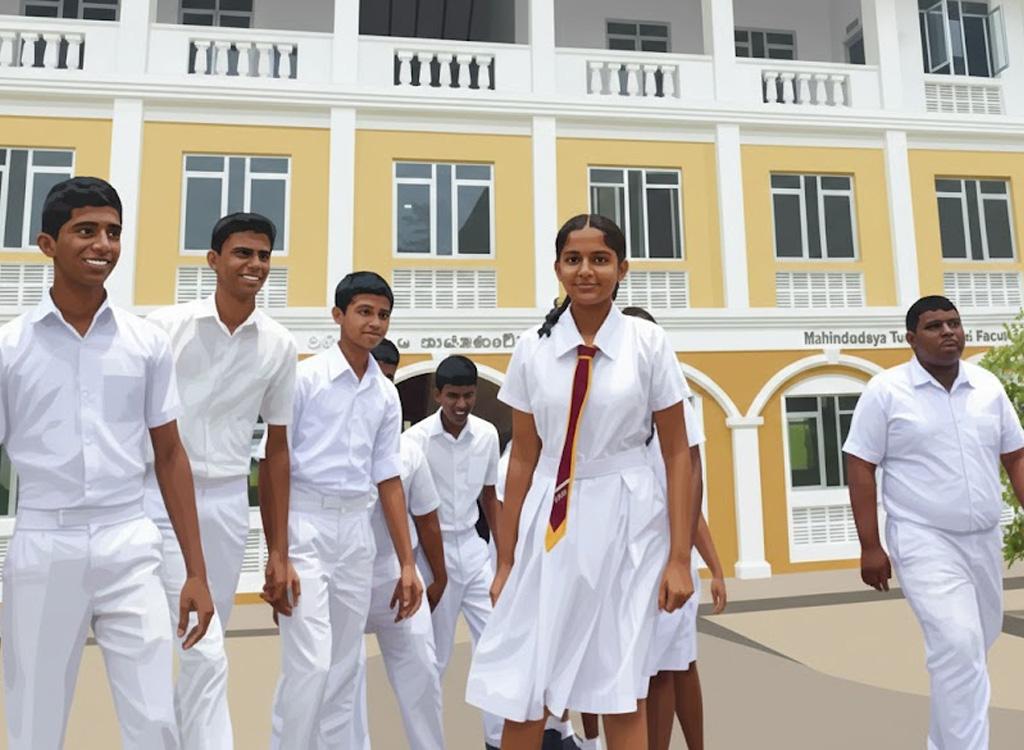
Sri Lanka’s journey in education began with a revolution, not just a policy. When C.W.W. Kannangara, the father of free education, championed this cause, it was a principled commitment to ensure that every child, regardless of income or location, had the dignity and opportunity to build the nation.
For decades, this vision worked, serving as a bridge across class divisions and proving that equality of opportunity was a lived reality. However, preserving a vision does not mean freezing it in time. The world Kannangara prepared children for no longer exists in the same form.
Today, we face a critical question: are we keeping the spirit of free education alive, or just the structure? If we fail to reform now, we risk weakening the very foundation of equality we are trying to protect.
What free education was meant to achieve
Kannangara’s intent was never limited to removing school fees. His philosophy was rooted in dignity, fairness, and national development. Education was meant to produce thinking citizens, ethical leaders, skilled professionals, and socially responsible individuals. It was a tool to strengthen democracy, economic self-reliance, and social cohesion.
Schools were meant to nurture curiosity, discipline, creativity, and character. They were spaces where children learnt not only subjects, but values such as respect, responsibility, and civic duty.
Free education was a means to unlock human potential across the country, not a system designed merely to filter students through examinations. Understanding this original intention is essential, because reform that ignores it risks becoming superficial. Reform that honours it can renew the system’s relevance without losing its soul.
Where school education lost its balance
Sri Lanka’s education system did not collapse. It gradually lost balance.
Over time, examinations came to dominate learning. Performance in a few highly competitive tests began to determine life chances. Teaching increasingly focused on completing syllabi rather than deep understanding. Learning became compressed into memorisation, repetition, and speed.
Teachers, once respected as mentors and guides, became burdened by overloaded curricula and performance pressures. Creativity, discussion, and exploration were often sacrificed in the race to finish lessons on time. Parents, anxious about their children’s futures, turned to private tuition, not by choice but by necessity.
The rise of the tuition culture is not a moral failure of families or teachers. It is a symptom of a system under strain. When classroom learning alone is no longer trusted to be sufficient, equality quietly erodes even within a free education framework.
Free education without equal outcomes
While access to schooling remains universal, outcomes are increasingly uneven. Children’s success now depends heavily on factors outside the classroom – parental income, location, availability of tuition, and exposure to enrichment opportunities.
This reality challenges the core promise of free education. When opportunity exists in theory but not equally in practice, reform becomes not a threat but a responsibility.
True reform does not aim to remove competition or lower standards. It aims to ensure that every child, regardless of background, has a fair chance to develop their abilities fully within the public education system itself.
Why reform can no longer be delayed
Today’s students will enter a world shaped by rapid technological change, global competition, and unpredictable social and economic shifts. Success in such a world depends less on how much information one remembers and more on how well one can think, adapt, communicate, and solve problems.
But much of Sri Lanka’s school education still rewards recall over reasoning and obedience over inquiry. This disconnect leaves students academically qualified but practically underprepared.
Reform is therefore not an admission of failure. It is an acknowledgement that education must keep pace with the realities children will face, not the realities adults remember.
Learning from the world, not copying it
International experience shows that strong education systems do not rely on constant overhauls. They evolve gradually, guided by evidence and feedback. They invest heavily in teachers, balance assessments, and prioritise student well-being alongside achievement.
Sri Lanka does not need to import foreign models wholesale. It needs to adapt lessons wisely. The country’s cultural values – respect for elders, social responsibility, collective well-being, and moral grounding – are strengths, not obstacles.
Reform should deepen these values, not dilute them. Global competitiveness and cultural identity are not opposites. In fact, students grounded in their own culture are often better equipped to engage confidently with the world.
Teachers as the heart of reform
No education reform can succeed without teachers. But reforms often ask teachers to implement changes they had little role in shaping.
Teachers need trust, professional respect, and continuous development, not just new directives. When teachers are empowered to think, adapt, and innovate, classrooms become dynamic spaces of learning rather than exam factories.
Supporting teachers is not an expense. It is the most effective investment any education system can make.
Rethinking assessment without creating fear
Examinations will always have a role in education. But when a single test determines a child’s future, learning narrows and anxiety grows.
Balanced assessment systems combine examinations with project work, practical tasks, and continuous evaluation. They measure not only what students remember, but how they learn, reflect, and apply knowledge.
Such systems reduce fear-driven learning and encourage genuine engagement. They also better reflect real-world skills, where success depends on collaboration, judgement, and adaptability.
Education for nation-building, not just employment
While employability matters, education must do more than produce workers. It must produce citizens.
Schools shape how young people think about society, responsibility, diversity, and ethics. In a country navigating social complexity and economic recovery, education plays a critical role in building resilience and cohesion.
Subjects such as civic understanding, environmental awareness, emotional literacy, and ethical reasoning are not distractions. They are foundations for a stable and forward-looking society.
Reform as a collective effort
Education reform should not arrive as a shock. Sudden changes create fear and resistance. Sustainable reform grows through dialogue, piloting, and gradual adjustment.
It requires the participation of teachers, parents, students, academics, employers, and policymakers. When reform is framed as a shared national effort, trust replaces suspicion.
Education must never become a political trophy or ideological experiment. It is a public good that must outlast governments and political cycles.
Keeping the promise alive
Free education was a promise made to the children of Sri Lanka. Reform is how that promise stays alive in a changing world.
The choice before the country is not between tradition and change. It is between thoughtful adaptation and slow decline. Reform, done wisely, protects equality, strengthens identity, and prepares children to compete globally without losing who they are.
Education is Sri Lanka’s most powerful long-term investment. When it offers every child the maximum chance to learn, grow, and contribute, it becomes the strongest defence against inequality and the greatest engine of national progress.
Reform is not a rejection of the past. It is how the future honours it.
(The writer is an independent researcher)
Disclaimer: The views and opinions expressed in this article are those of the writer and do not necessarily reflect the official position of this publication.








Leave a comment