
By Dinouk Colombage
“Oil and gas have always been political commodities” – Daniel Yergin
Sri Lanka’s energy sector is facing a growing crisis; a combination of governmental mismanagement, an absence of a clear energy policy and global tensions has brought the country to the brink of blackouts, which will accompany the recently announced energy price hikes (for both electricity and fuel).
Global headlines have been dominated by the war in Iran, which was launched last month by the U.S. and Israel. The result has been steadily climbing global oil prices which has been mainly caused by the closure of the Strait of Hormuz by Iranian forces. Countries, especially in Asia, have resorted to enforcing fuel rationing measures which include the introduction of fuel quotas and mandatory work-from-home days for both the private and public sectors.
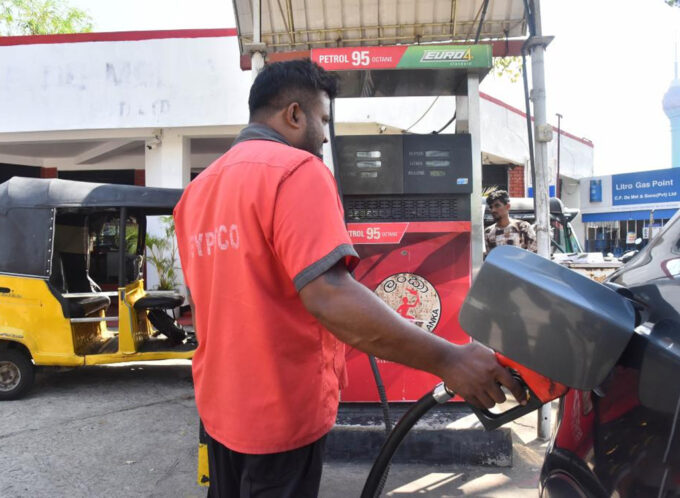
In Sri Lanka the initial news of the joint U.S./Israel attacks on Iran led to widescale panic buying of fuel. Reminiscent of the 2022 economic crisis, queues were abundant at fueling stations around the country as motorists rushed to fill up in anticipation of shortages. Despite attempts by government officials to re-assure the people that the country has adequate fuel supplies, the citizenry remained unconvinced and the queues did not shorten. The result was over-purchasing leading to self-induced shortages in the country. Despite having witnessed recovery efforts from the Opposition benches during the 2022 economic crisis, the President and his cabinet waited two weeks before re-introducing the QR system which had been first implemented in 2022 to conserve fuel stocks. After several days of uncertainty and technical glitches, the system is now in full effect with motorists provided a weekly allocation of 25 litres.
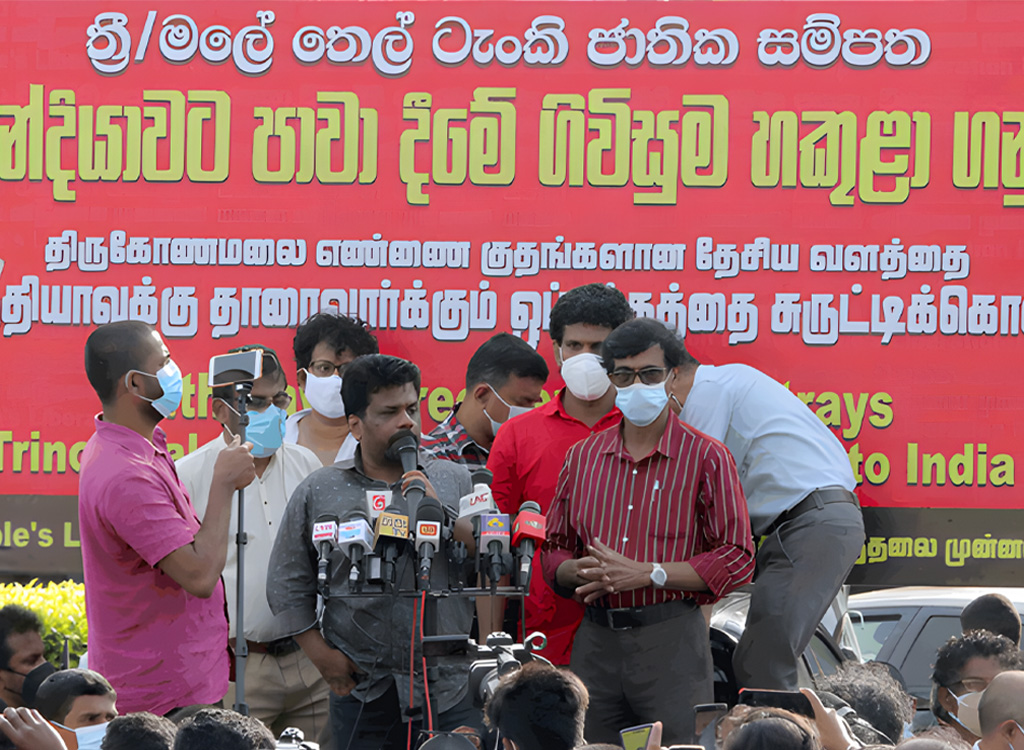
While the Sri Lankan public has acclimatised to the fuel conservation measures, the Sri Lankan government has announced efforts to expand the country’s fuel storage capabilities. Ironically, the country has resorted to the much talked about Trincomalee Oil Storage Tankers, a project that has been the subject of wide-scale opposition by the now ruling Janatha Vimukthi Peramuna (JVP). In the early 2000s the conversations with India over the joint development of these World War 2 era oil storage tankers did not proceed due to the war with the Tamil Tigers in the North and East of the country.
Blind opposition
In 2017, while the Sri Lankan government, led by the United National Party (UNP), was negotiating with India over the joint venture to refurbish and operationalise the storage tankers, several island-wide strikes were launched by trade unions affiliated to the JVP, led by the now President of Sri Lanka (Anura Kumara Dissanayake). In fact, one of the key organisers of the strikes was the current chairman of the Ceylon Petroleum Corporation, in his role as Convenor of the Trade Union Alliance. In 2018 the Sri Lankan government had finalized the joint-venture agreement with India for the development of the oil storage tankers. However, the JVP, once again took to the streets in opposition to the agreement, while also resorting to legal action in an attempt to halt the progression of the agreement.
Opposition to this project has been a cornerstone of the JVP, led by the now President during his tenure in the Opposition benches. With members of the JVP, including the President, embracing the joint-venture agreement with India, after nearly a decade of opposition, the country cannot help but lay partial blame on the past actions of the JVP and their trade unions for the fuel shortages Sri Lankans are facing today.
For the current government, it would bode well if they were look back upon their insistence on blind opposition to international development projects. While Sri Lanka is grappling with fuel shortages, the public are also facing the increasing possibility of power cuts due to the growing reliance on fuel and coal for power generation. While the government insists that power cuts are not necessary, they have urged the public to use electricity sparingly. Is this situation purely a result of the ongoing war in West Asia?
Following 2022 economic crisis, recovery efforts were focused not only on financially rebuilding the country but also diversifying our industries including the energy sector. With an increased focus on combating climate change and reducing the country’s reliance on external suppliers of energy, Sri Lanka increased their focus on renewable energy. With World Bank studies suggesting that the country has vast renewable energy resources, including wind energy, Sri Lanka was not only attempting to achieve 70% dependance on renewable energy by 20230, but was also exploring options of selling excess energy to India. In 2024 the former government, under President Ranil Wickremesinghe, approved the unbundling of the State-Owned Ceylon Electricity Board (CEB). The rationale behind the Electricity Act was to reduce the state monopoly on the energy sector and encourage greater private investment in the various power generation fields including renewable energy, while maintaining the state’s role as a regulator.
Abandoning diversification
However, upon assumption of office, the current government has chosen to abandon the diversification to renewable energy. After several months of hardened objections by the National People’s Power (NPP) and the JVP to the Adani Group’s proposed 484MW wind energy project, upon the NPP forming the government, the Indian conglomerate withdrew from the project. Alongside the withdrawal of the Adani project, a further 43 renewable energy projects drew attention to ongoing delays in approvals for their projects. To date there has been no indication that these projects have been approved, nor has there been a replacement found for the Adani project.
In fact, along with the loss of increased energy generation from the absence of these projects, the country is also facing financial losses due to the government’s refusal to support the renewable energy sector. At the beginning of this year, the Ceylon Electricity Board was accused of causing losses amounting to Rs. 2bn due to the curtailment of renewable energy production. Going further, the government has since amended the 2024 Electricity Act, allowing for the unbundling of the CEB, but retaining full state ownership of the new companies, effectively adding a new layer of bureaucracy in an already overburdened sector. Not only will this impact efficiency, but it will also see a loss of foreign investments in the energy sector.
While the government is continuing to avoid expanding the country’s renewable energy production, they are also grappling to ensure uninterrupted power generation from fossil fuels. During the country’s dry period (March-May), the country’s power generation relies heavily on coal for its Lakvijaya Power Plant. While designed to produce 810MW of electricity, recent coal shipments have been found to be below acceptable standards resulting in a shortfall of energy generation. In fact, due to the government insistence on the continued use of this substandard coal the country has been forced to resort to using diesel for power generation. At a time that the global markets are scrambling to secure adequate fuel stocks, and while Sri Lanka is rationing fuel available to motorists, the government must immediately answer as to why they are continuing to use subpar coal forcing increased diesel consumption.
As Sri Lanka continues to face the financial strain from the ongoing war in West Asia, the government must be held accountable for current, and past, actions that have resulted in the growing energy crisis. Increased financial burdens are being placed upon the public, while the NPP government searches for answers to problems that are in many ways their own making.
(The writer previously served as the Director of International Affairs to former President Ranil Wickremesinghe and is a current member of the United National Party Working Committee)
Disclaimer: The views and opinions expressed in this article are those of the writer and do not necessarily reflect the official position of this publication.







Leave a comment