

By Dinouk Colombage
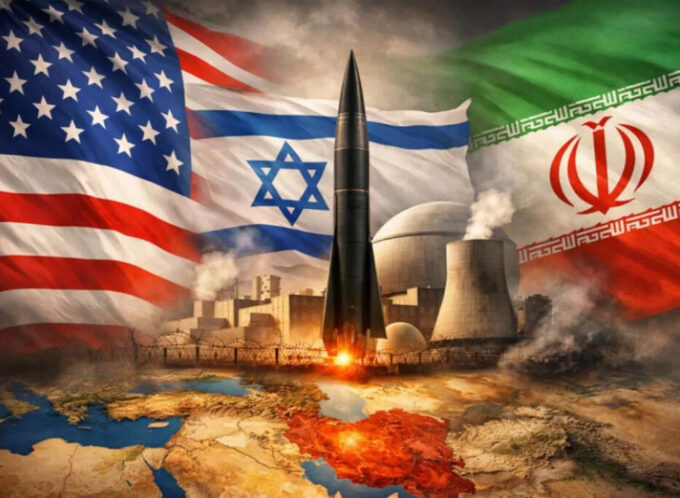
The Israel/U.S. – Iran war has had far reaching implications on the global supply routes and economies across the world. Beyond the traditional areas of focus, several countries have found themselves thrown under the spotlight on specific matters, including international obligations.
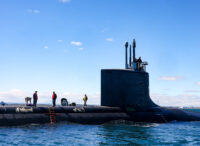
When an Iranian naval vessel was sunk by a U.S. submarine within Sri Lanka’s Exclusive Economic Zone (EEZ) the country’s national security was under scrutiny. But a lesser discussed aspect was the country’s duty to uphold the international community’s commitments to the region.
During the height of the Cold War in the 20th Century, tensions were rapidly rising and the threat of a war breaking out in the Indian Ocean was a very real possibility. Sri Lanka, who is strategically positioned along the key shipping routes in the Indian Ocean, has played a foundational role in defining the region and its standing on the international stage. In 1964 at the Second Summit of the Non-Aligned Movement in Cairo, Egypt, Prime Minister Sirimavo Bandaranaike proposed that the Indian Ocean be declared a “Zone of Peace”, free of military bases and nuclear weapons. With increased militarisation across the world, India’s Prime Minister, Jawaharlal Nehru, supported the proposal. This proposition was once again discussed at the Third Conference of Heads of State or Government of Non-Aligned Countries held in Lusaka, Zambia in 1970.
A year later, at the United Nations, Prime Minister Bandaranaike tabled resolution 2832 (XXVI) which officially designated the Indian Ocean as a Zone of Peace. As per the resolution it was declared that “the establishment of a zone of peace in the Indian Ocean in an extensive geographical area in one region could have a beneficial influence on the establishment of permanent universal peace based on equal rights and justice for all, in accordance with the purposes and principles of the Charter of the United Nations.” While countries such as the USA, Australia and the U.K. opposed the resolution, terming it “simplistic, idealistic and naive”, it was adopted by the UN General Assembly with no country voting against the proposal. Incidentally, while the initial proposal was tabled by Sri Lanka, countries such as Iran threw their support behind the resolution and assisted in the final drafting of the document.
Fifty-five (55) years later and the designation of the Indian Ocean as a Zone of Peace has come under pressure from the ongoing war in the Gulf. For Sri Lanka, as the original proponent of this declaration, the responsibility lies with the government to uphold its principles in the face of wanton disregard and violation. The options before the country, while limited, are clear. The breach of the UN Declaration must be raised at the United Nations, making it clear, that in line with the principles of the Indian Ocean Zone of Peace, Sri Lanka has continued to remain neutral in the ongoing war. It must be stressed that in order for countries such as Sri Lanka to preserve its neutrality the international laws and principles governing the region must be adhered to by all actors involved in the conflict. Additionally support from the original countries involved in the Declaration, including the Non-Aligned Movement, should be garnered by Sri Lanka in order to safeguard this key principle of the Indian Ocean.
The ongoing silence of the Sri Lankan government, in the face of foreign military action in the country’s EEZ, not only infringes upon the obligations undertaken by the littoral States in the Indian Ocean but also betrays the international responsibilities assumed by Sri Lanka as the original proponent of this Declaration. Despite a political movement emerging in society, which propagates an idea of a 76-year curse, the country has a duty to uphold the obligations undertaken by past government’s on the global stage.
(The writer is the Chief Research Officer at the Geopolitical Cartographer and has previously served as the Director of International Affairs to former President Ranil Wickremesinghe)
Disclaimer: The views and opinions expressed in this article are those of the writer and do not necessarily reflect the official position of this publication.








Leave a comment