
By Nilantha Ilangamuwa
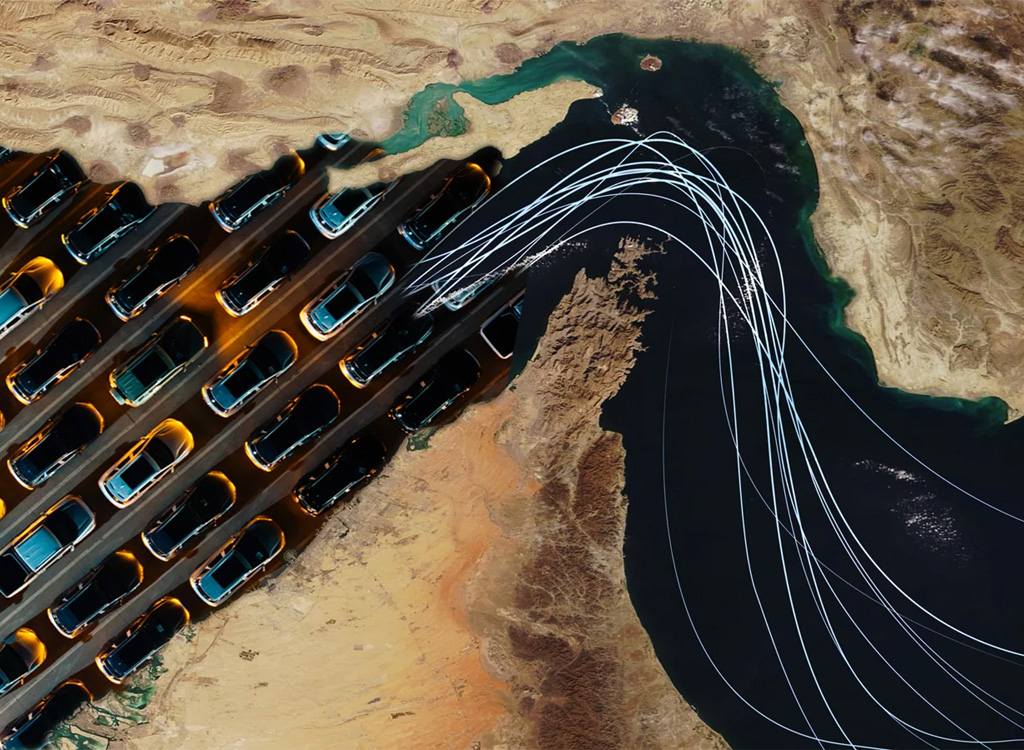
The focal point: the Strait of Hormuz in the Persian Gulf. Enemy forces have captured seven key military bases, cutting off the major oil supplies of the free world.
Your challenge is how you are going to respond. You fly a McDonnell Douglas VTOL BA Harrier, and your mission is to destroy all seven bases without losing your carrier. Your opposition consists of MiG-21 fighters. That was 37 years ago. Have you heard anything about this? I doubt it.
That was ‘Operation Hormuz’. This was 10 years after the Iranian Revolution, which overthrew a pro-American autocrat and replaced him with a theocrat. It was the final year of the decade-long Soviet intervention in Afghanistan, an intervention whose consequences still haunt the region and its people.
From a moral perspective, Americans were not alone in the catalogue of sinners; throughout human history, those who wielded unchecked and unaccountable power inflicted the deepest wounds. Sin and virtue are abstractions; the only measure is the consequences of action or inaction.
Returning to Hormuz, the area has changed in shape and form, but the stakes remain as high as ever. ‘Operation Hormuz’ was not real; it was virtual, a product of the emerging computer era where games were designed to simulate scenarios of extreme pressure. Introduced in 1989 by Durell Software Ltd., a small British company known for arcade-style and action games, the game was later released in North America as ‘Harrier 7’.
The company was founded by Robert James Durell White, a self-taught programmer and entrepreneur. Despite the military realism in the game, White had no verified links to any intelligence service or government agency.
Yet, decades later, what he simulated eerily reflects the real-world tension and military posturing that now dominate discussion of the maritime chokepoint, the Strait of Hormuz. The game is a reminder that human imagination often anticipates events long before official institutions respond to them.
Lethal significance
Reading materials for this column, I was struck by the audacity of those who envision possibilities that others cannot conceive. People like White, or the scientists submitting classified studies decades earlier, approached problems from perspectives that challenge conventional thinking.
Today, the Strait of Hormuz is part of everyday conversation. Open-source intelligence and global connectivity allow almost anyone to understand its strategic importance within minutes, yet those who first acted, studied, or speculated when the world was ignorant shaped the contours of global policy. The game, ‘Operation Hormuz,’ is only one illustration of foresight in miniature, a digital simulation of what decades later became a reality in geopolitics.
However, it would not be surprising if US President Donald Trump only became aware of the Strait of Hormuz days after his fresh interventions in Iran. He might have turned to his inner circle and asked, “Where the hell was that? What is this Hormuz?” Such details may eventually emerge through accounts from those directly involved in high-level decision making.
Time and again, Americans have revealed the messy reality behind closed-door discussions – humour, arrogance, ignorance, and ruthless strategic calculation all intertwined. If he isn’t impeached or sidelined, Trump will continue to steer the West for several years, navigating a path fraught with challenges for himself, his allies, and his adversaries.
Yet US military and policymakers – what outsiders often label the ‘deep state’ – have long understood Hormuz and its lethal significance: the chokepoint’s power to control trade, dictate energy security, and determine who holds the lifeblood of the global economy.
The nuclear proposal by Howard David Maccabee, submitted in 1963 to G.H. Higgins at the Lawrence Radiation Laboratory, is another evidence of extreme strategic imagination. The report considered the use of nuclear explosives to create a sea-level canal across Israel’s Negev Desert, linking the Mediterranean with the Gulf of Aqaba.
This was not mere theorising; the report provided technical calculations, including the detonation of multi-kilotonne nuclear devices buried up to 1,300 feet deep, spaced four per mile, to remove millions of cubic feet of rock.
The proposal was technically feasible but politically incendiary, ethically questionable, and environmentally catastrophic. It assumed the willing use of nuclear detonations in proximity to human settlements, long-term contamination, and the creation of a strategic chokepoint capable of altering global trade.
The report estimated costs at roughly $ 2 million per mile, yet acknowledged that political and regional opposition would be overwhelming. Its very existence challenges the boundaries between civil engineering and militarisation, showing how far planners were willing to push the limits of conventional morality in pursuit of strategic advantage.
Insurance against irrelevance
What is vital is that the maritime chokepoints define dominance. The global reaction to China’s control of Hambantota illustrates this clearly. The port, leased for 99 years, triggered alarm in Western capitals precisely because it allows Beijing permanent influence over a critical Indian Ocean node. Djibouti, the site of China’s first overseas naval base, drew similar consternation, reflecting the stark reality that maritime infrastructure is not commercial alone but a strategic lever.
These moves are rarely discussed in isolation; they form part of a deliberate sequence of manoeuvres where recognition, access, and influence are traded, bought, or forcibly projected. Israel’s formal recognition of Somaliland is another chess piece in this grand game, confirming that weak nations and disputed territories become significant when they occupy strategic positions along vital sea routes. The world’s powers manoeuvre in these waters, not merely for trade, but for the capacity to coerce, defend, and dominate entire regions.
History shows these chokepoints are neither new nor neutral. Sri Lanka, described in the ‘Periplus of the Erythraean Sea,’ acted as a mandatory stopover for ancient traders. Goods were exchanged, repackaged, and deliberately misattributed, obscuring supply chains from rivals. The practice of leveraging geography for control has persisted through centuries, from colonial ambitions to modern port leases.
Every attempt by a power to control a port or naval base, whether Hambantota or Djibouti, is a continuation of a struggle that has defined empires and nations alike. For the West, each Chinese foothold provokes unease not because of immediate threat, but because strategic patience, foresight, and denial of advantage have always been markers of decline or resilience. Chokepoints are leverage; they are insurance against irrelevance.
The stakes of chokepoints
The common obstacle to effective nation-building is not technology, markets, or ideology. It is the absence of a shared sense of responsibility, a coherent national consciousness that aligns citizen priorities with state strategy.
Developing such awareness is neither immediate nor simple; it is a process that unfolds over decades, requiring institutions that teach, challenge, and shape perception. Without it, states become reactive rather than proactive, responding to crises rather than anticipating them.
The real question is whether leaders, militaries, and civilians today can match the imagination and audacity of those who came before. Nations build infrastructure, alliances, and military capacity around it. Every discussion, plan, and contingency is informed by the lessons of the past, by simulations, and by exercises that predate the events they now describe. It demonstrates the unbroken chain between theory and action, between imagination and geopolitics, between a self-taught programmer in England and global energy markets.
If the world’s leaders understood only half the significance of these chokepoints, chaos would dominate trade, energy, and conflict resolution. Yet knowledge alone is insufficient. It must be paired with moral courage, strategic patience, and a willingness to confront consequences without pretence.
Historical examples abound where visionaries anticipated problems decades before institutions recognised them. Those who ignore history, technical possibility, and the reality of strategic geography do so at their peril.
The powerful do not negotiate from weakness; they calculate, position, and strike. Those unable to grasp the stakes of chokepoints, whether maritime or political, will inevitably be forced to beg, adapt, or perish. This is the game: timeless, brutal, and unforgiving.
(The writer is an author based in Colombo)
Disclaimer: The views and opinions expressed in this article are those of the writer and do not necessarily reflect the official position of this publication.









Leave a comment