
By The Pulseline News Desk
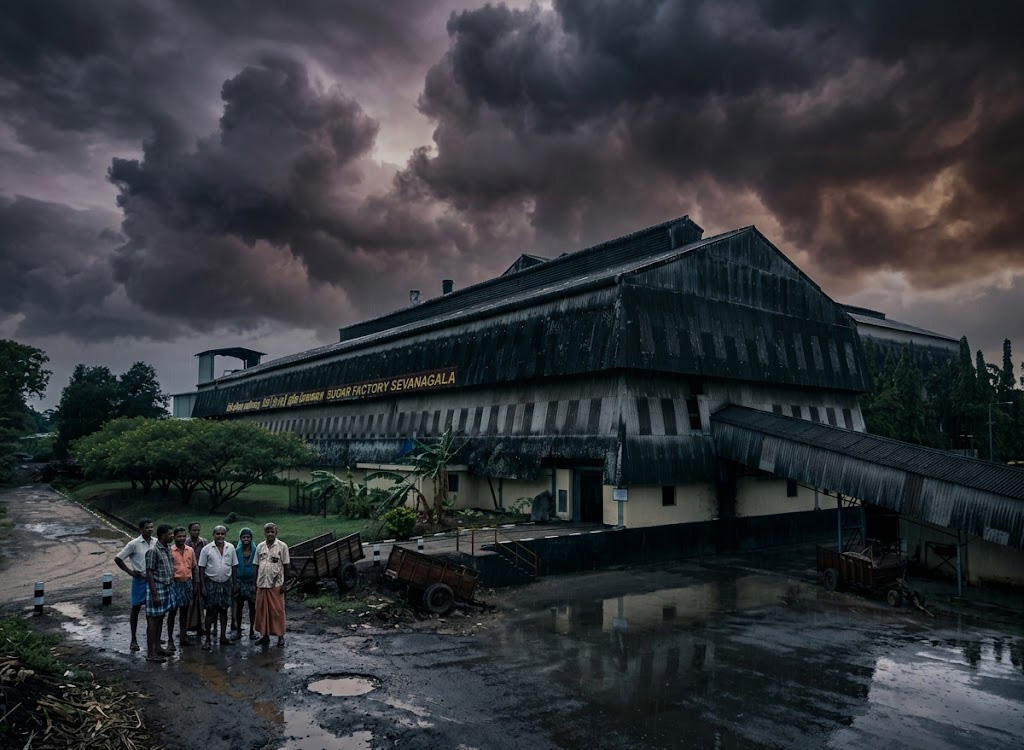
The temporary closure of the Sevanagala Sugar Factory has raised concerns well beyond the factory gates, with sugarcane farmers in Monaragala among those most vulnerable to the economic fallout from the continuing labour dispute.
The factory was shut down until further notice after repeated disruptions to production caused by employee unrest and trade union action. Management has said attempts to resume production had failed despite workers reporting for duty from August 25.
While the immediate dispute centres on wages, staffing and working conditions, a prolonged shutdown could create a much larger problem for the region’s sugarcane farmers, whose livelihoods depend heavily on the factory continuing to process and purchase their harvest.
For farmers, a disruption at the factory can mean uncertainty over where and when their sugarcane will be processed, while delays in the supply chain can affect cash flow and future cultivation decisions.
The economic impact could also spread through the wider Monaragala economy. Transporters, suppliers, traders and other businesses linked to the sugar industry depend on the continuous operation of the factory and the movement of sugarcane and finished sugar.
Management has warned that the factory itself is already suffering financial losses, with salaries and overtime being paid despite production remaining stalled. Disruptions to trucks transporting sugar for sale have also affected revenue-generating activities.
The dispute therefore risks becoming more than a confrontation between management and trade unions. If the closure continues, the cost could ultimately be borne by workers, farmers and businesses whose incomes depend on the factory.
The Government now faces the task of ensuring that a labour dispute at one of the country’s key sugar-producing facilities does not develop into a wider agricultural and economic crisis in the region.
With sugarcane farmers dependent on a functioning processing facility, restoring production quickly is likely to be as important as resolving the underlying labour dispute.













Leave a comment