
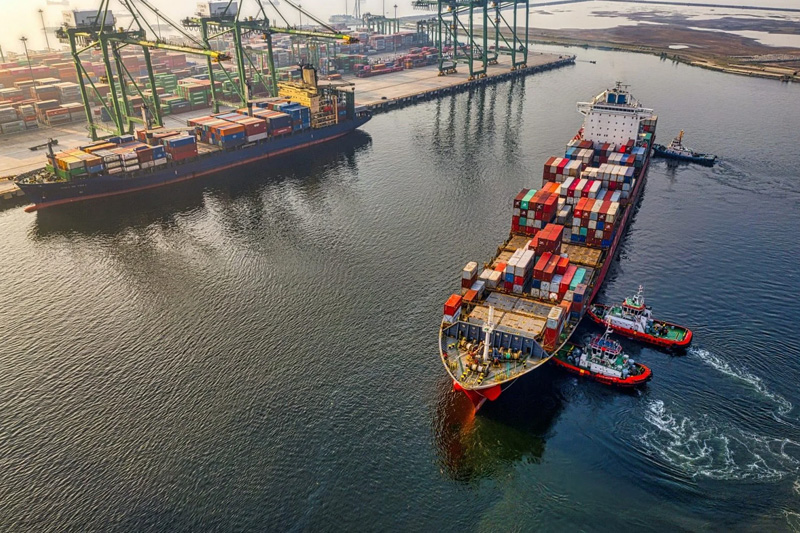
Sri Lankan exporters are once again grappling with mounting uncertainty as severe operational delays at the Port of Colombo prompt major international shipping lines to bypass the country’s primary maritime gateway.
Last week, ZIM Integrated Shipping Services informed local clients that its vessel, MV Shanghai 018W, originally scheduled to dock in Colombo on 14 September, would instead discharge its cargo in India, returning more than ten days later. The abrupt change has left exporters facing delays of up to two weeks — a devastating blow to time-sensitive sectors such as apparel, electronics, and rubber manufacturing.
At the heart of the disruption lies long-standing inefficiencies in terminal coordination and customs operations. The absence of a streamlined Inter-Terminal Transport (ITT) system forces transshipment cargo to be moved slowly using outdated methods. As a result, congestion across multiple terminals has become chronic.
While Colombo Port handled 4.7 million TEUs in the first seven months of 2025 — a 4% rise from last year — industry analysts warn that volume growth masks deep-rooted logistical challenges. Compounding matters, nearby Indian ports such as Mundra, Cochin, and the newly inaugurated Vizhinjam are luring shipping lines with faster turnaround times and modern infrastructure.
Exporters and industry stakeholders have expressed frustration at the lack of decisive policy direction under the National People’s Power (NPP) government. Key infrastructure projects, including the East and West Container Terminals, remain stalled, while customs reform has seen little progress.
“This isn’t just an operational hiccup — it’s a strategic failure,” one senior exporter told the BBC. “Without urgent investment and long-term planning, we risk losing our edge in regional trade.”
With Sri Lanka relying heavily on external trade to stabilize its fragile economy and rebuild foreign reserves, continued disruptions at Colombo Port could have far-reaching consequences.
Unless the government acts swiftly to modernize port operations and restore confidence among international shipping lines, Sri Lanka’s status as South Asia’s transshipment hub may be at serious risk — leaving exporters to bear the brunt.












Leave a comment