
By The Pulseline News Desk
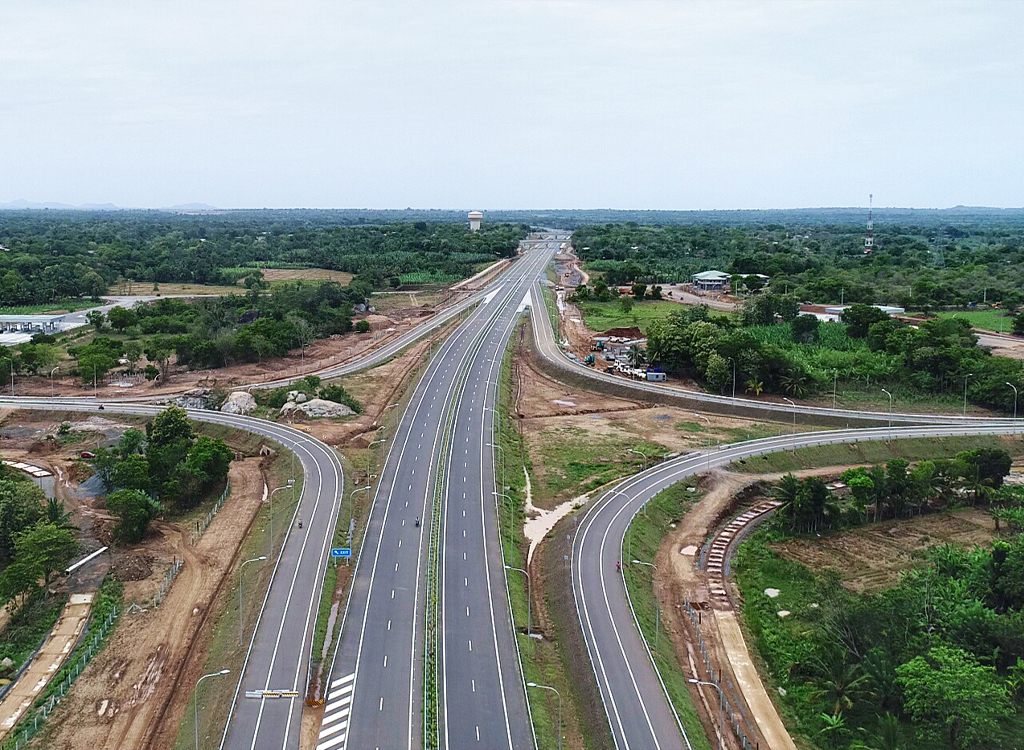
Sri Lanka’s expressway network generated more than Rs. 16 billion in revenue last year, while maintenance costs exceeded Rs. 5 billion, according to figures presented in Parliament, highlighting both the financial strength and the operational burden of the country’s key transport infrastructure.
Minister of Transport and Highways Bimal Rathnayake has told Parliament that the total maintenance cost for the 312.57-kilometre expressway network amounted to Rs. 5,180.90 million.
He was responding to a question raised by Opposition MP Ravi Karunanayake during a parliamentary session held on Wednesday (20).
Breakdown of maintenance costs
According to the Minister, the largest share of maintenance expenditure was incurred on the Southern Expressway (E1), which alone cost Rs. 2,024.5 million for its 200.45 km stretch from Kottawa to Mattala.
Other major routes included:
- Outer Circular Expressway (E2): Rs. 767.6 million for 28.86 km from Kottawa to Kerawalapitiya
- Colombo–Katunayake Expressway (E3): Rs. 834.1 million for 25.8 km from Peliyagoda to Seeduwa
- Central Expressway (E4): Rs. 531 million for 40.91 km from Mirigama to Kurunegala–Yaggapitiya
- Southern Expressway Extension (E5): Rs. 1,022.7 million for 16.55 km from Andarawewa to Hambantota
Officials note that maintenance costs remain concentrated on heavily used corridors, particularly the Southern Expressway, which continues to handle high traffic volumes from both passenger and freight transport.
Revenue performance in 2025
For the period from January 1 to December 31, 2025, total expressway revenue stood at Rs. 16,330.14 million, reflecting strong usage of the national highway network.
Revenue was distributed across the network as follows:
- Southern Expressway: Rs. 5,031.28 million
- Outer Circular Expressway: Rs. 4,347.32 million
- Colombo–Katunayake Expressway: Rs. 3,355.12 million
- Southern Expressway Extension: Rs. 2,019.45 million
- Central Expressway: Rs. 1,576.97 million
The Southern Expressway and Outer Circular Expressway together accounted for the bulk of earnings, underscoring their role as the country’s most commercially significant road corridors.
Revenue vs maintenance balance
While the figures suggest that expressways collectively generate revenues well above their annual maintenance costs, transport analysts caution that these headline numbers do not capture broader financial obligations, including debt servicing, expansion costs, and long-term infrastructure upgrades.
Maintaining high-speed road networks also requires continuous investment in safety systems, resurfacing, lighting, and structural repairs, particularly in areas exposed to heavy rainfall and increasing traffic density.
Political and policy implications
The disclosure in Parliament has also reignited discussion on infrastructure efficiency and cost recovery in Sri Lanka’s transport sector. Lawmakers have frequently debated whether toll-based expressways are delivering optimal returns relative to their construction and upkeep costs.
For the government, the figures offer both reassurance and pressure: reassurance that expressways remain a strong revenue-generating asset, but pressure to ensure long-term financial sustainability as usage and maintenance demands continue to rise.










Leave a comment