
By The Pulseline News Desk
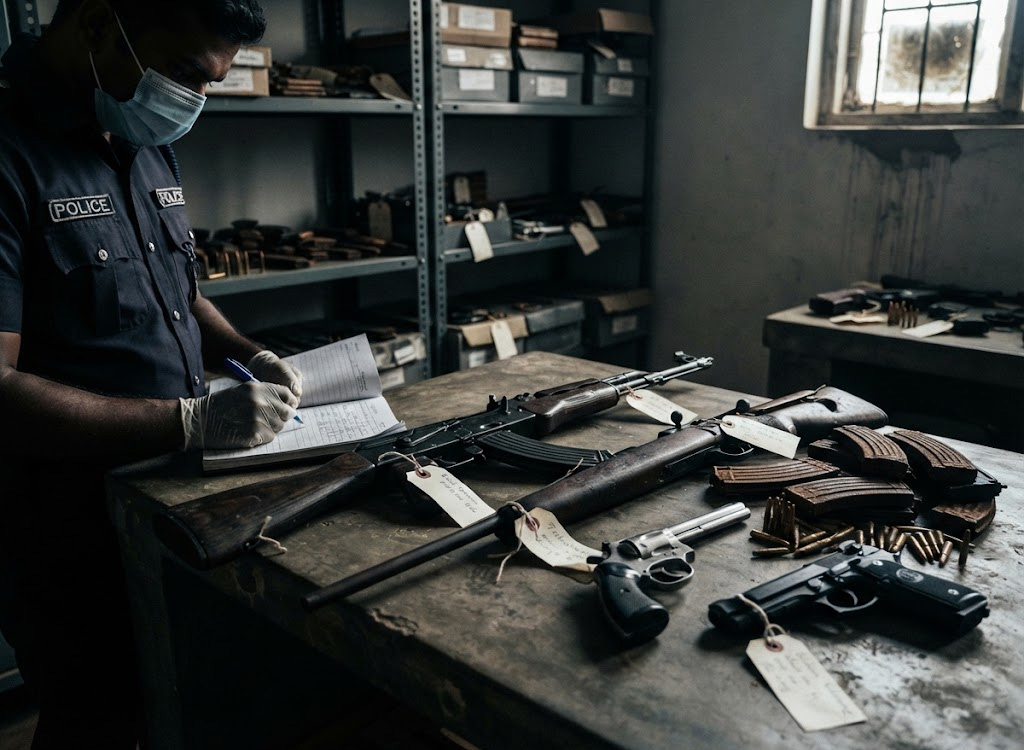
Sri Lanka’s continuing struggle with illegal firearms has come under renewed scrutiny, with police seizing 891 illegal firearms across the country during the first eight and a half months of 2026, while 40 shooting incidents have been reported during the same period.
Cabinet Spokesman and Minister Nalinda Jayatissa has disclosed the figures at a media briefing, providing a snapshot of the scale of the country’s illegal firearms problem and the violence associated with it.
According to the Minister, police had recovered 891 firearms between January 1 and September 17, including weapons capable of causing significant damage in organised criminal activity.
Among the firearms seized were 14 T-56 assault rifles, 33 pistols and 25 revolvers.
The figures indicate that illegal firearms remain a significant law-enforcement concern despite ongoing police operations aimed at locating and removing such weapons from circulation.
The situation becomes more pronounced when compared with the previous year. Jayatissa has said police had seized 2,404 firearms in 2025, including 74 T-56 assault rifles.
While the number of seizures recorded so far this year is below the total for 2025, the recovery of assault rifles and other lethal weapons continues to raise concerns over the availability of firearms outside the legal system.
40 shootings, 22 deaths
The firearm seizures come against the backdrop of a series of shooting incidents reported across the country.
Jayatissa has said 40 shooting incidents had been recorded since the beginning of 2026. Of these, 35 had been identified as organised shootings, indicating that the majority were being linked by investigators to organised criminal activity.
A total of 22 people have been killed in shooting incidents reported so far this year, according to the Minister.
The figures highlight the link between the circulation of illegal firearms and the continuing threat posed by organised shootings, while also placing pressure on law-enforcement agencies to identify the sources of weapons and dismantle the networks responsible for their distribution.
The seizure of hundreds of firearms does not, however, necessarily indicate the full scale of the problem. Every weapon recovered represents one less firearm available for criminal use, but the continued occurrence of organised shootings suggests that illegal weapons remain accessible to criminal networks.
From weapons to organised crime
Sri Lanka has faced recurring concerns over the use of firearms in organised criminal activity, particularly in shooting attacks. The recovery of T-56 assault rifles, pistols and revolvers demonstrates that the weapons circulating illegally range from handguns to military-style assault rifles.
The Government has increasingly placed law-and-order concerns and the suppression of organised crime among its security priorities. The latest figures provide an indication of the challenge facing police as they attempt to curb both the supply of illegal firearms and their use in violent crime.
With 35 of the 40 shootings this year classified as organised shootings, the issue extends beyond isolated incidents of gun violence. It points to the continuing need for investigations into the criminal networks, financing and supply chains behind such attacks.
For the authorities, the task therefore goes beyond recovering weapons after they have been used or discovered. Tracking how firearms enter criminal circulation, who supplies them and how they are transferred between criminal groups will be central to reducing the availability of illegal weapons.










Leave a comment