
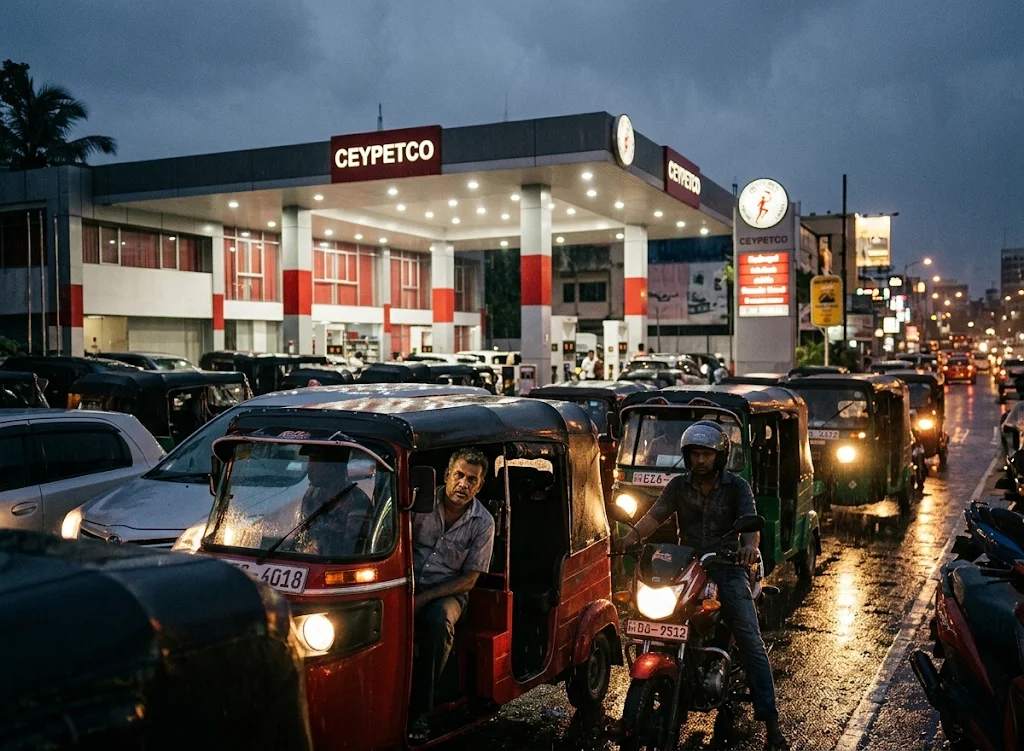
Government subsidy fails to prevent private operators from raising prices as authorities turn to CPC expansion to improve competition
By The Pulseline News Desk
Motorists hoping for some relief from rising fuel costs are facing fresh uncertainty, with private fuel operators continuing to increase prices despite government intervention aimed at easing pressure on distributors.
The decision by private suppliers to raise the prices of Octane 95 petrol and Super Diesel has raised questions about the effectiveness of the Government’s fuel subsidy scheme and whether consumers are benefiting from measures introduced to stabilise the market.
The Government recently introduced a subsidy to help private fuel distributors manage losses arising from fluctuations in international petroleum prices. However, the assistance has not prevented operators from seeking higher prices, exposing the continuing difficulties in balancing supplier interests, market competition and consumer protection.
Difficulty in absorbing losses
Energy Ministry Secretary G.M.R.D. Aponsu has noted that private fuel companies had repeatedly informed the authorities that they could not continue absorbing losses during periods of significant volatility in global fuel prices.
He has explained that the Government had consequently introduced a pricing formula allowing private operators to adjust prices within prescribed limits, rather than requiring them to maintain prices regardless of changing market conditions. “When fuel prices experience significant fluctuations, the three operators other than CPC tell us they cannot absorb the losses. We have therefore given them a pricing formula. Under that formula, they are allowed to increase prices within a prescribed limit. That is why they have increased the prices of Octane 95 petrol and Super Diesel. They have that freedom within the framework provided to them,” he has been quoted in the media.
Aponsu has observed that private distributors were nevertheless required to maintain minimum stock levels and ensure the continuous release of fuel to the market in accordance with existing regulations.
Structural weaknesses
However, the latest price adjustments have brought renewed attention to the structural weaknesses of Sri Lanka’s fuel distribution system, particularly the unequal conditions under which the private operators entered the market.
According to Aponsu, the problems are rooted in the original arrangements made when private sector participation was introduced into an industry historically dominated by the Ceylon Petroleum Corporation (CPC).
He has argued that the market was not established on a level playing field, with the existing distribution infrastructure and market opportunities effectively divided among operators, creating distortions that have continued over the years. “This is not an arrangement that came into effect yesterday. These agreements have been in operation for years. There was a problem from the very beginning. The market was not created on equal terms for all companies. It was not designed as a truly competitive marketplace. What existed under CPC was essentially distributed among the other companies, creating distortions from the outset,” he has explained.
His remarks highlight a wider policy challenge facing the Government. Although successive administrations have sought greater private sector participation in fuel distribution, the existence of multiple operators has not necessarily translated into effective price competition.
The Government now appears to be looking towards strengthening the CPC’s position as a way of addressing this imbalance.
Improving competition
Aponsu has revealed that plans were under way to establish 72 additional fuel stations under the CPC network, describing the expansion as a key component of efforts to improve competition in the domestic petroleum market.
The proposed expansion is expected to increase the state corporation’s presence in areas where private operators have established a stronger foothold, while providing motorists with additional supply options.
However, expanding the number of CPC outlets alone may not resolve the underlying issues surrounding pricing, procurement costs and the regulatory framework governing private distributors.
The latest developments therefore raise a broader question about the direction of Sri Lanka’s fuel market – whether the government intends to rely on greater state-sector participation to restore competition or undertake a more fundamental restructuring of the industry.
For motorists, the immediate concern remains whether Government subsidies and regulatory interventions will eventually translate into more affordable and predictable fuel prices.










Leave a comment