
By The Pulseline News Desk
Sri Lanka’s efforts to crack down on unlicensed online gambling are facing questions over the continued visibility of betting-linked surrogate brands during international cricket matches, with researcher Dr. Sanjana Hattotuwa highlighting extensive exposure given to such branding during Sri Lanka’s recent Test series against India.
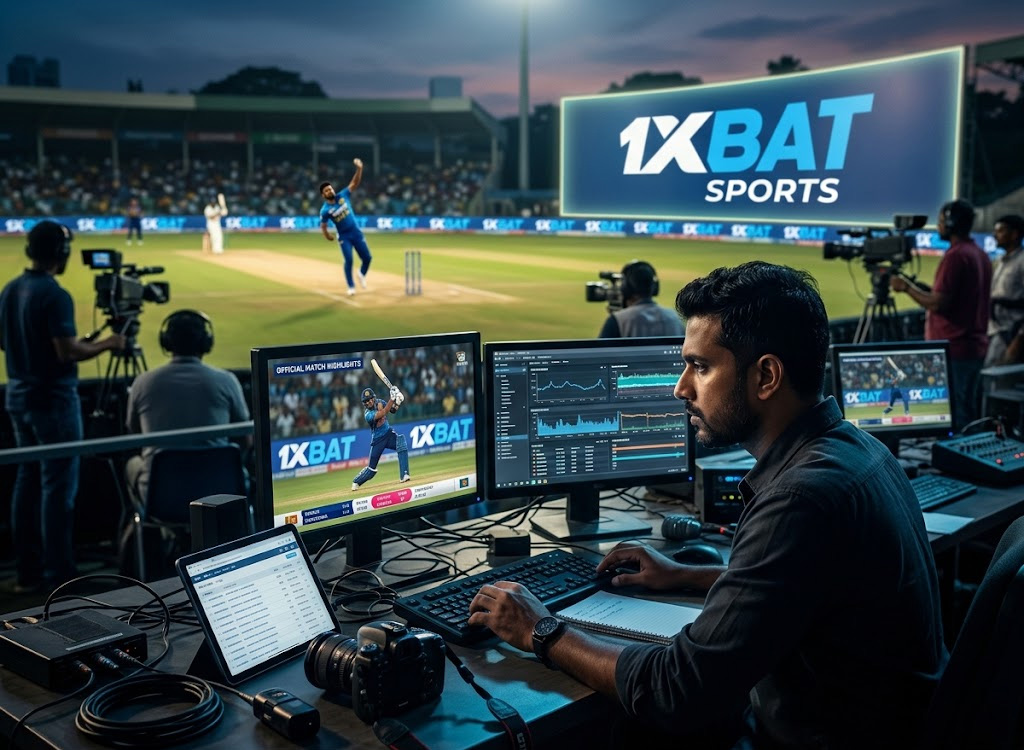
In an analysis of official highlights from the second Test at the Sinhalese Sports Club (SSC), Hattotuwa has found that the 1xBAT logo had appeared for approximately 14 minutes across five daily highlights packages released by Sri Lanka Cricket.
The videos had collectively attracted more than 629,000 views at the time of his analysis, raising concerns over the scale of exposure generated through official cricket content.
When highlights from the first Test in Galle were also taken into account, Hattotuwa has estimated that 1xBAT branding had received approximately 25 minutes of exposure across 10 videos, which had accumulated around two million views.
The branding was visible through advertising mats positioned behind the wicket, boundary boards and sight-screen placements during the SSC Test.
Sri Lanka Cricket’s official website has confirmed that highlights from the match were published through its digital channels, giving the branding exposure beyond spectators inside the stadium and into the organisation’s online audience.
Hattotuwa has also pointed to the presence of Parimatch Sports and batbricks7 during the second Test, describing them as surrogate brands associated with offshore betting operations.
The findings have raised a broader regulatory question: how can betting-linked brands continue to secure substantial exposure through one of Sri Lanka’s most prominent sporting platforms while authorities are simultaneously taking steps to restrict access to unlicensed gambling websites?
The Telecommunications Regulatory Commission of Sri Lanka (TRCSL) had previously moved to block access to several gambling websites, including 1xbet.com.
Hattotuwa has argued that 1xBAT operates as a surrogate brand for 1xBet, an association he has noted had previously been acknowledged by a former Sri Lanka Cricket secretary.
The distinction between a betting operator and a brand presented as a sports or entertainment entity has therefore become increasingly significant, particularly as regulators seek to prevent the promotion of unlicensed gambling without necessarily restricting legitimate sports-related advertising.
Sri Lanka’s regulatory framework has also been strengthened through the Gambling Regulatory Authority Act No. 17 of 2025, which contains provisions relating to the operation and promotion of unlicensed online gambling.
Against this backdrop, the continued appearance of betting-linked branding at international cricket matches creates a potential enforcement gap — particularly where advertising does not openly carry the name of a gambling operator but is instead presented through an associated or surrogate brand.
Sri Lanka Cricket has previously maintained that it “does not permit betting advertising at SLC matches within the territory of Sri Lanka.”
That position, however, sits uneasily alongside the branding identified by Hattotuwa, particularly given the reach of official match footage and highlights.
The issue is consequently larger than the physical advertising boards seen at a cricket ground. Once match footage is distributed through official digital platforms, branding displayed inside the stadium can be reproduced to hundreds of thousands of viewers, potentially giving surrogate brands an audience far beyond those attending the match.
For regulators, this creates a difficult question of enforcement. Blocking access to gambling websites addresses the consumer’s ability to reach an online platform, but it does not necessarily address the promotional ecosystem that can direct attention towards betting-linked brands through mainstream sports.
Cricket, meanwhile, remains one of the most powerful advertising platforms in Sri Lanka, making international matches particularly valuable for brands seeking mass visibility.
Hattotuwa’s analysis therefore points to a wider weakness in the country’s approach to online gambling regulation: restricting access to betting websites may have limited impact if associated brands can continue to build recognition and visibility through mainstream sporting broadcasts.
The challenge now for authorities and Sri Lanka Cricket is determining whether existing restrictions extend effectively to surrogate branding — and whether enforcement mechanisms are capable of addressing advertising that may not explicitly promote gambling, but is nevertheless closely associated with betting operations.
As Sri Lanka moves to strengthen its gambling regulatory framework, the visibility of such brands during nationally broadcast and officially distributed cricket content is likely to remain a test of whether the country’s crackdown extends beyond blocking websites to tackling the wider promotion of unlicensed betting.











Leave a comment