
By The Pulseline News Desk
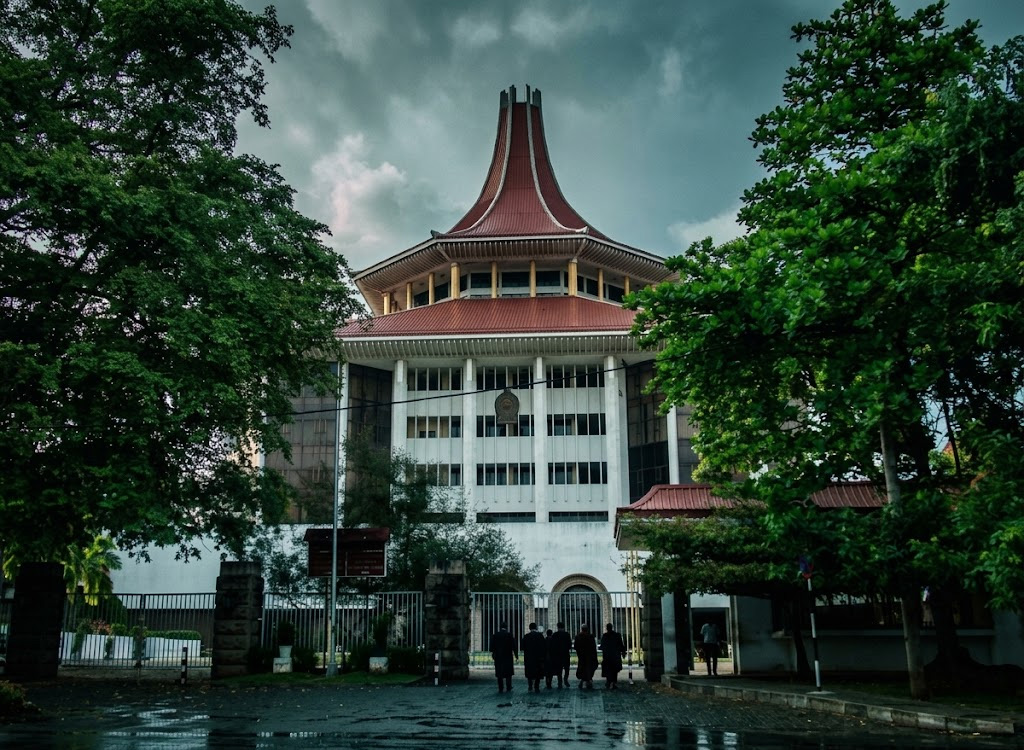
The Supreme Court (SC) has been asked to scrutinise the proposed extension of the retirement ages of Supreme Court and Court of Appeal judges against the broader constitutional principles of judicial independence, separation of powers and the sovereignty of the People.
Making oral submissions before the Supreme Court on September 1, Eraj de Silva PC, appearing for petitioners Ven. Ulapane Sumangala Thero and Attorney-at-Law Sudarshana Gunawardana, argued that the proposed 22nd Amendment to the Constitution and the related Judicature (Amendment) Bill could not be viewed simply as changes to the retirement age of judges.
He has told the Court that the constitutional implications were particularly serious because the proposed changes would apply not only to judges appointed in the future but also to judges currently holding office.
According to the submissions, this would effectively provide an additional period of tenure to identifiable sitting judges and could preserve the existing composition of the Superior Courts for a further period.
De Silva has argued that this raised a fundamental question: whether the Executive and Legislature could, at a particular point in time, alter the tenure of sitting judges and thereby influence the composition of another organ of government.
‘A constitutional amendment cannot be considered in a vacuum’
The petitioners’ counsel has urged the Court to examine not only the wording of the proposed legislation but also the circumstances and sequence of events surrounding its introduction.
He has argued that the Bill had not emerged through an open and transparent constitutional process, describing it as having been “shrouded in a veil of secrecy” and having appeared “like a ghost in the night.”
The timing of the amendment was also highlighted.
The Court was asked to consider both when the Bill was introduced and when its provisions were intended to take effect, particularly against the background of judicial vacancies, appointments and changes in the composition of the Superior Courts.
De Silva has maintained that these factors could not be separated from the constitutional question because the immediate application of the proposed amendment could result in a particular composition of the judiciary being retained.
He has stressed that the argument was not directed at the competence, character or integrity of the judges currently serving.
Rather, the issue was whether the political branches of government could confer an additional period of tenure on identifiable judges and, in doing so, alter the constitutional relationship between the branches of government.
Judicial independence at centre of the challenge
A central argument advanced before the Court was that judicial tenure is not a personal privilege granted to judges but a constitutional safeguard designed to protect the public.
The petitioners’ position is that judges must be able to decide cases without fear, favour, affection or expectation, including cases involving the Executive and Legislature.
Drawing on Alexander Hamilton’s Federalist Paper No. 78, De Silva has argued that the judiciary is institutionally the weakest of the three branches because it possesses neither the “sword” nor the “purse”.
Security of tenure therefore becomes critical to ensuring that judges can exercise judicial power independently.
The submissions distinguished between establishing a new retirement age for judges appointed after a constitutional amendment and extending the tenure of judges who are already in office.
The latter, De Silva has argued, presents a more immediate constitutional difficulty because it grants sitting judges an additional period in office that they did not possess under the constitutional framework applicable when they were appointed.
The appearance of dependence
The petitioners have also argued that judicial independence must be protected not only against actual interference but against circumstances that could create an appearance of influence or dependence.
De Silva has said he was not suggesting that any judge had requested or wanted an extension, nor that a judge receiving such an extension would fail to perform judicial duties impartially.
The constitutional concern, he has argued, arises from the institutional relationship created when political authorities provide an additional period of tenure to sitting judges.
This could affect public confidence in the judiciary, particularly where judges may subsequently be required to determine the legality or constitutionality of actions taken by the same political branches responsible for their extended tenure.
Articles 1, 3 and 4 invoked
The submissions have placed particular emphasis on Articles 3 and 4 of the Constitution.
Article 3 establishes that sovereignty is in the People, while Article 4 sets out how that sovereignty is exercised, including through the judicial power of the People.
De Silva has argued that judicial power is therefore not a personal power belonging to judges but a power exercised on behalf of the People.
Consequently, he has submitted that judicial independence forms part of the constitutional protection surrounding the exercise of that judicial power.
The proposed amendment should therefore not be considered solely as an alteration to Article 107, which deals with the appointment and tenure of judges of the Superior Courts.
The petitioners’ position was that Article 107 must be read within the broader constitutional framework of Articles 3 and 4, separation of powers and judicial independence.
Article 1 was also brought into the argument.
The provision declares Sri Lanka to be a “Free, Sovereign, Independent and Democratic Socialist Republic”. De Silva has argued that the reference to an “Independent” Republic must have substantive constitutional meaning and cannot be treated as merely declaratory.
Internal and external independence
The submissions further distinguished between external and internal judicial independence.
External independence concerns the ability of the judiciary as an institution to operate without interference or control by the Executive and Legislature.
Internal independence concerns the ability of individual judges to decide cases independently and impartially.
Security and certainty of tenure, De Silva has argued, are fundamental to both.
A judge should not be placed in a position where an additional period of tenure has been granted by the same political branches whose actions the judge may later be called upon to scrutinise.
Immediate application under scrutiny
The petitioners have maintained that even a prospective change to retirement ages would have to be examined in light of Articles 3 and 4 because judicial tenure forms part of the constitutional structure safeguarding judicial independence.
However, the immediate application of the proposed amendment creates a separate and more serious issue, according to the submissions.
By applying to judges already holding office, the amendment could extend the tenure of identifiable individuals and preserve the existing composition of the Superior Courts.
The petitioners therefore have argued that the Court should examine the actual effect of the amendment rather than rely solely on its description as a general change to retirement ages.
Referendum issue emerges
The submissions have ultimately placed the question within the framework of constitutional amendments requiring approval beyond Parliament.
De Silva has argued that the proposed amendment affects Articles 1, 3 and 4 of the Constitution and therefore cannot become law solely through passage by a two-thirds majority in Parliament.
He has submitted that it would additionally require approval by the people at a referendum.
The Supreme Court’s determination on the constitutional consistency of the proposed 22nd Amendment and the Judicature (Amendment) Bill will therefore have implications extending beyond the retirement age of judges.
At its core, the challenge raises a broader constitutional question over how judicial tenure can be altered, who can alter it, and whether extending the tenure of sitting judges can affect the independence and institutional legitimacy of the judiciary itself.













Leave a comment