
By The Pulseline News Desk
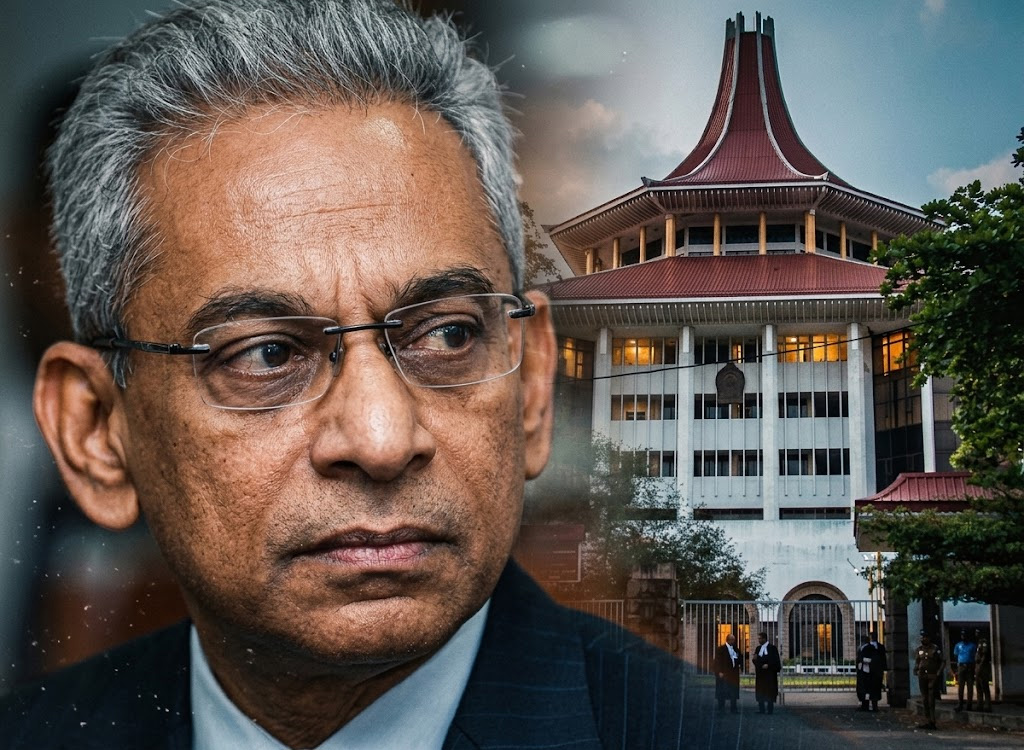
The constitutional battle over Sri Lanka’s proposed 22nd Amendment entered a critical phase yesterday (2) as the President of the Commonwealth Lawyers’ Association, Steven Thiru, observed proceedings at the Supreme Court amid growing international concern over the proposed extension of the retirement age of judges of the Superior Courts.
Thiru’s presence in Court comes weeks after he had warned that Sri Lanka could risk repeating Zimbabwe’s controversial judicial crisis if it proceeds with extending the retirement age of sitting judges without broad public consultation.
His intervention has added an international dimension to what is rapidly becoming one of the Government’s most significant constitutional tests.
The Supreme Court began hearing petitions challenging the constitutionality of the proposed amendment on September 1, with proceedings continuing for almost 12 hours before concluding at around 10.30 p.m.
A total of 67 petitions were reportedly filed against the Bill, including 41 submitted online, highlighting the scale of opposition to the proposed changes.
Why retirement age has become a constitutional flashpoint
The controversy is not simply about how long judges should remain in office.
Speaking at a public forum organised by the Bar Association of Sri Lanka (BASL) in July, Thiru had stressed that the central concern was the timing, manner and application of the proposed constitutional amendment.
The issue becomes particularly sensitive because the proposed changes would affect judges already serving in the Supreme Court and Court of Appeal.
Critics argue that extending the tenure of sitting judges could alter or preserve the existing composition of the Superior Courts and raise questions about judicial independence and the separation of powers.
Thiru’s earlier warning drew comparisons with Zimbabwe, where changes affecting judicial tenure became part of a broader constitutional and political crisis involving the judiciary.
His appearance at the Supreme Court yesterday now places the Commonwealth legal community’s concerns directly against the backdrop of the ongoing constitutional proceedings.
A marathon first day
The first day of hearings demonstrated the intensity of the legal challenge.
Proceedings continued for nearly 12 hours, ending at approximately 10.30 p.m., as lawyers for petitioners began making submissions challenging the Bill.
The hearings were conducted before a five-judge bench comprising Chief Justice Preethi Padman Surasena, Justice Achala Wengappuli, Justice Arjuna Obeyesekere, Justice Sampath Abeykoon and Justice Gihan Kulatunga.
Yesterday marked the second consecutive day of hearings. Counsel representing the petitioners continued their submissions on whether the proposed legislation is compatible with the Constitution.
Once those arguments were completed, lawyers representing the intervening petitioners addressed the Court.
The Attorney General then presented the Government’s position, including submissions on the constitutional validity of the proposed legislation.
A test beyond retirement ages
At the heart of the petitions is a broader constitutional question over the relationship between Parliament, the Executive and the judiciary.
The petitioners’ challenge comes amid concerns that changing the tenure of sitting judges could have implications extending beyond the individuals currently holding judicial office.
Judicial independence depends not only on judges being free from direct political interference, but also on institutional arrangements that prevent the appearance of political influence over judicial tenure.
This is why the timing of the proposed amendment has become such a significant issue.
If a new retirement age were introduced exclusively for judges appointed in the future, the political and constitutional questions would be different.
Applying the change to judges already in office creates a direct connection between the amendment and the present composition of the Superior Courts.
That distinction is likely to remain central to the arguments before the Supreme Court.
International eyes on Colombo
Thiru’s presence also underlines the extent to which the dispute is attracting attention beyond Sri Lanka’s legal community.
The Commonwealth Lawyers’ Association represents lawyers across Commonwealth jurisdictions and has a longstanding interest in the rule of law, judicial independence and access to justice.
His earlier comments had indicated that the concern was not opposition to changing judicial retirement ages as a matter of principle.
Instead, the warning had focused on whether such changes are introduced transparently, after consultation, and whether they are applied in a manner that could affect sitting judges.
That distinction is now playing out before the country’s highest court.
Govt. faces major constitutional test
For the Government, the Supreme Court proceedings represent more than another legal challenge to legislation.
The NPP administration has built much of its political identity around institutional reform, accountability and a break from practices associated with previous governments.
The handling of the judicial retirement age issue will therefore be closely watched.
If the Court determines that the proposed amendment is inconsistent with entrenched constitutional provisions, the Government could face the prospect of having to take the issue directly to the electorate through a referendum.
If the Court clears the way for Parliament to proceed, the Government will still have to contend with questions about consultation, judicial independence and public confidence in the reform.
For now, the courtroom remains the central arena.








Leave a comment