
By The Pulseline News Desk
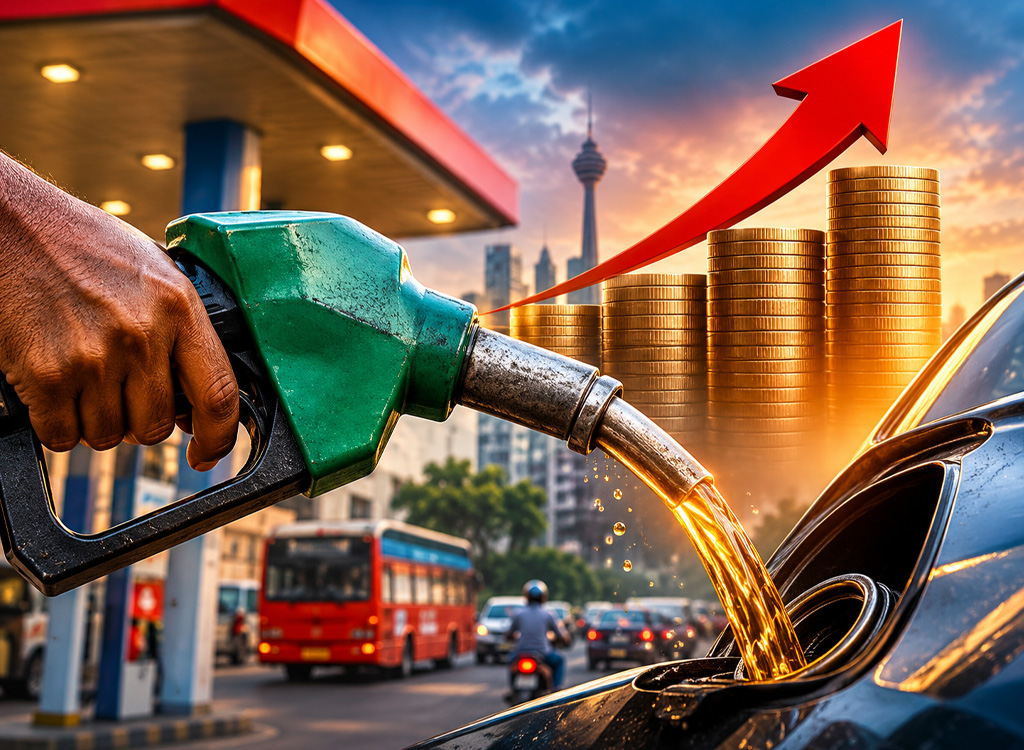
Fuel prices in Sri Lanka have been increased with effect from midnight on November 1, following a revision announced by the Ceylon Petroleum Corporation (CPC), with Lanka IOC also adjusting its prices to match the increases.
Accordingly, the price of Auto Diesel has been increased by Rs. 5 to Rs. 397 per litre, while Super Diesel has gone up by Rs. 15 to Rs. 543 per litre.
Petrol prices have also been revised upwards, with 92 Octane Petrol increasing by Rs. 10 to Rs. 424 per litre and 95 Octane Petrol rising by Rs. 15 to Rs. 490 per litre.
The price of kerosene remains unchanged at Rs. 285 per litre.
Lanka IOC, which operates a network of fuel stations across the country, has also announced corresponding price increases, bringing its retail prices in line with the revised CPC rates.
Economic impact
The latest fuel price revision is expected to place additional pressure on households and businesses, with the increase in diesel prices particularly significant given the fuel’s importance to public transportation, goods distribution, agriculture and industrial operations.
Higher diesel costs could translate into increased operating expenses for private bus operators, freight transport companies and other businesses dependent on road transportation. These additional costs could eventually be passed on to consumers through higher prices for goods and services.
The increase in petrol prices, meanwhile, will add to the monthly expenses of motorists and households that depend on private vehicles for daily transportation.
The wider economic impact could also emerge through renewed inflationary pressure, particularly if higher fuel-related transportation and production costs feed into retail prices.
For businesses already managing elevated operating expenses, the latest revision could further squeeze profit margins, while households may face additional pressure on disposable incomes and purchasing power.
The timing of the increase is also significant as Sri Lanka continues to manage the cost-of-living pressures associated with the country’s economic recovery. Any sustained increase in domestic energy costs could complicate efforts to contain inflation and maintain price stability.
However, the actual impact on inflation will depend on the extent to which businesses absorb the additional costs, pass them on to consumers or adjust their operations.
The latest revision also comes amid continued exposure to international petroleum market fluctuations and the country’s dependence on imported fuel. Changes in global oil prices, exchange rate movements and import costs remain important factors influencing domestic fuel pricing.
Revised fuel prices
The revised prices are as follows:
- Auto Diesel: Rs. 397 per litre (increased by Rs. 5)
- Super Diesel: Rs. 543 per litre (increased by Rs. 15)
- Petrol 92 Octane: Rs. 424 per litre (increased by Rs. 10)
- Petrol 95 Octane: Rs. 490 per litre (increased by Rs. 15)
- Kerosene: Rs. 285 per litre (unchanged).










Leave a comment