
By The Pulseline News Desk
Sri Lanka is preparing to restructure and divest selected state-owned enterprises (SOEs) under a proposed new legal framework aimed at reducing market distortions, improving operational efficiency and attracting private investment, Deputy Minister of Finance and Planning Anil Jayantha said.
Speaking at an industry forum organised by the Securities and Exchange Commission of Sri Lanka and the Colombo Stock Exchange, Jayantha has said a dedicated committee had been appointed to review state-owned entities and develop appropriate restructuring strategies.
Of the 527 entities classified as state enterprises, only a limited number operate as genuine commercial businesses, while many others perform administrative or statutory functions, he has said.
The government is considering different approaches, including divestment, mergers and institutional restructuring, depending on the nature and purpose of each enterprise.
“Some of these SOEs really we can divest, sometimes we may have to merge,” Jayantha has said, explaining that the government’s primary role should be to facilitate economic activity rather than engage directly in ordinary commercial operations.
He has said the state had little reason to operate businesses such as trading ventures and hotels, indicating a shift towards limiting government involvement in competitive commercial activities.
However, the government intends to retain ownership in strategically important sectors, including energy, where state participation is considered necessary to prevent private operators from manipulating markets.
Commercial state enterprises and state-owned banks are also expected to move away from traditional bureaucratic management towards more competitive corporate structures.
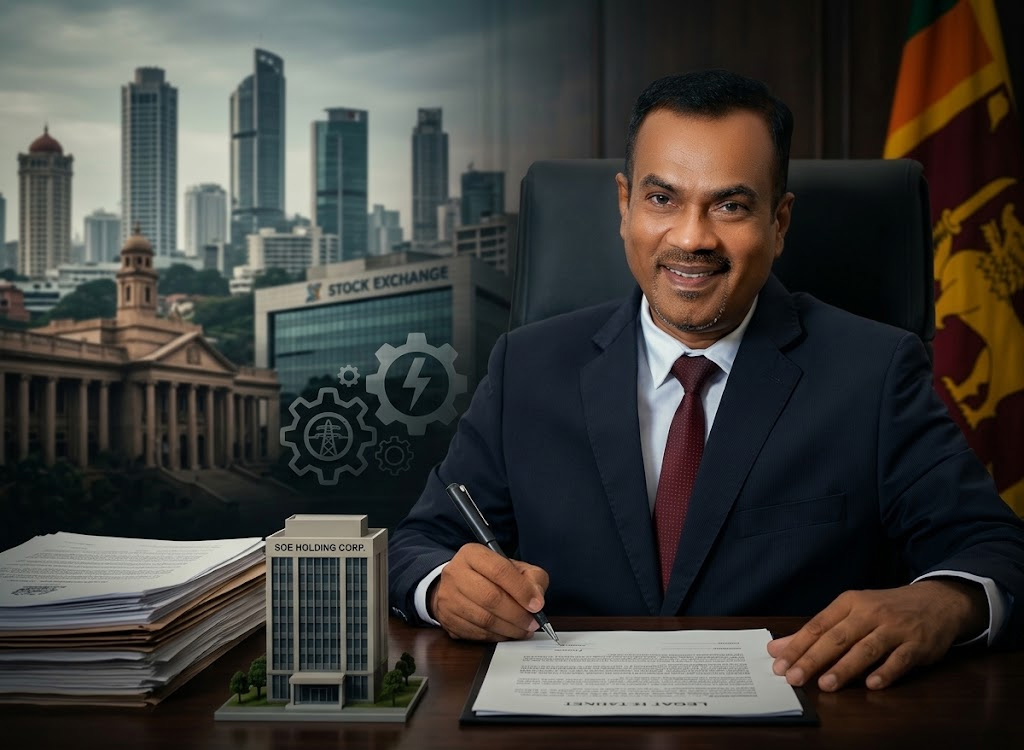
Under the proposed State-Owned Enterprises Act, selected entities could be brought under a common holding structure and incorporated as limited liability companies, allowing them to operate with greater managerial independence. “The new SOE Act would facilitate, would allow separate management so they can be reorganised under one umbrella,” Jayantha has said.
The proposed framework is intended to give restructured enterprises greater flexibility to respond to market conditions while improving accountability and commercial performance. Some entities could eventually be listed on the Colombo Stock Exchange, creating opportunities for private and foreign investors to participate in their ownership.
However, the legislative timeline remains uncertain. Jayantha has said delays at the Legal Draftsman’s Department could prevent the Bill from reaching Parliament within the timeframe initially anticipated.
The government had initially aimed to secure parliamentary passage by the end of this year, but the process could extend into 2027. “First, we need to get it cleared from the Legal Draftsman’s Department; if that is the case, at least we can submit to Parliament, maybe that could be next year,” he has said.
The proposed reforms form part of a broader effort to redefine the state’s role in the economy by distinguishing between essential public services, strategic national assets and commercially operated enterprises.
While the restructuring process is expected to take time, Jayantha has said a gradual approach would help establish the institutional foundations needed to support Sri Lanka’s economic transformation.












Leave a comment