
By The Pulseline News Desk
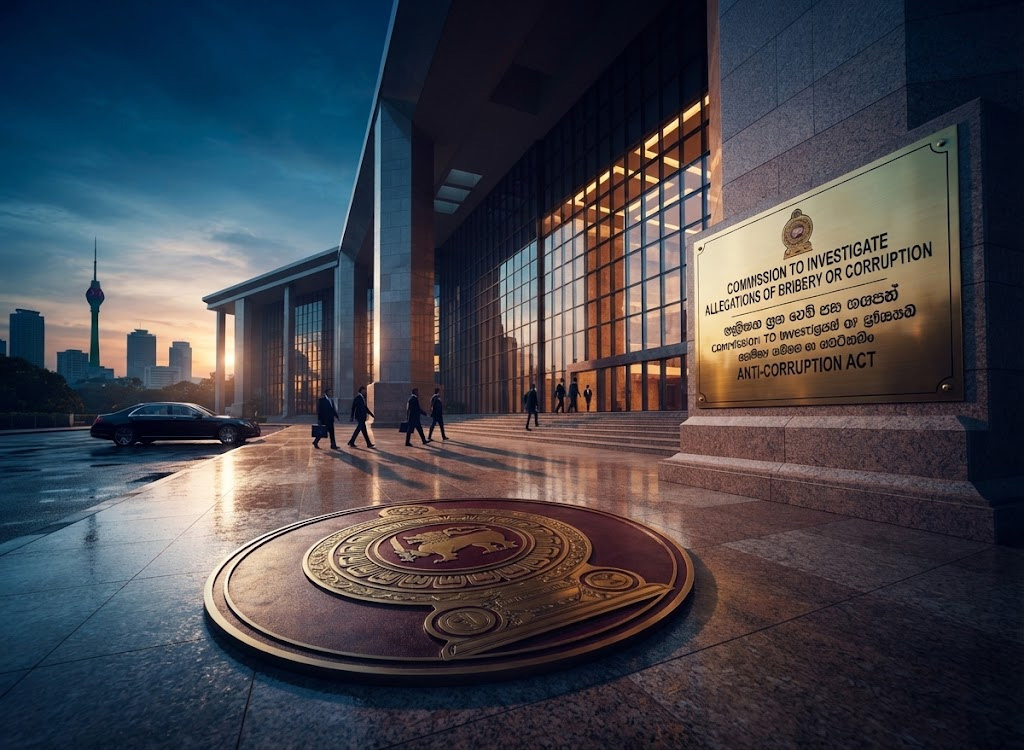
Sri Lanka’s 2022 economic collapse was driven not only by debt, economic mismanagement and financial pressures, but also by weaknesses in governance and failures of integrity, Commission to Investigate Allegations of Bribery or Corruption (CIABOC) Director General Ranga Dissanayake has said.
Addressing an IMF Legal Department panel in Washington, D.C., Dissanayake has said Sri Lanka’s experience demonstrated how institutional weaknesses can contribute to an economic crisis and why stronger accountability mechanisms are essential to economic recovery.
Dissanayake was speaking on Monday (21) at a discussion marking the 80th anniversary of the IMF Legal Department, alongside IMF Asia and Pacific Department Director Krishna Srinivasan.
Sri Lanka became the first country in Asia to request an IMF Governance Diagnostic Assessment, which examined governance weaknesses and integrity risks following the country’s unprecedented economic crisis.
From prosperity to crisis
Dissanayake has described Sri Lanka as a clear example of the link between governance and economic stability.
He has recalled that Sri Lanka had once been regarded as a prosperous country and was compared with Singapore during the 1960s. By 2022, however, the country had descended into its worst economic crisis, resulting in sovereign default, shortages and the need for an IMF-supported recovery programme.
He has said the collapse could not be explained by financial factors alone.
“Not only the debts, not only the mismanagement, not only the economic reasons, but also lack of integrity and corruption,” Dissanayake has said.
He has also referred to a Supreme Court determination which identified corruption among the factors contributing to the economic crisis.
The IMF’s subsequent governance assessment provided recommendations aimed at strengthening institutional integrity, reducing vulnerabilities and improving the effectiveness of oversight mechanisms.
A new legal framework
Dissanayake has highlighted the Anti-Corruption Act No. 9 of 2023 as one of the major institutional reforms introduced following the crisis.
Although Sri Lanka ratified the United Nations Convention Against Corruption in 2004, he has noted that it took almost two decades to introduce comprehensive legislation designed to bring the country’s framework closer to international standards.
Under the new legislation, CIABOC was given a stronger institutional framework, including greater financial independence and dedicated staff.
Dissanayake has said the main challenge following the enactment of the legislation was no longer simply creating the legal framework, but ensuring that it worked effectively in practice.
He has said discussions with the IMF’s legal team helped address legal and operational issues, including questions arising from the Public Financial Management Act.
As a result, he has said, CIABOC was able to strengthen its institutional independence, recruit dedicated personnel and submit its budget estimates directly to Parliament rather than through the Ministry of Finance.
Beyond investigations
Dissanayake, who was appointed CIABOC Director General in January 2025 following two decades as a lawyer, magistrate and High Court judge, has said the Commission’s responsibilities extend beyond investigations and prosecutions.
Its mandate now includes prevention, public education, integrity-building and wider governance reforms.
He has also stressed the importance of cooperation between independent institutions and other law-enforcement and regulatory bodies.
The Anti-Corruption Act provides mechanisms for CIABOC to work with institutions including the Sri Lanka Police and the Central Bank’s Financial Intelligence Unit.
A significant change under the 2023 legislation, he has said, was the expansion of CIABOC’s jurisdiction to investigate money-laundering offences alongside the Police and institute prosecutions before the High Court.
The Commission has also established 12 divisions covering investigations, prosecutions and other functions under the new framework.
More than 80,000 asset declarations
Technology has become another major component of the institutional reforms.
Dissanayake has said CIABOC launched an electronic assets and liabilities declaration system in 2026, allowing politicians and public officials to submit their declarations digitally.
More than 80,000 declarations have already been received and are undergoing verification, he has said.
The system also facilitates public access to declarations and incorporates beneficial ownership information, which Dissanayake has described as an important development for transparency and accountability.
Asset recovery
Dissanayake has also linked the reform drive to the public demands that emerged during the 2022 economic crisis and the nationwide protests that followed.
He has said the protests created a strong public demand for greater accountability and the recovery of assets allegedly acquired through corrupt activity.
Civil society organisations, he has noted, had played an important role in keeping those demands on the national agenda.
International cooperation would be particularly important where investigations involve assets or transactions across borders, he has said.
Dissanayake has identified support from the World Bank’s Stolen Asset Recovery Initiative (StAR), the United Nations Office on Drugs and Crime (UNODC), Transparency International and the International Anti-Corruption Coordination Centre (IACCC) as important to Sri Lanka’s efforts.
Prevention as the priority
Looking ahead, Dissanayake has identified prevention as the central priority of Sri Lanka’s reform strategy.
He has said the National Anti-Corruption Action Plan for 2025-2029 places significant emphasis on prevention and building a culture of integrity rather than relying exclusively on investigations after wrongdoing has occurred.
“Prevention is the most appropriate step to minimise corruption. That is my priority,” he has said.
Dissanayake has argued that lasting change would require shifts in public attitudes and the development of integrity from an early age.
As part of this effort, CIABOC has entered into agreements with the education sector and the University Grants Commission to promote integrity and accountability among students and young people.
The reforms come as Sri Lanka continues its economic recovery under the IMF programme, with stronger institutions and improved accountability forming part of efforts to rebuild public confidence and reduce the risk of another governance-driven economic crisis.
For Sri Lanka, the challenge now extends beyond economic recovery to building institutions capable of preventing the weaknesses that contributed to the 2022 collapse.










Leave a comment