
By The Pulseline News Desk
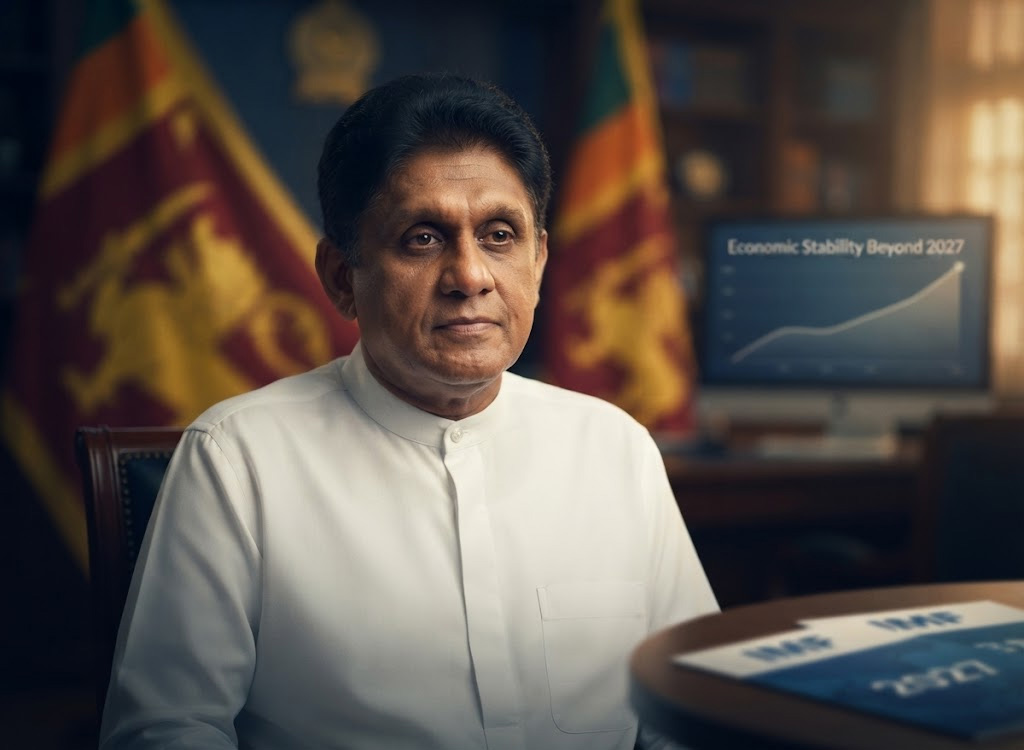
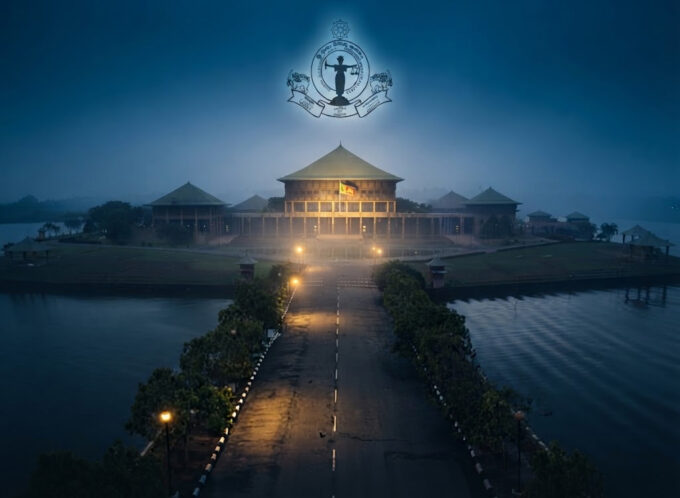
Sri Lanka’s economic path beyond the current International Monetary Fund (IMF)-supported Extended Fund Facility (EFF) programme came under discussion when Opposition Leader Sajith Premadasa met an IMF delegation at Parliament, with particular attention on how the country can maintain economic stability after March 2027.
The meeting, held at the Opposition Leader’s Office, focused on the progress of IMF-backed reforms, Sri Lanka’s current economic position and the policy framework that would be required once the existing EFF arrangement reaches its scheduled end.
The discussions come as the Government prepares for the next stages of the IMF programme, with the seventh review scheduled for October 2026 and the eighth review in March 2027, based on performance through the end of December 2026.
Premadasa and the IMF delegation reviewed Sri Lanka’s external sector position, foreign exchange reserves, debt sustainability, fiscal conditions and economic growth prospects.
A key issue was what economic conditions and measurable targets Sri Lanka should achieve by the conclusion of the current programme to ensure that the country can maintain stability without immediately requiring another IMF financing arrangement.
The discussions also examined the possibility of a transition beyond the current EFF without a successor programme, as well as the circumstances under which continued IMF financial assistance could become necessary.
Focus on people beyond macro indicators
Premadasa stressed that the success of the economic reform programme should not be measured solely through headline indicators such as fiscal balances, reserves or economic growth.
He argued that the impact of reforms should also be assessed through their effects on poverty, affordability, employment, household incomes and the financial pressures facing ordinary families.
While acknowledging the importance of fiscal discipline and macroeconomic stability, the Opposition Leader cautioned against adjustment measures placing a disproportionate burden on working people and vulnerable households.
Particular attention was drawn to the difficulties faced by lower- and middle-income families, as well as micro, small and medium-sized enterprises (MSMEs).
The financial pressures facing MSMEs, including debt-related difficulties, were discussed in the context of their potential impact on entrepreneurship, investment and productive capacity.
Premadasa also highlighted the need for reliable and timely household-level and poverty-related data to assess the social consequences of economic adjustment and support evidence-based policymaking.
What comes after the IMF programme?
A central theme of the meeting was Sri Lanka’s ability to sustain economic stability after the current EFF arrangement.
The discussions considered the fiscal, external and debt-related conditions that would be necessary for the country to maintain stability after March 2027, while strengthening its ability to withstand future external shocks.
Premadasa emphasised the need for Sri Lanka to move beyond crisis management and economic stabilisation towards sustainable and inclusive growth.
Such a transition, he said, should ultimately translate into increased investment, employment opportunities and household incomes, while improving economic security for the wider population.
The Opposition Leader also stressed the importance of establishing a credible economic framework for the post-March 2027 period rather than allowing uncertainty over the country’s future policy direction to undermine investor confidence or economic stability.
Fiscal adjustment and taxation
The meeting also touched on the social impact of fiscal consolidation and taxation measures.
Premadasa called for greater consideration of how such measures affect working people and vulnerable households, while maintaining the need for sound public finances.
The discussions also focused on the importance of setting measurable targets for the end of the IMF programme, including sustainable debt policies, stronger public finances, manageable external financing requirements and improved long-term growth prospects.
The broader question facing Sri Lanka is whether the reforms implemented under the IMF programme can create an economy capable of generating sufficient domestic revenue, investment and foreign exchange to maintain stability without repeatedly depending on emergency external financing.









Leave a comment