
By The Pulseline News Desk
As Sri Lanka approaches the final phase of its current International Monetary Fund (IMF)-backed reform programme, discussions are beginning to shift towards what comes next, with the IMF stressing that any decision on a successor programme must ultimately come from the Sri Lankan Government.
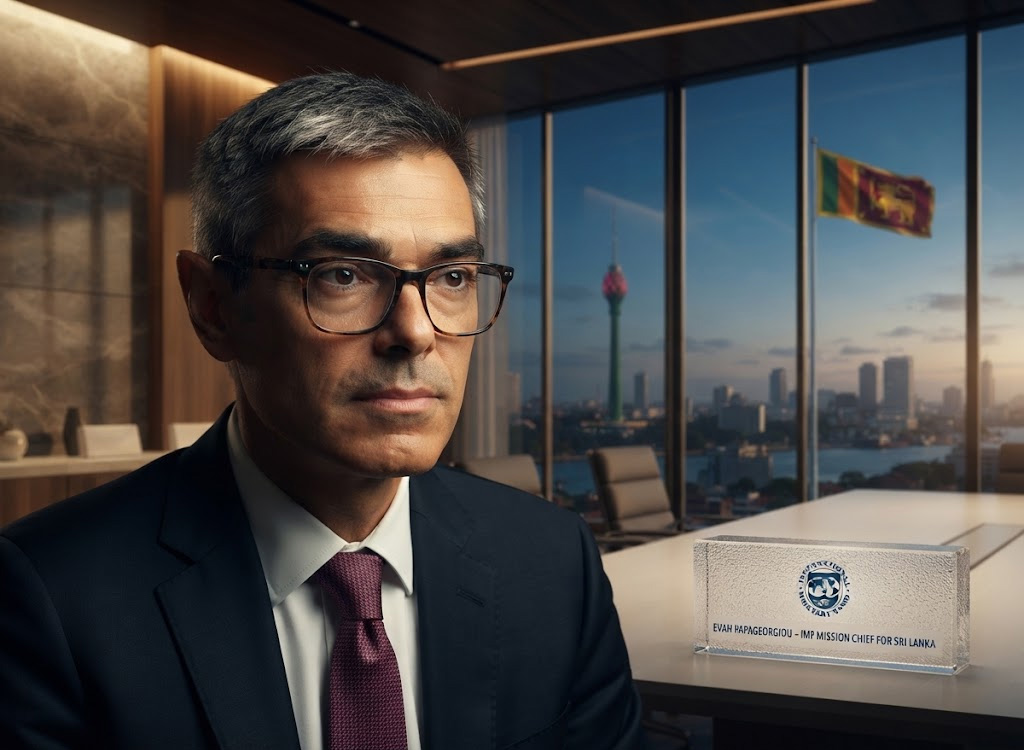
IMF Mission Chief for Sri Lanka Evan Papageorgiou has said the current Extended Fund Facility (EFF) still has two reviews to complete — including the ongoing review and a final review — before the programme expires in March 2027.
He has said substantial work remains under the existing arrangement, with discussions continuing on economic and policy issues before the programme is completed.
No automatic successor programme
Addressing speculation over a possible new IMF arrangement, Papageorgiou has said the decision would not be made by the IMF alone.
A request for a new programme would have to come from the Government and reflect Sri Lanka’s economic priorities and objectives, he has said.
Papageorgiou has explained that modern IMF programmes are designed around the goals of national authorities rather than imposing a predetermined set of policies unrelated to a country’s own development agenda.
Programme targets, reforms and policy measures are therefore intended to support the economic objectives identified by the Government, he has said.
Whether Sri Lanka seeks another financing arrangement after the current EFF will consequently depend on what the authorities aim to achieve once the existing programme ends and how they assess the value of continued engagement with the IMF and other development partners.
IMF engagement can continue without a loan programme
Papageorgiou has also stressed that the end of an IMF financing programme would not necessarily mean the end of the Fund’s engagement with Sri Lanka.
The IMF can continue supporting the country through regular economic surveillance and policy consultations, technical assistance and capacity development, as well as Financial Sector Assessment Programs (FSAPs) and other forms of engagement.
These mechanisms can help strengthen economic institutions, improve policy capacity, assess financial-sector vulnerabilities and respond to emerging economic challenges even in the absence of a formal financing arrangement.
He has said there were therefore multiple avenues through which the IMF could continue supporting Sri Lanka’s economic objectives, depending on the needs identified by the authorities.
Focus remains on completing current EFF
For now, however, Sri Lanka remains committed to completing the current EFF programme, which runs until March 2027.
With two reviews still pending, the immediate focus remains on meeting the programme’s remaining policy commitments and reform targets.
At the same time, Papageorgiou’s comments indicate that the broader question of Sri Lanka’s post-EFF economic framework is beginning to enter discussions.
Any future IMF programme, he has stressed, would ultimately need to be shaped around the Government’s objectives and the country’s economic requirements rather than being treated as an automatic continuation of the existing arrangement.










Leave a comment