
By The Pulseline News Desk
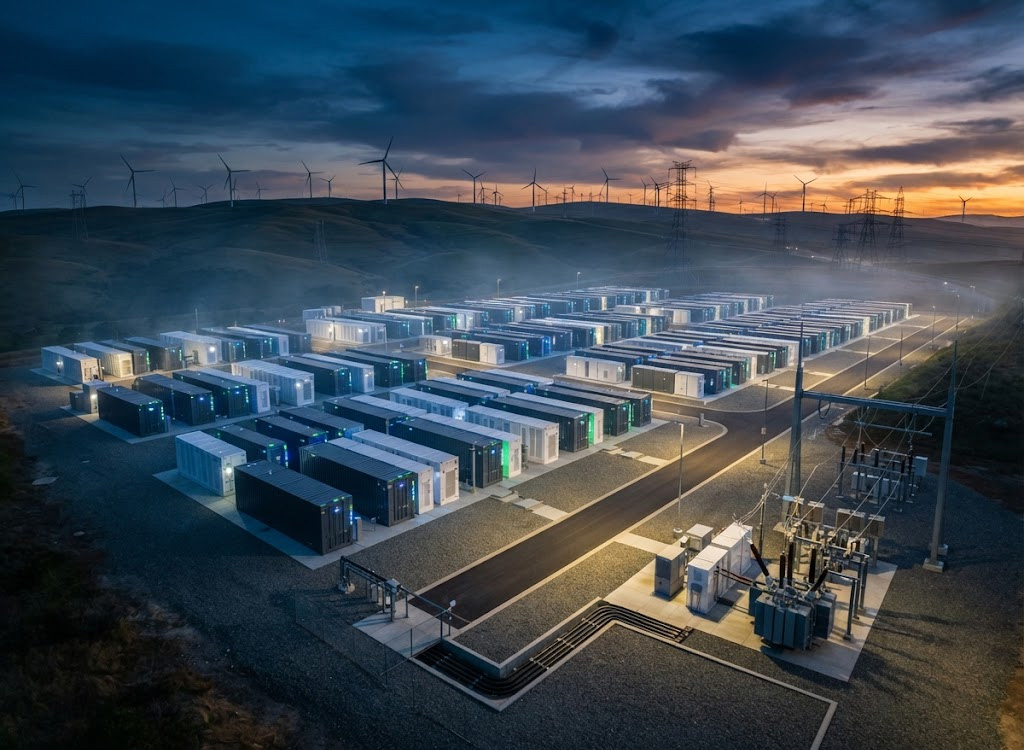
The Government is reportedly holding back on a proposed Feed-in Tariff (FIT) for Battery Energy Storage Systems (BESS), warning that locking in a high rate for 15 years could ultimately make battery storage more expensive than diesel power.
Ministry of Energy Secretary G.M.R.D. Aponsu has told the media that the tariff proposed by the Public Utilities Commission of Sri Lanka (PUCSL) should be considered alongside prices emerging from competitive procurement, which he has said would provide a more reliable benchmark for the actual market cost of battery storage.
“If we give a higher FIT now and sign agreements for 15 years, it could ultimately become more expensive than diesel,” Aponsu has told the media.
He has said the Government therefore wants to establish a competitive market price for BESS before committing to long-term fixed tariffs.
Competitive market before long-term tariff
The issue has become particularly relevant following a competitively tendered 10 MW BESS project by the National System Operator (NSO), which has reportedly attracted bids of around Rs. 20 per unit – significantly below some of the rates proposed under the FIT mechanism.
PUCSL’s July proposal had covered rooftop solar systems integrated with BESS, standalone battery storage and renewable power plants equipped with batteries.
Under the proposal, rooftop solar projects with battery storage could receive between Rs. 41.56 and Rs. 66.53 per unit during the priority evening period from 5.30 p.m. to 9.30 p.m., depending on system capacity.
Standalone BESS projects were proposed with tariffs ranging from Rs. 30.83 to Rs. 50.01 per unit, in addition to a charging component linked to the applicable daytime electricity tariff.
Against this backdrop, the Government is keeping rooftop solar projects linked to batteries towards the later stages of the programme, allowing it to assess prices emerging from competitive BESS procurement before finalising a long-term FIT.
“We want to delay giving the FIT. The price should be taken from the competitive market,” Aponsu has said.
Threshold for competitive bidding under review
Another policy decision still pending is the capacity threshold at which BESS projects would move from a FIT mechanism to competitive procurement.
According to Aponsu, the NSO has referred the matter for a policy-level decision, with possible thresholds of 10 MW, 5 MW or even 3 MW under consideration.
The final threshold will determine which projects can qualify for a fixed FIT and which will have to compete through tenders.
The Ministry’s position is that competitive procurement would allow the Government to assess not only price but also the technical quality of battery systems.
“When we conduct competitive tenders, we have already included the quality measures. We have asked for specifications for the cells, so we are directly involved with quality,” Aponsu has noted.
The Government is also developing technical guidelines and quality standards for BESS, amid concerns that a standard tariff mechanism without detailed technical requirements could give developers greater flexibility over the quality of battery cells used.
160 MW in private-sector projects
Meanwhile, four private companies are currently undertaking BESS projects with a combined capacity of around 160 MW, according to Aponsu.
One project was launched last week, while the others are expected to commence shortly. Technical evaluations have already been completed for some projects, with procurement and implementation work continuing on the remainder.
The projects are expected to move towards implementation by May next year.
Unlike conventional power plants, BESS facilities do not generate electricity. Instead, they store excess electricity and release it when required by the grid.
This is expected to become increasingly important in areas where growing solar generation has resulted in renewable energy curtailment. Batteries can store surplus solar power that cannot immediately be absorbed by the grid and release it later when demand rises.












Leave a comment