
By The Pulseline News Desk
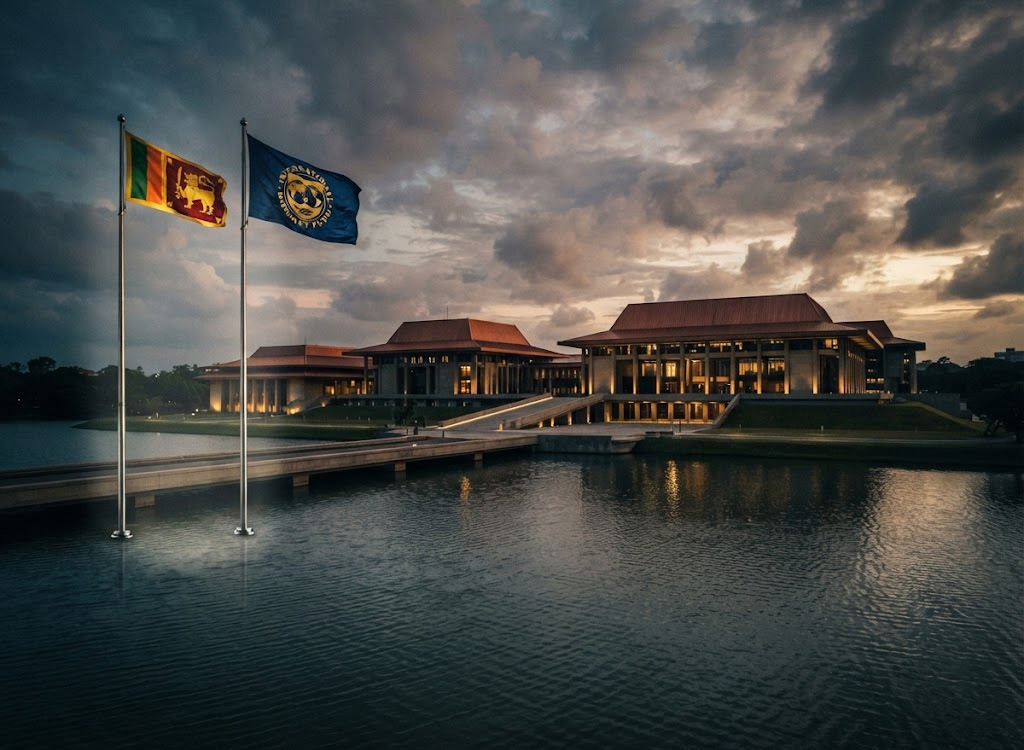
Discussions between the International Monetary Fund (IMF) and Sri Lankan authorities will continue in the coming weeks as both sides work towards agreement on the policies and programme parameters required to complete the Seventh Review of Sri Lanka’s Extended Fund Facility (EFF) programme.
The IMF, concluding its latest mission to Sri Lanka led by Mission Chief Evan Papageorgiou, said discussions on the Seventh Review and the 2026 Article IV Consultation had been productive, but further engagement would be required before a staff-level agreement can be reached.
The latest assessment comes as Sri Lanka enters a critical phase of its post-crisis recovery, with the economy showing continued growth and reserves strengthening, while the IMF continues to press for deeper reforms to make the recovery sustainable.
The Fund said economic activity expanded by 4.2% in the second quarter of 2026, marking the 11th consecutive quarter of strong growth. Gross official reserves had also risen to US$6.9 billion by the end of August, while banks remained well capitalised and profitable.
Fiscal performance during the first half of the year was described as strong, while Sri Lanka’s debt restructuring process was assessed as largely complete.
However, the IMF cautioned that the recovery remains exposed to external shocks.
The Fund identified uncertainty surrounding the duration and intensity of the conflict in the Middle East, changes in global trade policies and the effects of El Niño as key downside risks facing the economy.
Against this backdrop, the IMF said maintaining macroeconomic stability would require a continued commitment to prudent economic policies and reforms.
Revenue reform remains central
A major focus of the IMF’s latest assessment is Sri Lanka’s ability to strengthen government revenue without undermining the recovery.
The Fund said developing and implementing a medium-term revenue strategy should remain a key priority, alongside broadening the tax base, rationalising tax exemptions and incentives, and strengthening revenue administration.
The objective, it said, should be to improve tax compliance and secure durable increases in government revenue.
The emphasis on revenue comes as the Government seeks to balance fiscal consolidation with increased public investment and economic recovery. The IMF’s position indicates that any expansion in spending will need to be supported by stronger and more predictable domestic revenue mobilisation.
The Fund also stressed the importance of maintaining cost-recovery energy pricing, warning that deviations from this approach could create fiscal risks through state-owned enterprises.
It also called for measures to remove bottlenecks holding back capital expenditure, including projects associated with recovery and reconstruction following Cyclone Ditwah.
Inflation and the rupee
Monetary policy will remain another area requiring close coordination.
The IMF said the authorities should remain ready to respond to inflationary pressures while maintaining price stability under Sri Lanka’s flexible inflation-targeting framework.
It also said greater exchange-rate flexibility would help the economy absorb external shocks while supporting the accumulation of foreign exchange reserves.
Importantly, the Fund said it would be prudent for Sri Lanka to retain its existing 5% inflation target and current accountability band during the first statutory review.
The IMF argued that maintaining the existing target provides the necessary flexibility at a time when food and energy prices remain vulnerable to sharp fluctuations.
IMF raises governance concerns
Governance and anti-corruption reforms also featured prominently in the discussions.
The IMF stressed that maintaining the integrity of Sri Lanka’s anti-corruption legislative framework is important for strengthening public confidence in the country’s institutions.
It also raised concerns that selected provisions in recently proposed amendments could weaken existing arrangements for transparency and accountability.
The issue is significant for the EFF programme, which places emphasis not only on fiscal and monetary reforms but also on strengthening governance and institutions following the economic crisis.
From stabilisation to transformation
With the immediate economic crisis having eased, the IMF said Sri Lanka now needs to move beyond stabilisation and focus on economic transformation.
The Fund called for sustained structural reforms to create a more conducive environment for businesses and attract investment.
Among the measures highlighted were trade liberalisation, modernising business and labour regulations, expanding access to finance and accelerating digitalisation.
The IMF’s assessment reflects a shift in emphasis from simply restoring macroeconomic stability towards improving the country’s underlying growth model.
For Sri Lanka, the challenge will be to translate the improved macroeconomic indicators into higher investment, productivity and employment while maintaining the fiscal discipline required under the IMF programme.
Northern economy in focus
The IMF mission also travelled to Jaffna, where it held discussions with private sector representatives and civil society organisations on the economic potential of the Northern Province.
The discussions examined opportunities to expand economic activity through investment in connectivity, skills development, agriculture, fisheries, tourism and renewable energy.
The visit underscored the IMF’s broader focus on ensuring that Sri Lanka’s recovery is supported by investment and growth beyond the country’s traditional economic centres.
During the mission, the IMF delegation met President and Finance Minister Anura Kumara Dissanayake, Prime Minister Harini Amarasuriya, senior government officials, Central Bank representatives, parliamentarians, private sector representatives, civil society organisations and development partners.
The IMF said it remains committed to supporting Sri Lanka as the country moves through the next stage of its recovery.
The immediate objective is now clear: reach a staff-level agreement on the Seventh Review, allowing the review to be completed in a timely manner.
For the Government, however, the latest mission also sets out a broader agenda — strengthening revenue, preserving price and fiscal stability, protecting governance reforms and accelerating structural changes needed to move the economy from crisis recovery towards sustained growth.










Leave a comment