
By The Pulseline News Desk
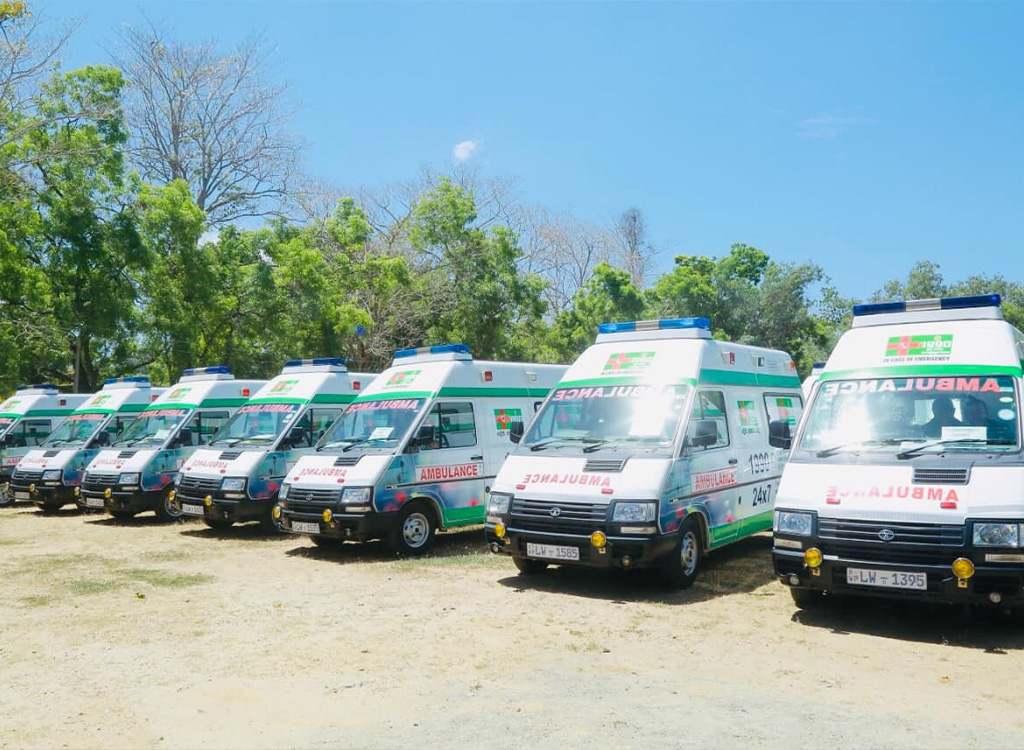
Sri Lanka is to receive a grant of Rs. 1.725 billion from India to procure 100 new ambulances for the 1990 Suwa Seriya emergency ambulance service, as the Government moves to strengthen an ageing fleet increasingly affected by heavy operational demands.
The Cabinet of Ministers has approved entering into an agreement with the Government of India to secure the financial assistance, Cabinet Spokesman, Minister Nalinda Jayatissa announced.
Jayatissa has said the proposal was presented in response to the growing need to replace ageing vehicles in the existing fleet of 322 ambulances, which collectively travel approximately nine million kilometres annually.
He has noted that the extensive mileage had increased the likelihood of mechanical failures, making the acquisition of additional ambulances essential to maintaining the reliability of the emergency service.
The Indian Government has agreed to provide the funding following a special request from Sri Lanka to procure 100 fully equipped ambulances for the service.
Clarifying the nature of the assistance, Jayatissa has said the Rs. 1,725.7 million would be provided as an outright grant and would not create an additional debt burden for the country.
He has also stressed that the procurement would be carried out through a competitive tender process rather than through a direct purchasing arrangement.
The Ministry of Health will be responsible for recruiting the required personnel and undertaking maintenance and operational arrangements once the funding is received.
An essential emergency service
The 1990 Suwa Seriya service operates free of charge around the clock across all districts, responding to between 1,000 and 1,200 patient transport requests daily.
Launched in 2016 with financial assistance from India, the service was subsequently expanded island-wide in 2018, becoming a critical component of Sri Lanka’s pre-hospital emergency healthcare system.
Its ambulances provide emergency medical assistance and transport patients to hospitals, particularly in situations where timely access to medical care can be critical.
However, the service’s growing operational demands have placed considerable pressure on its existing fleet. With ambulances covering approximately nine million kilometres each year, vehicle maintenance, replacement and the availability of properly equipped units have become increasingly important to ensuring uninterrupted operations.
The proposed procurement of 100 additional ambulances is expected to strengthen the fleet’s capacity, reduce pressure on ageing vehicles and improve the service’s ability to respond to emergencies.
The latest assistance also represents a continuation of India’s support for one of Sri Lanka’s most significant public healthcare initiatives, which was established with Indian assistance and has since become an integral part of the country’s emergency response network.










Leave a comment