
By The Pulseline News Desk
The search for Agbo, one of Sri Lanka’s best-known wild tuskers, has intensified with the deployment of a special military team, as the recent death of another iconic elephant has renewed concerns over the safety of the country’s wild elephants.
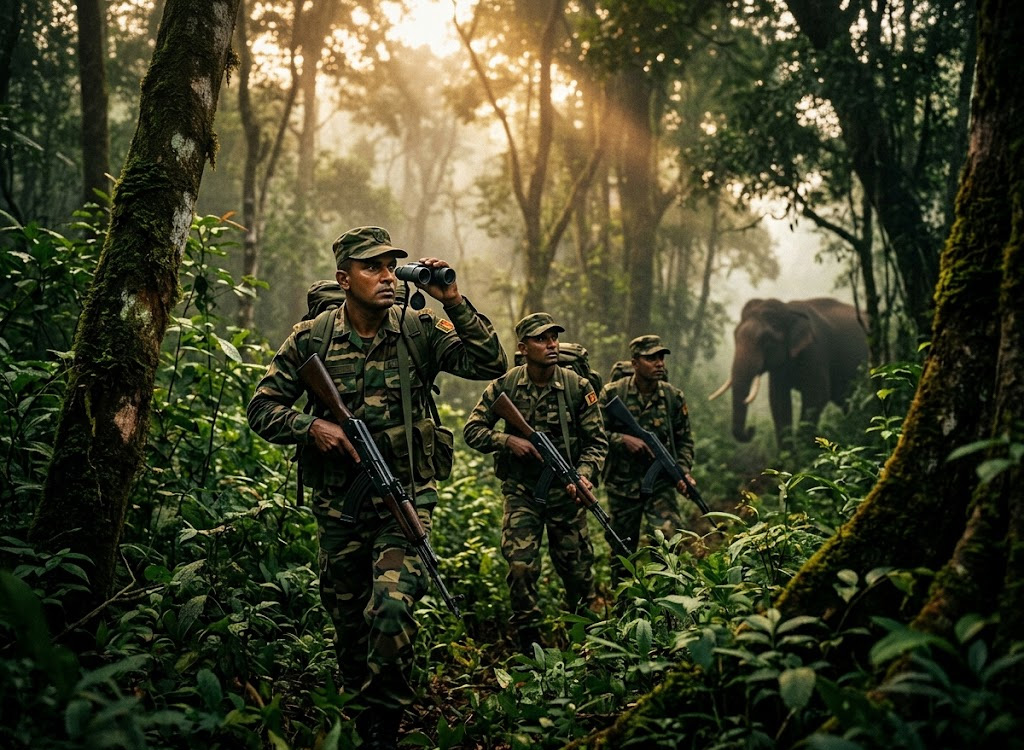
A special military team has been deployed to locate Agbo following discussions between the Minister of Environment and the Secretary to the Ministry of Defence, with authorities seeking to establish the tusker’s whereabouts and ensure his safety.
According to an official announcement, the Defence Secretary has ordered the team’s immediate deployment to accelerate the ongoing search operation. The effort involves relevant government institutions working together to trace the elephant and take necessary measures for his protection.
The latest development comes amid heightened public concern over the safety of Sri Lanka’s iconic wild tuskers following the death of Kawanthissa on October 16 after he received treatment for a gunshot injury.
The Environment Ministry has since asked the Inspector General of Police (IGP) to launch an immediate and comprehensive investigation into Kawanthissa’s death and possible organised activities targeting wild elephants.
In a written request, the Ministry Secretary has called on police to determine whether an organised group was involved in the killing of wild elephants, including Kawanthissa. The Ministry has also urged authorities to identify those responsible and bring them to justice.
It has requested regular updates on the investigation and legal action taken against suspects, underscoring the need for transparency in establishing the circumstances surrounding the tusker’s death and other elephant killings.
Agbo’s recovery and renewed concerns
Agbo, frequently seen in the Thirappane area of Anuradhapura, became the focus of national attention in 2023 after sustaining a serious gunshot injury to his left front leg.
The injury, reportedly caused by a trap gun, left the tusker struggling to walk and required extensive veterinary treatment over several months. Wildlife veterinarians, including Dr. Tharaka Prasad and Dr. Chandana Jayasinghe, were involved in efforts to treat him, while villagers and wildlife enthusiasts closely followed his recovery.
However, concerns over Agbo’s safety persisted after reports that he had been shot again in October 2023, highlighting the continuing threats posed to wild elephants by illegal firearms and human-elephant conflict.
His prolonged treatment and recovery became a widely followed wildlife conservation story, drawing attention to the challenges of protecting elephants outside secure habitats.
Pressure for stronger enforcement
The deaths and injuries of prominent tuskers have intensified calls for more effective enforcement of wildlife protection laws and stronger action against those responsible for harming elephants.
The Department of Wildlife Conservation, working with the Tri-Forces, the Special Task Force (STF) and the Sri Lanka Police, continues operations aimed at curbing the illegal killing of wild elephants and strengthening enforcement.
The investigation into Kawanthissa’s death is expected to be important in determining whether the incident was an isolated act or linked to wider organised activities targeting elephants.
For now, the priority is to locate Agbo and establish his condition, as the military team joins the ongoing search.
The latest operation has also renewed a broader question facing Sri Lanka’s wildlife authorities: whether existing protection and enforcement measures are sufficient to safeguard the country’s most celebrated wild elephants from continued threats.













Leave a comment